
OEM and ODM Custom Motorcycle Parts: How It Works for B2B Buyers
Most buyers assume OEM means “original quality.” It does not. It means the buyer holds the technical risk.
In the aftermarket V-twin sector, the distinction between OEM and ODM is not merely about branding or labeling; it defines who is liable when a part fails to fit. For purchasing managers sourcing OEM vs ODM motorcycle parts, understanding this division of responsibility is critical to minimizing returns and ensuring batch consistency. OEM production follows the buyer’s exact specifications, placing the burden of design accuracy on the purchaser. ODM involves the supplier’s design input, shifting technical liability to the manufacturer. Success in custom manufacturing depends less on the initial drawing and more on rigorous fitment verification, clear documentation, and physical sampling before bulk production begins.
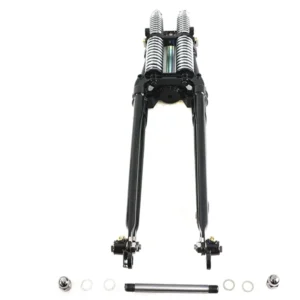
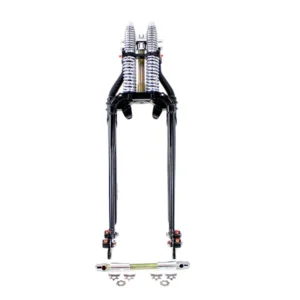
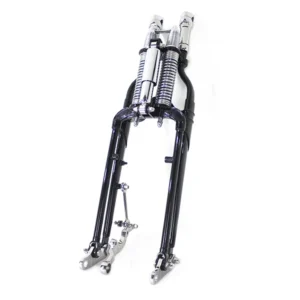
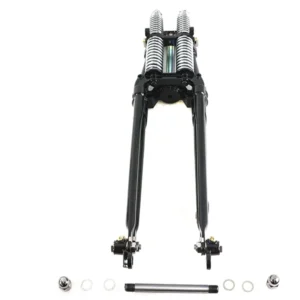
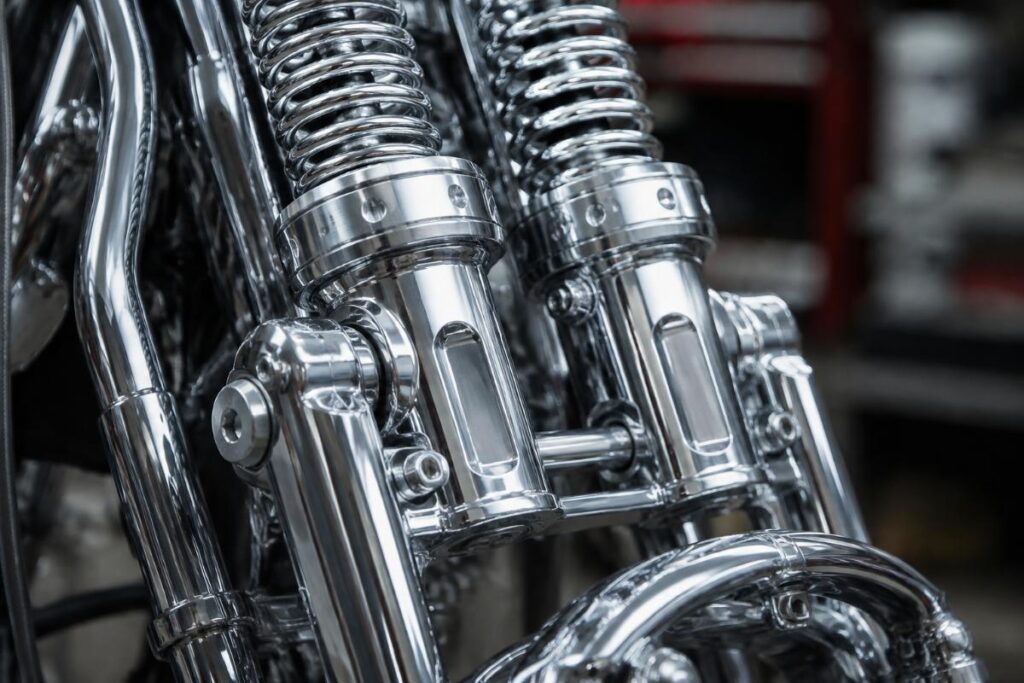
This distinction becomes starkly visible on the shop floor. I recall a shipment of springer front ends destined for a customization workshop in Southeast Asia. The CAD drawings were pristine, specifying every curve and mount point for a classic big twin frame. Yet, when the mechanics attempted installation, the steering axis spacing was off by a fraction of a millimeter. The entire batch sat useless in the workshop, causing significant delays and frustration. That incident underscored a fundamental truth: in custom motorcycle manufacturing, dimensional tolerance is not just a number on a sheet; it is the difference between a sellable product and scrap metal. This experience drives the approach to verifying OEM vs ODM motorcycle parts through physical measurement rather than relying solely on digital models.
What Is the Real Difference Between OEM and ODM in Motorcycle Parts?
OEM follows the buyer’s specs; ODM involves the supplier’s design input, shifting technical liability.
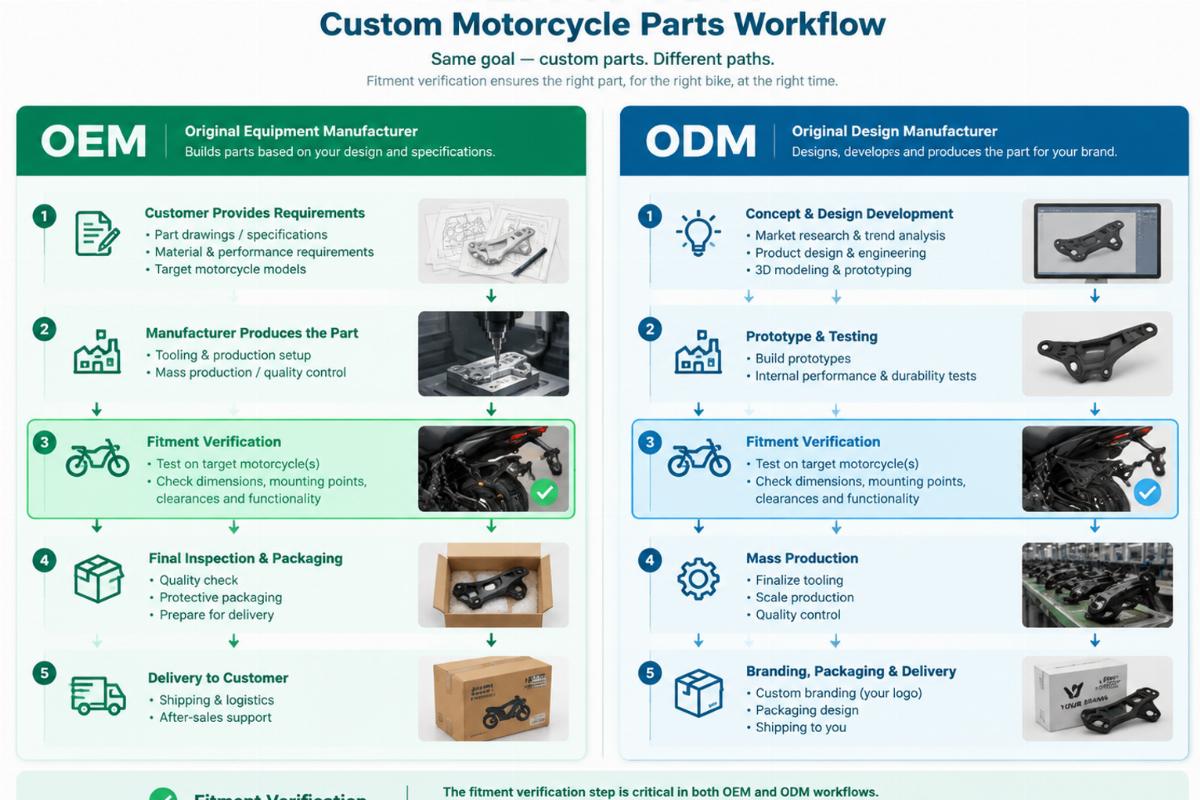
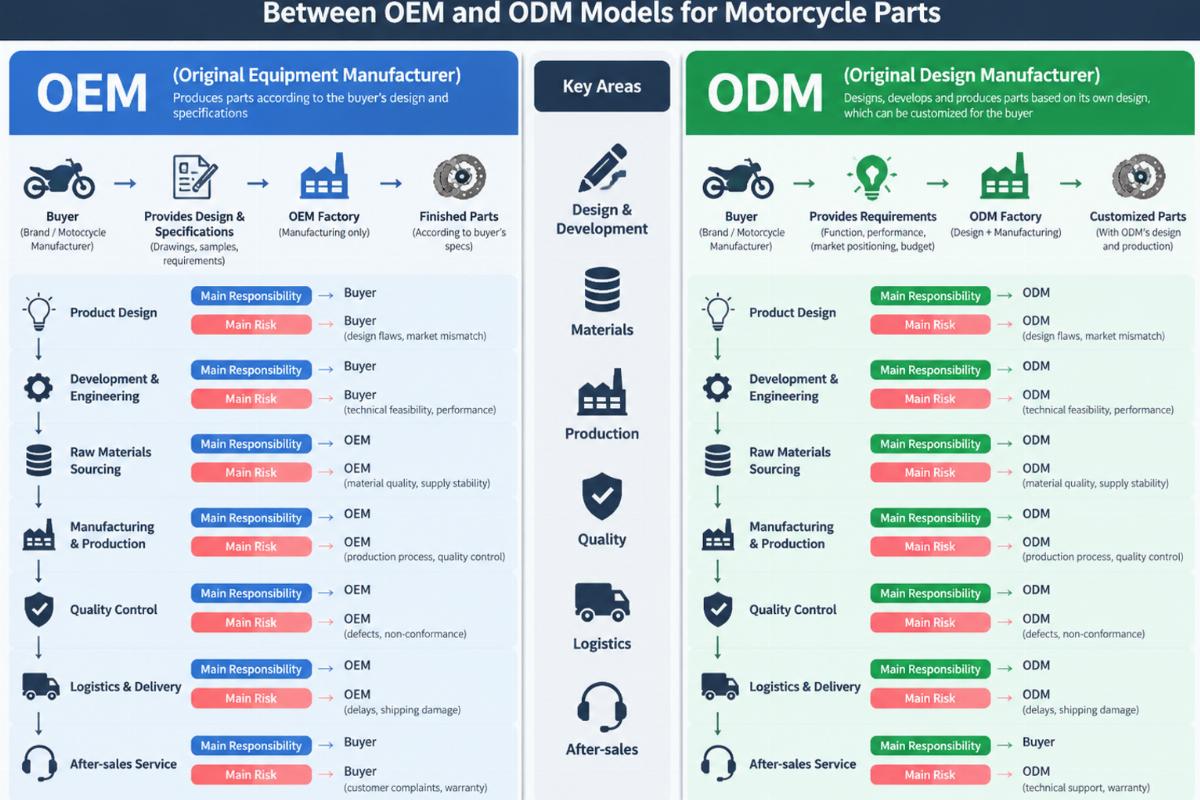
When sourcing OEM vs ODM motorcycle parts, the primary difference lies in the origin of the design and the allocation of risk. In an OEM arrangement, the buyer provides complete technical drawings, material specifications, and tolerance requirements. The manufacturer’s role is strictly production. If the part does not fit because the drawing was incorrect, the buyer bears the cost. Conversely, in an ODM model, the supplier designs the part based on performance requirements or general fitment data. Here, the supplier assumes responsibility for engineering accuracy.
| Feature | OEM (Original Equipment Manufacturer) Model | ODM (Original Design Manufacturer) Model |
|---|---|---|
| Design Ownership | Buyer provides full technical drawings | Supplier creates design based on requirements |
| Technical Risk | Buyer holds liability for fitment errors | Supplier holds liability for design flaws |
| Fitment Verification | Buyer must validate samples against frames | Supplier validates fitment before offering |
| Documentation | Buyer supplies specs; supplier provides inspection records | Supplier provides design files and fitment sheets |
| Customization Level | High, specific to buyer’s unique needs | Moderate, often based on existing platforms |
For aftermarket V-twin components, such as those for Harley-Davidson Softail or Yamaha XS650 models, this distinction dictates the procurement strategy. A buyer requesting a custom springer fork assembly with unique rake angles typically engages in an OEM process, requiring them to verify every dimension. A buyer seeking standard replacement hydraulic fork tubes might opt for an ODM approach, relying on the supplier’s established designs. Understanding this helps in selecting the right partner for OEM vs ODM motorcycle parts, ensuring that the party best equipped to manage technical risk is the one holding the reins. [NEED_CITE: industry standards for contractual liability in custom manufacturing]
Why Do Drawings Alone Fail in Custom V-Twin Manufacturing?
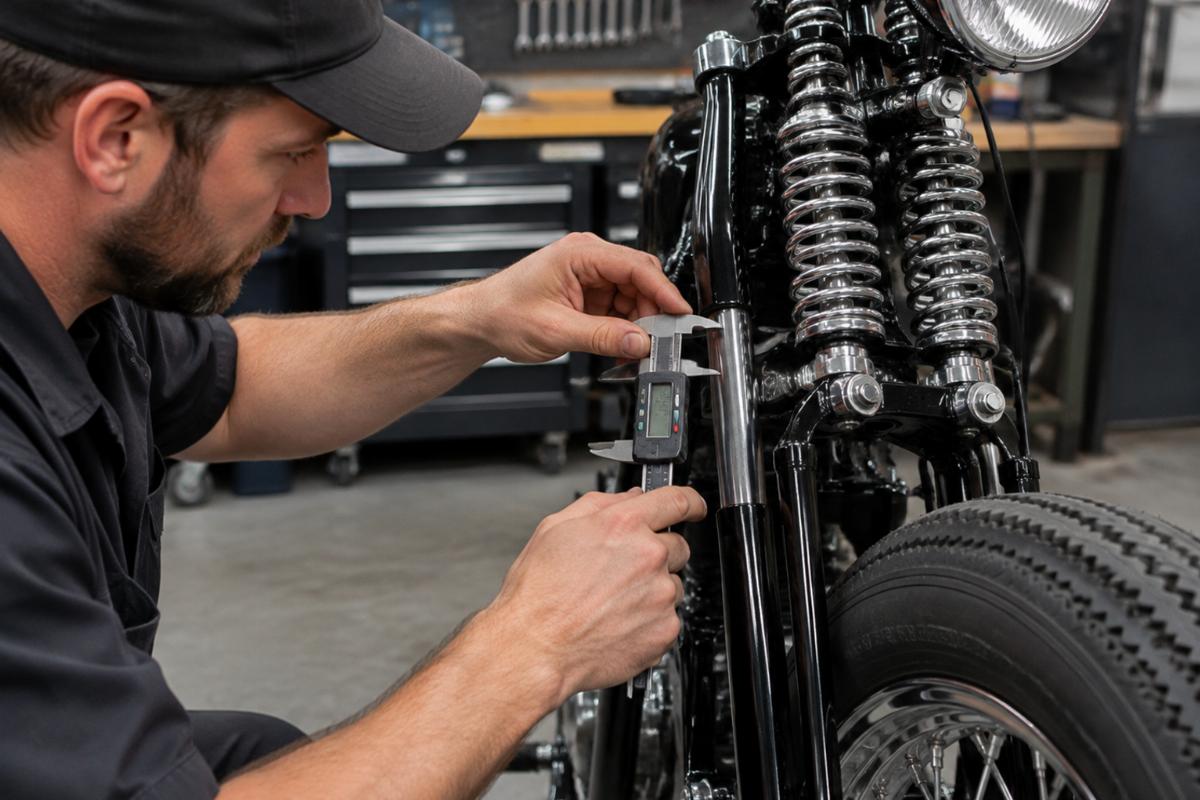
Physical fitment checks on springer forks and hydraulic tubes prevent assembly disasters.
Relying exclusively on CAD drawings for custom motorcycle parts is a common pitfall. While digital models provide a theoretical baseline, they often fail to account for real-world variables such as frame warping, casting inconsistencies, or subtle variations in bearing seats. For complex assemblies like springer front ends, even minor deviations in the steering head neck angle can render a part unusable. This is why physical fitment verification is non-negotiable when evaluating OEM vs ODM motorcycle parts.
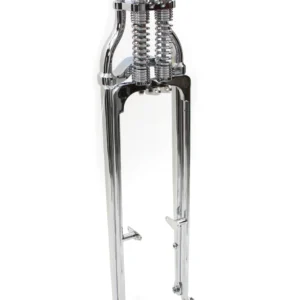
Consider the case of a chrome-finished springer kit. The drawings specified precise mounting hole locations for the fender and headlight. However, during trial assembly on a pre-1984 Knucklehead frame, the holes did not align due to a slight variance in the frame’s neck casting, a detail not captured in the generic digital model. Without a physical sample check, this mismatch would have resulted in a full batch rejection. Similarly, for hydraulic forks, the interaction between triple trees, tube diameters, and axle sizes requires hands-on validation. A drawing might specify a 39mm tube, but the actual fit within the triple tree clamp depends on machining tolerances that vary between manufacturers. [NEED_CITE: factory service manuals for fitment specifications]
To mitigate this, successful sourcing strategies involve sending samples for single-piece fitment checks before committing to bulk orders. This practice allows buyers to test the part on actual motorcycles, identifying issues like interference with charging system components or misalignment with brake caliper mounts. By prioritizing physical verification over digital perfection, buyers can significantly reduce the risk associated with OEM vs ODM motorcycle parts.
How Does Fitment Verification Reduce Return Rates?
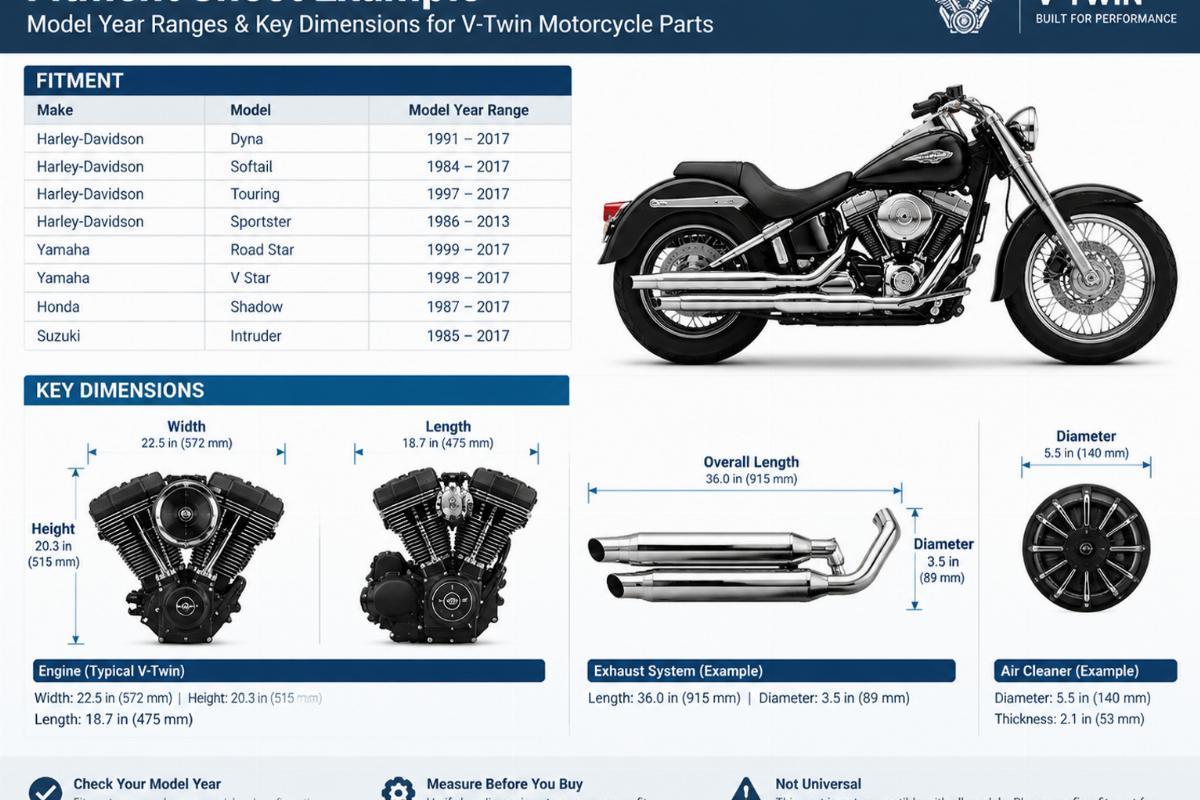
Confirming model year, tube diameter, and bearing types before quotation ensures catalog accuracy.
Return rates in the aftermarket parts industry are often driven by fitment errors rather than product defects. A part may be manufactured to perfect specifications but still be incompatible with the intended motorcycle due to model year variations. For instance, Harley-Davidson Big Twin frames underwent significant changes in steering head dimensions between the Evolution and Twin Cam eras. A springer fork designed for a 1990s Softail will not fit a 1970s Shovelhead without modification. Therefore, fitment verification must go beyond simple part numbers.
Effective verification involves cross-referencing superseded OEM numbers and confirming key dimensions such as frame neck angle, tube diameter, and bearing type. For Yamaha XS650 builds, distinguishing between early and late model steering head cups is crucial, as these components are not interchangeable. When sourcing OEM vs ODM motorcycle parts, buyers should expect suppliers to provide detailed fitment sheets that specify exact model year ranges and compatibility notes. This documentation serves as a safeguard against catalog errors, which are frequently propagated from outdated or inaccurate online listings.
A practical approach is to request a mixed order of samples for critical components, such as springer legs and hydraulic damper tubes, to test against a variety of frames in the target market. This proactive step identifies potential issues before they reach the end customer, preserving brand reputation and reducing logistical costs. By embedding fitment verification into the sourcing process, buyers can ensure that their inventory of OEM vs ODM motorcycle parts meets the precise needs of their clientele.
What Documentation Should You Expect from a Reliable Supplier?
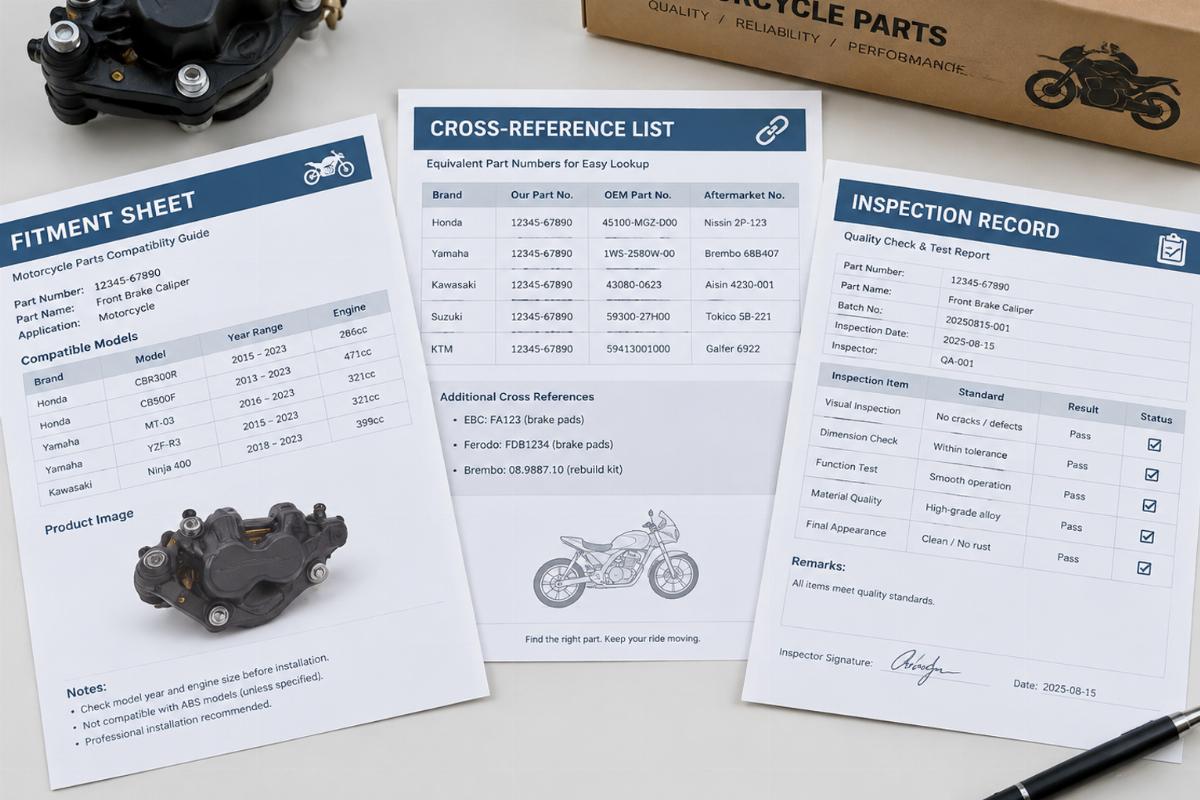
Fitment sheets, cross-reference lists, and inspection records are essential for B2B trust.
Transparency in documentation is a hallmark of a reliable supplier in the custom motorcycle parts industry. When evaluating OEM vs ODM motorcycle parts, buyers should look for a comprehensive documentation package that supports both sales and technical support. This package typically includes fitment sheets detailing compatible models and years, cross-reference lists linking aftermarket part numbers to original OEM equivalents, and inspection records verifying dimensional accuracy and finish quality.
Fitment sheets are particularly vital for dealers and distributors, as they provide the technical data needed to answer customer queries accurately. These documents should clearly state any limitations or specific installation requirements, such as the need for modified bearings or spacers. Cross-reference lists help in identifying superseded part numbers, ensuring that customers receive the correct component even if the original OEM number has changed. Inspection records, including packing photos and finish specifications, offer proof of quality control and consistency across batches. [NEED_CITE: best practices for B2B documentation in automotive aftermarket]
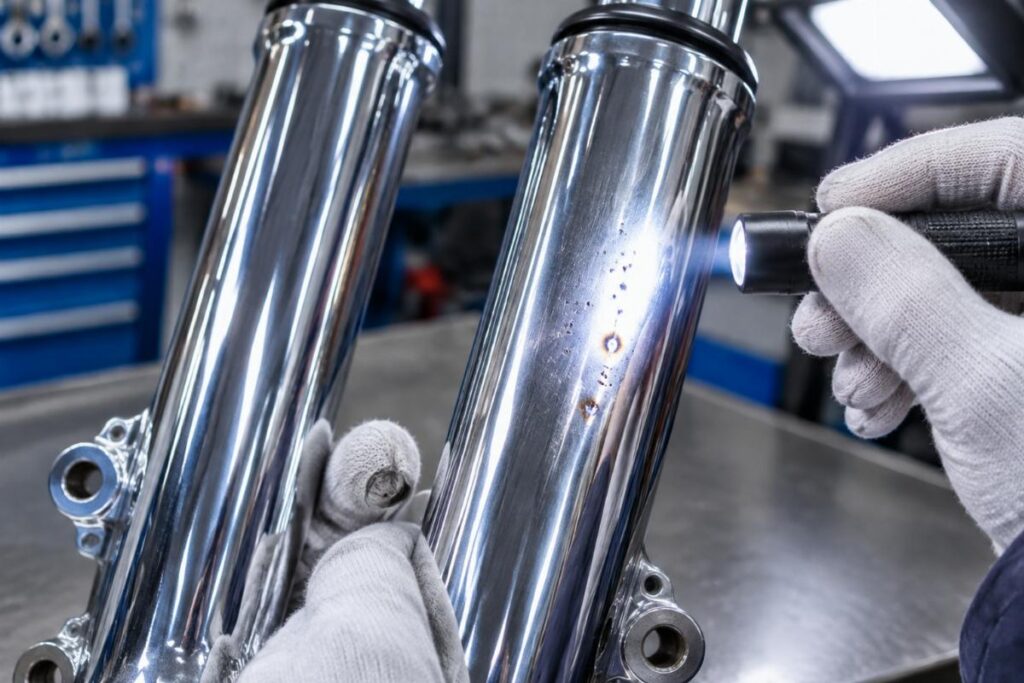
For chrome and black finishes, documentation should specify the plating thickness and color consistency standards. Batch variation in chrome finish can lead to catalog rejection, especially for high-end custom builders who demand uniform appearance. By requiring detailed documentation, buyers can hold suppliers accountable for quality and fitment, reducing the likelihood of disputes and returns. This level of transparency builds trust and facilitates smoother transactions for OEM vs ODM motorcycle parts.
Conclusion
Fitment verification and clear documentation define success in custom parts sourcing.
Navigating the landscape of OEM vs ODM motorcycle parts requires a shift from viewing suppliers as mere manufacturers to treating them as technical partners. The key to minimizing risk lies in rigorous fitment verification, physical sampling, and comprehensive documentation. By understanding who holds the technical risk and insisting on precise fitment data, buyers can ensure that their aftermarket V-twin parts meet the exacting standards of the custom motorcycle community.