
Most builders assume “springer” is a universal fitment category. It is not.
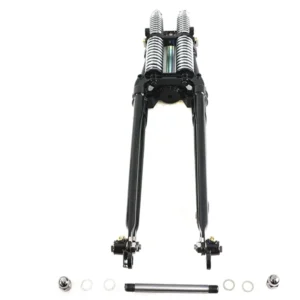
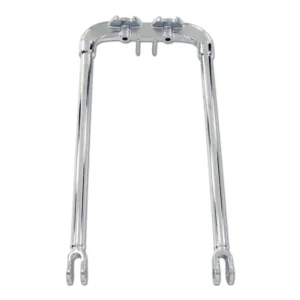
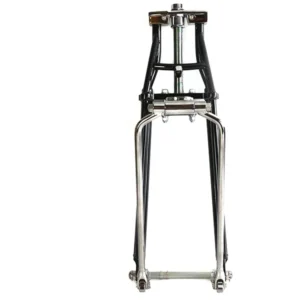
Inline springer fork fitment depends on precise length-over-stock measurements and triple tree compatibility, not just the motorcycle model name. Correct sizing prevents frame interference, fender clearance issues, and brake misalignment, which are the primary causes of costly returns in aftermarket parts distribution.
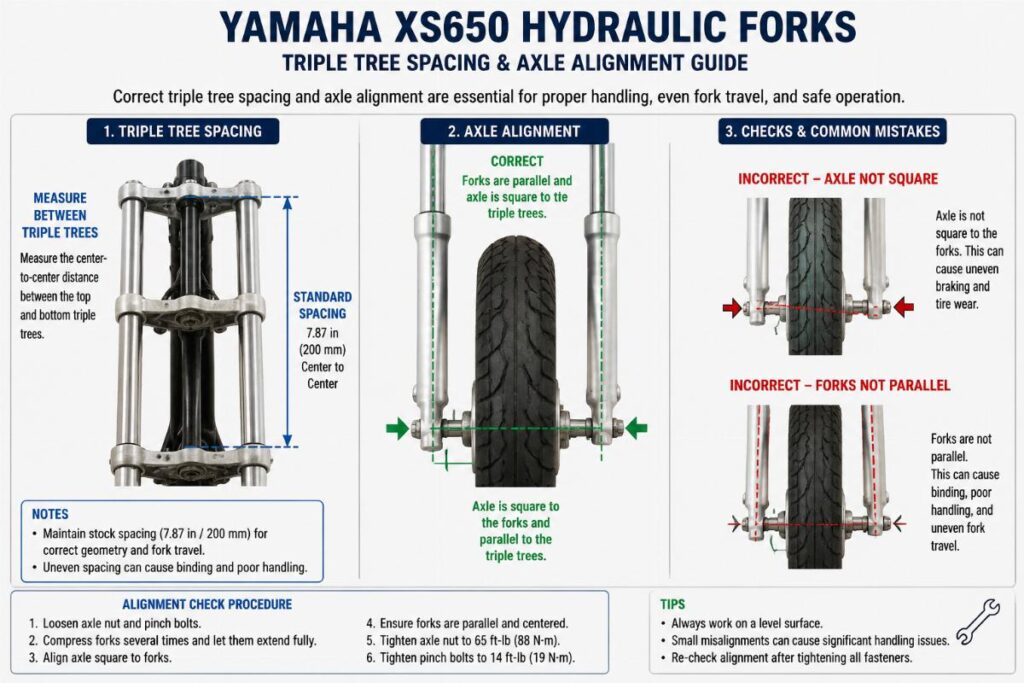
The smell of burnt clutch plates and hot oil still triggers a specific memory from my time working in a workshop in Lagos. A local custom builder was rushing to finish a Yamaha XS650 for a regional show. He had sourced an inline springer assembly based solely on the visual style, ignoring the critical geometric differences between the stock telescopic setup and the new springer design. We mounted the unit, tightened the neck bearings, and lowered the bike. The front wheel immediately jammed against the fender. The axle holes did not align with the caliper mounts. The triple tree spacing was off by several millimeters, causing the forks to bind against the frame neck during steering. That incident was not a failure of the part itself, but a failure of verification. In the aftermarket supply chain, such errors translate directly into return freight costs and lost trust. As a supplier, I learned that providing an inline springer fork fitment guide is not about listing available products, but about defining the exact dimensional boundaries that make a build viable.
Transitioning from hands-on assembly to B2B supply, I observed that these fitment errors were not isolated to individual builders. Distributors often listed parts based on generic model names, leading to bulk orders of incompatible components. The solution lies in shifting the focus from brand compatibility to dimensional accuracy.
What Determines Inline Springer Fork Fitment?
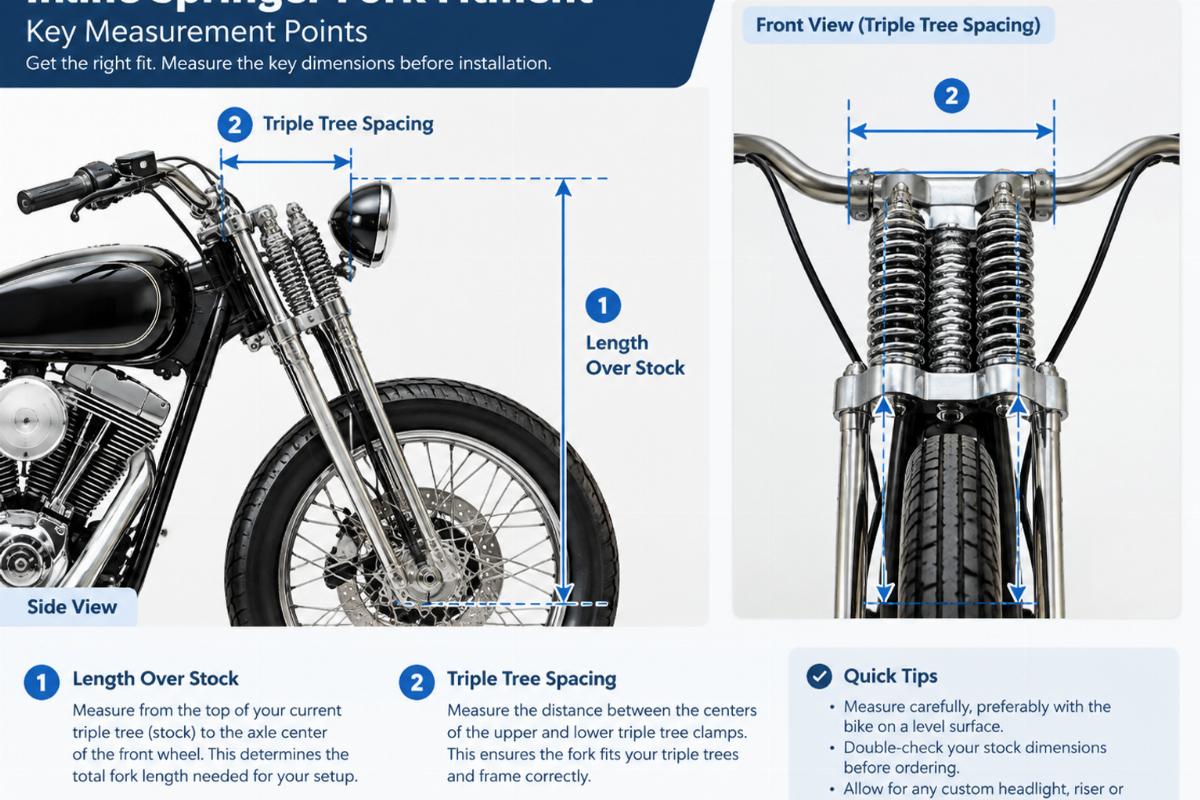
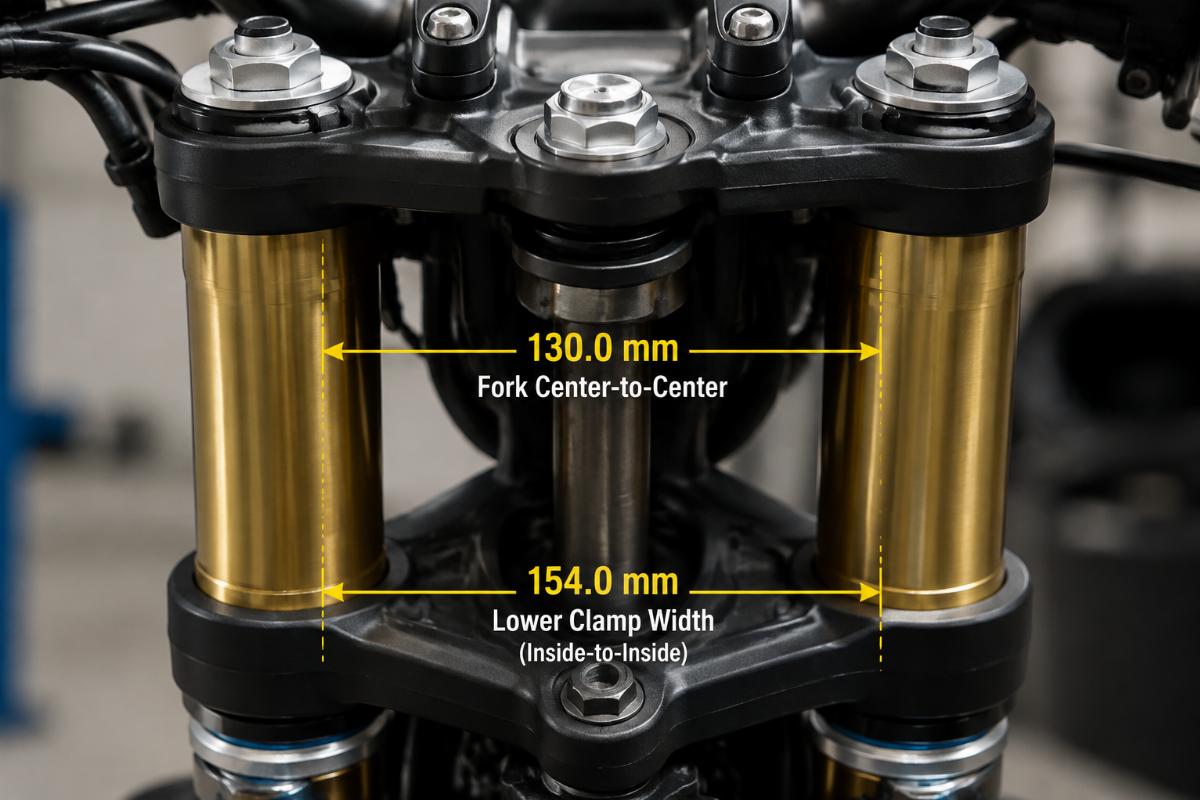
Fitment is dictated by geometry, not branding. Many buyers assume that if a fork is labeled for a “Harley Softail,” it will fit any year within that family. This assumption ignores the evolution of frame neck angles and triple tree designs. The two most critical dimensions are length over stock and triple tree clamp diameter. Length over stock determines the rake and trail, which affects handling stability and front-end height. Triple tree spacing ensures the forks sit parallel and do not interfere with the frame or each other. [NEED_CITE: relationship between fork length and rake angle in motorcycle chassis design]
When these dimensions are mismatched, the consequences are immediate. A fork that is too long may cause the front tire to hit the fender or the frame downtubes. A fork with incorrect triple tree spacing can lead to uneven stress on the neck bearings, resulting in premature wear or steering stiffness. For distributors, understanding these parameters is essential for curating a catalog that minimizes returns. An effective inline springer fork fitment guide must prioritize these measurements over aesthetic descriptions.
| Dimension | Impact on Fitment | Verification Method |
|---|---|---|
| Length Over Stock | Determines rake, trail, and fender clearance | Measure from axle center to top of triple tree |
| Triple Tree Spacing | Ensures parallel fork alignment and frame clearance | Measure distance between fork tube centers at clamps |
| Axle Hole Spacing | Aligns wheel and brake caliper | Compare with OEM wheel and caliper specs |
| Neck Bearing Diameter | Fits the frame headstock | Measure inner diameter of frame neck cups |
Common Sizing Mistakes in XS650 and V-Twin Builds
The Yamaha XS650 and Harley-Davidson V-twins represent two distinct challenges in springer fitment. The XS650, originally designed with telescopic forks, requires significant modification to accept a springer front end. The most common error is ignoring the frame neck angle. Unlike dedicated springer frames, the XS650 neck is angled for telescopic forks. Installing a standard springer without adjusting for this angle leads to the fender clearance issues I witnessed in Lagos. Builders must measure the neck angle and select a springer kit with a corresponding offset or adjustable triple trees. [NEED_CITE: Yamaha XS650 frame geometry specifications]
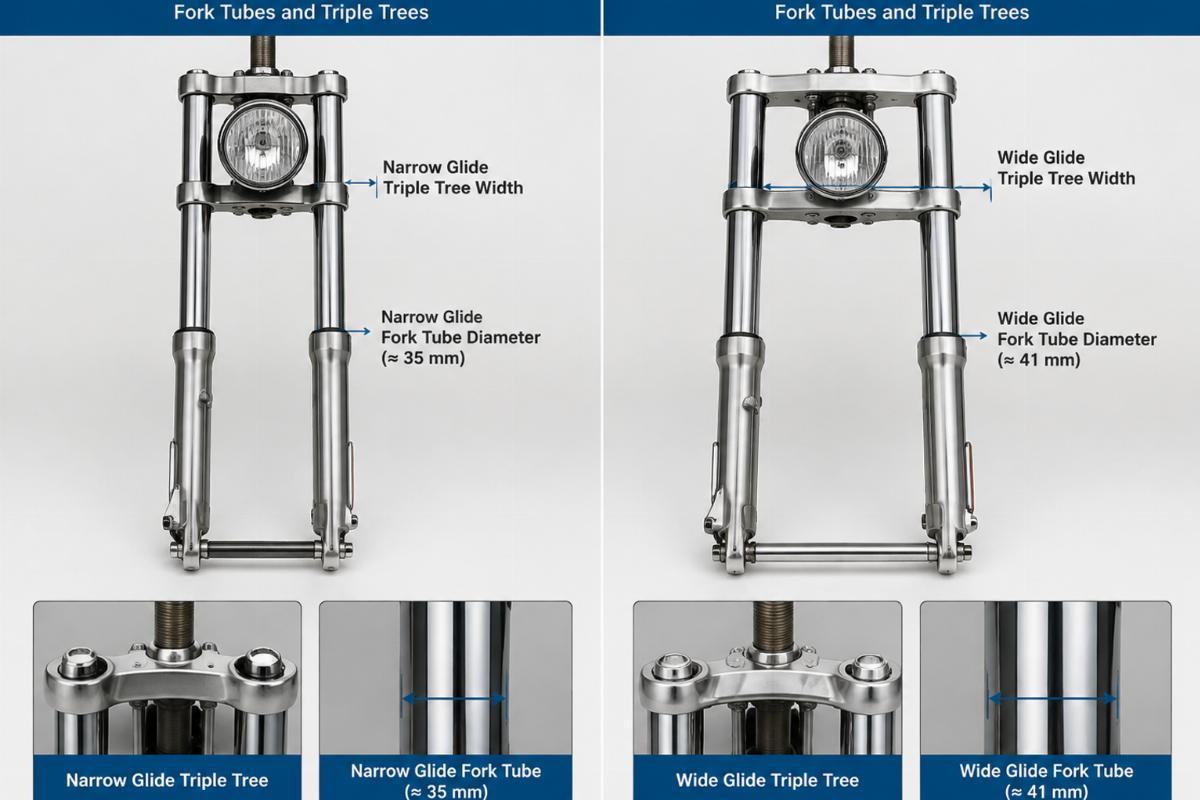
For Harley-Davidson models, the mistake often involves confusing Narrow Glide and Wide Glide specifications. While both are V-twins, the fork tube diameters and triple tree widths differ significantly. A distributor once received a return batch because a customer ordered Wide Glide springers for a Narrow Glide frame. The calipers did not align, and the wheels sat too far inward. Cross-referencing OEM part numbers for specific year ranges is the only reliable way to avoid this. An inline springer fork fitment guide should explicitly separate these families and highlight the year-specific changes in frame design.
Another frequent error is assuming that all springer forks have the same axle spacing. Early Harley models used different axle sizes compared to later Evolution and Twin Cam engines. Using the wrong axle hardware can compromise braking safety and wheel stability. Distributors must verify axle hole spacing against the customer’s existing wheel and brake setup. Providing a detailed fitment sheet that includes these dimensions helps buyers make informed decisions and reduces the likelihood of mismatched orders.
How to Verify Dimensions Before Ordering
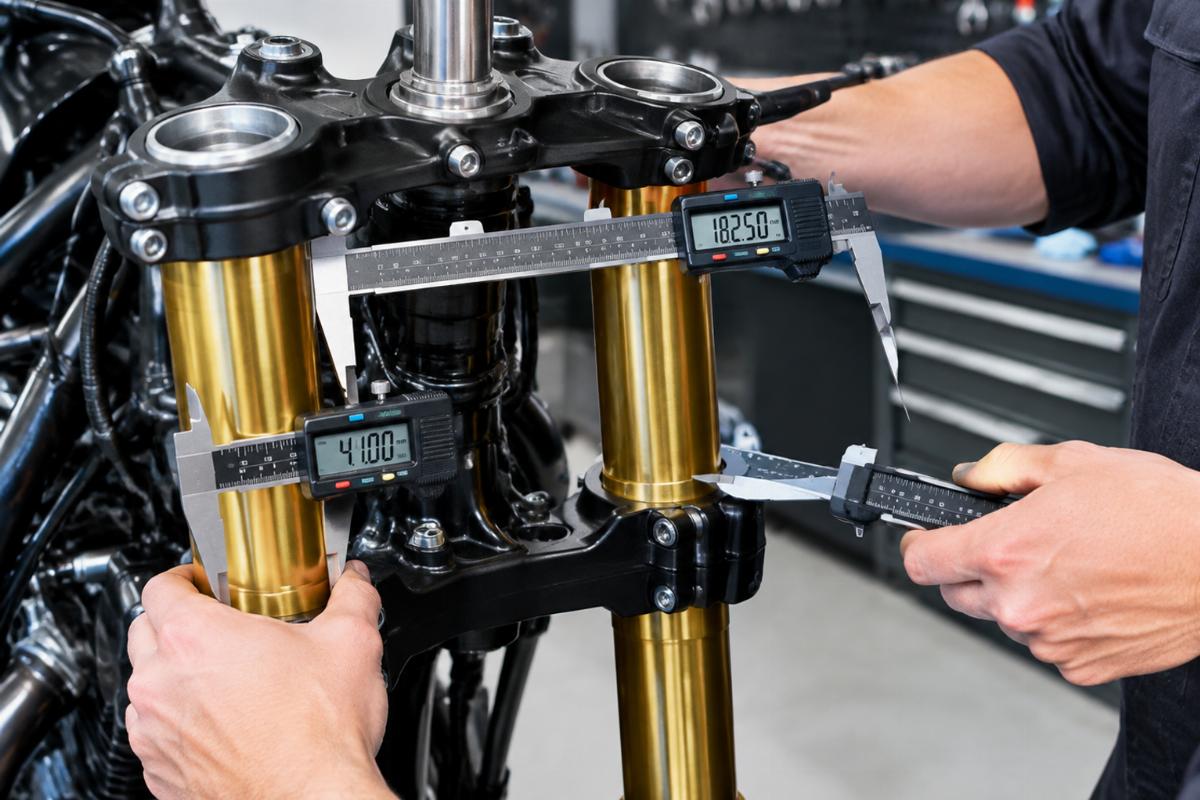
Verification is a systematic process that begins with accurate identification. Buyers should never rely solely on model names. Instead, they must gather specific data points from the existing motorcycle. Start by measuring the current fork length from the axle center to the top of the upper triple tree. This provides a baseline for determining the desired length over stock. Next, measure the diameter of the fork tubes and the spacing between them at the triple tree clamps. These measurements ensure that the new springer forks will fit within the existing frame constraints. [NEED_CITE: standard measurement procedures for motorcycle front ends]
Cross-referencing OEM part numbers is another critical step. Factory service manuals provide detailed diagrams and part numbers for each model year. By matching these numbers to the aftermarket components, buyers can confirm compatibility. For example, a Harley-Davidson Softail from 1984 may have different frame dimensions than one from 1995, even if they share the same model name. Using OEM cross-references helps identify these subtle differences. Suppliers who provide comprehensive cross-reference lists add significant value to the buying process.
Requesting samples before placing bulk orders is a prudent strategy for distributors. A single unit allows for physical verification of dimensions, finish quality, and packaging. It also provides an opportunity to test fitment on a representative motorcycle. This step mitigates the risk of receiving a large shipment of incompatible parts. An inline springer fork fitment guide should encourage this practice, emphasizing that sample testing is a cost-effective insurance policy against large-scale errors.
Ensuring Quality and Consistency in Aftermarket Parts
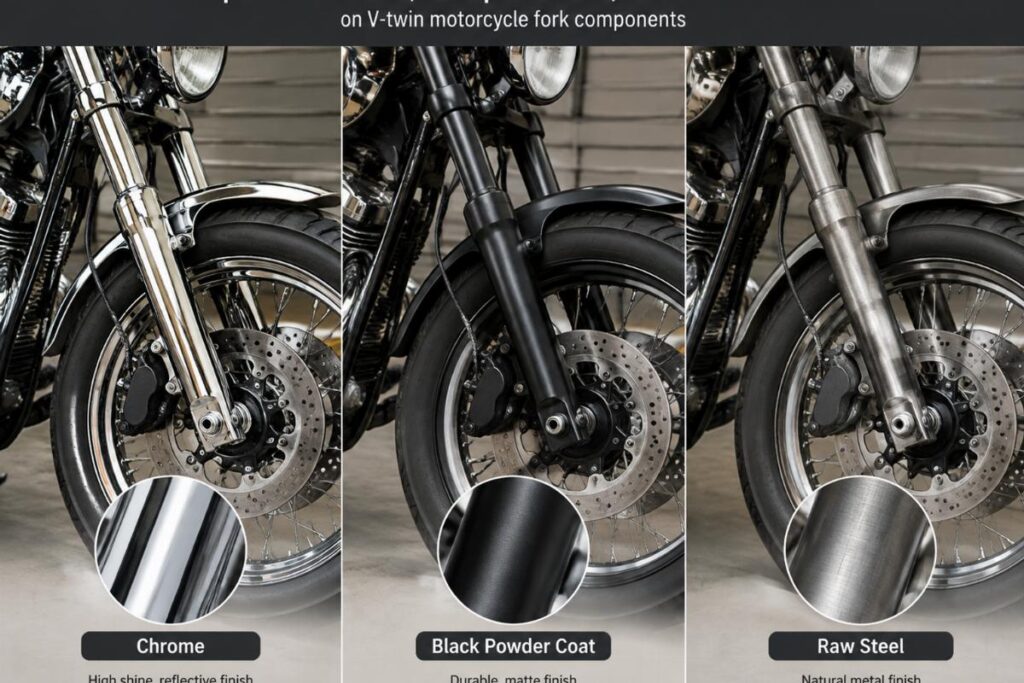
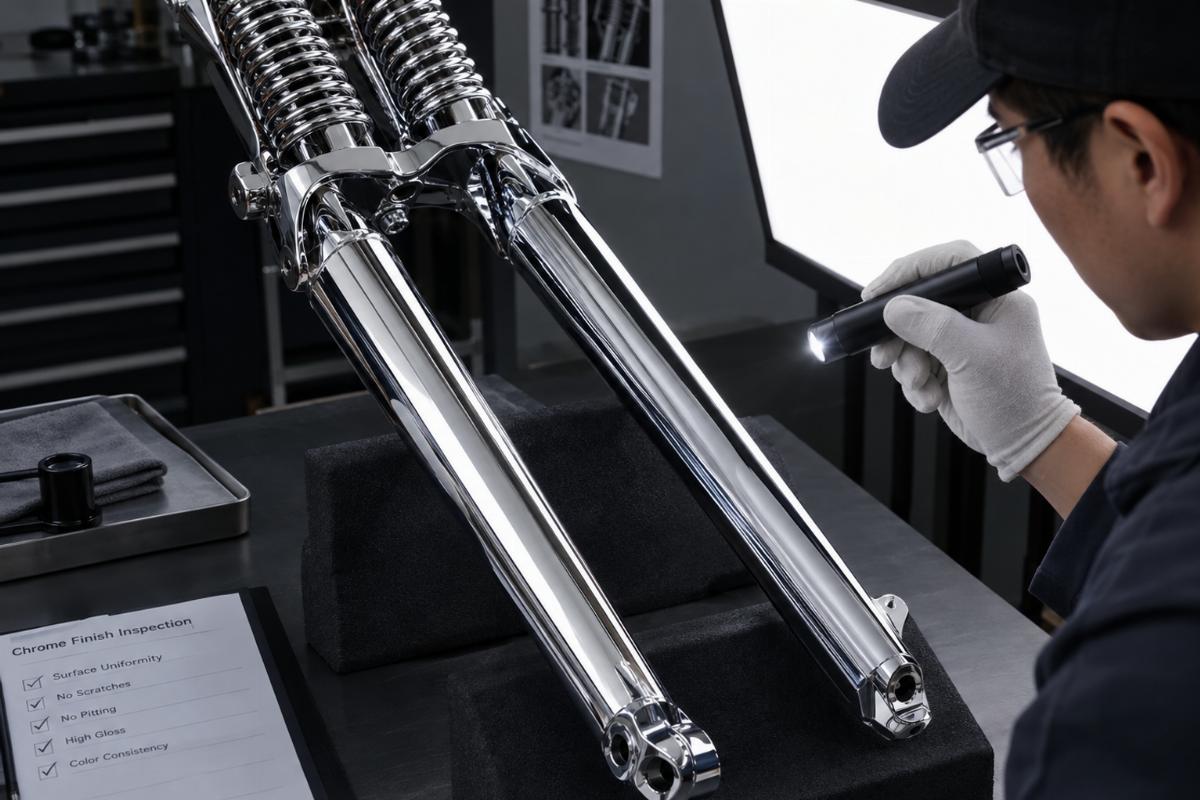
Quality consistency is as important as dimensional accuracy. Batch variations in finish and material can undermine a distributor’s reputation. Chrome plating, for instance, can vary in thickness and brightness between production runs. Without strict quality control, one shipment may arrive with bright, mirror-like chrome, while the next has a dull or yellowish tint. This inconsistency confuses end customers and leads to complaints. Requesting inspection records and finish samples from suppliers helps ensure that each batch meets the expected standards. [NEED_CITE: industry standards for chrome plating quality control]
Material integrity is another concern. Springer forks undergo significant stress during operation. Weak or poorly manufactured components can fail, posing safety risks. Suppliers should provide documentation regarding the materials used, such as steel grade and heat treatment processes. While specific proprietary details may not be disclosed, general certifications and quality assurances are essential. Distributors should prioritize suppliers who transparently share their quality control protocols.
Packaging also plays a role in maintaining quality. Poorly packed parts can arrive damaged, with scratches on chrome surfaces or bent threads. Proper packaging protects the product during transit and ensures that it arrives in sellable condition. Suppliers who invest in robust packaging demonstrate a commitment to quality that extends beyond the manufacturing floor. An inline springer fork fitment guide should include tips on evaluating supplier reliability, focusing on their ability to deliver consistent quality over time.
Conclusion
Fitment precision defines the value of an aftermarket springer fork. Success in this niche requires moving beyond generic model labels to embrace detailed dimensional verification. By focusing on length over stock, triple tree spacing, and OEM cross-references, distributors can minimize returns and build trust with their customers. Consistent quality control and transparent communication further strengthen this relationship. An inline springer fork fitment guide serves as a vital tool in this process, empowering buyers to make informed decisions. Send your model and year for a fitment check to ensure your next order aligns perfectly with your build requirements.