
Matching tube diameter is not enough to guarantee fitment.
Successful Yamaha XS650 chopper front ends depend on precise measurement of triple tree spacing and handlebar geometry, not just tube diameter. Miscalculations lead to steering issues and component interference.
I learned this the hard way in a warehouse in Jebel Ali Port, Dubai. I was overseeing a shipment of extended forks and high-rise bars destined for a custom shop in Riyadh. The parts looked perfect on paper. The fork tubes matched the required diameter. The bars had the right rise. But when the local builder assembled the bike, the handlebars slammed into the instrument cluster. The customer could not turn the bars fully without hitting the tank or the gauges. Worse, the extended forks had altered the frame geometry so drastically that the bike felt unstable at low speeds. The client missed the Ramadan deadline for delivery. That return shipment cost more than the original order. Since then, I do not quote a single Yamaha XS650 chopper front end parts guide recommendation without verifying the triple tree spacing and pullback angles first. Dimensions differ by millimeters, but those millimeters determine whether a build succeeds or fails after crossing oceans.
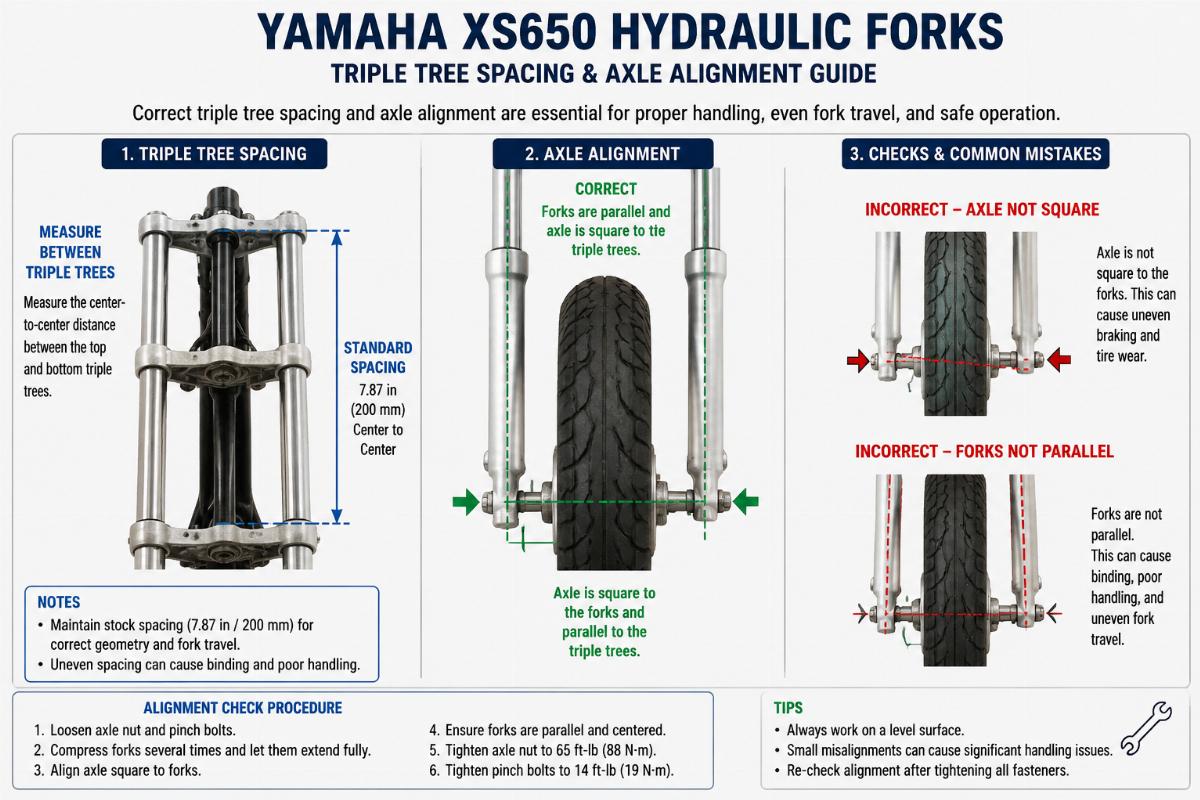
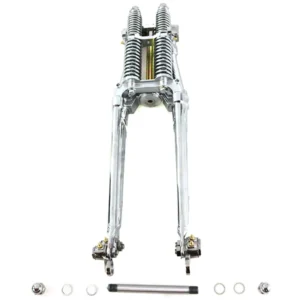
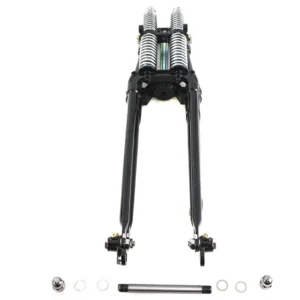
Builders often assume that if the fork tubes slide into the clamps, the job is done. This assumption ignores the structural integrity provided by the triple trees. The distance between the upper and lower triple trees, known as triple tree spacing, dictates how the fork legs align with the steering head. If this spacing is incorrect, the forks bind or sit at an angle, causing premature wear on bushings and seals.
Why Does Tube Diameter Alone Fail for XS650 Front Ends?
Tube diameter is only one variable in a complex geometric equation. Many builders focus exclusively on whether the fork tubes are 35mm or 39mm, ignoring the width of the triple tree clamps and the axle alignment. This oversight leads to parts that physically fit but functionally fail.
The core issue lies in the difference between Narrow Glide and Wide Glide configurations, even within the context of custom builds. While the XS650 is not a Harley, the principles of hydraulic fork fitment remain similar. The triple tree must match the fork tube diameter precisely, but it must also accommodate the specific axle spacing of the wheel hub. A mismatch here causes the wheel to sit off-center, leading to handling quirks and brake caliper misalignment.
| Fitment Factor | Critical Check | Consequence of Error |
|---|---|---|
| Tube Diameter | Match OEM or aftermarket spec exactly | Forks will not insert or will rattle loosely |
| Triple Tree Spacing | Measure center-to-center of clamp bores | Fork binding or steering head stress |
| Axle Alignment | Verify offset relative to frame centerline | Wheel misalignment and brake drag |
| Clamp Width | Ensure sufficient surface area for torque | Slippage under braking loads |
[NEED_CITE: standard hydraulic fork fitment tolerances]
A common mistake involves ordering Wide Glide style triple trees for Narrow Glide forks, or vice versa, based on visual similarity. The tube diameter might be identical, but the internal bore spacing and axle mounts differ. I once saw a builder in Europe spend weeks trying to force a set of aftermarket trees onto stock XS650 forks. The tubes fit, but the axle would not line up with the brake mount. He had to machine new adapters, adding cost and delay. Verifying axle spacing and tube diameter against OEM specs before ordering prevents this. When sourcing from a Yamaha XS650 chopper front end parts guide, always cross-reference the specific model year, as early and late models have different steering head dimensions.
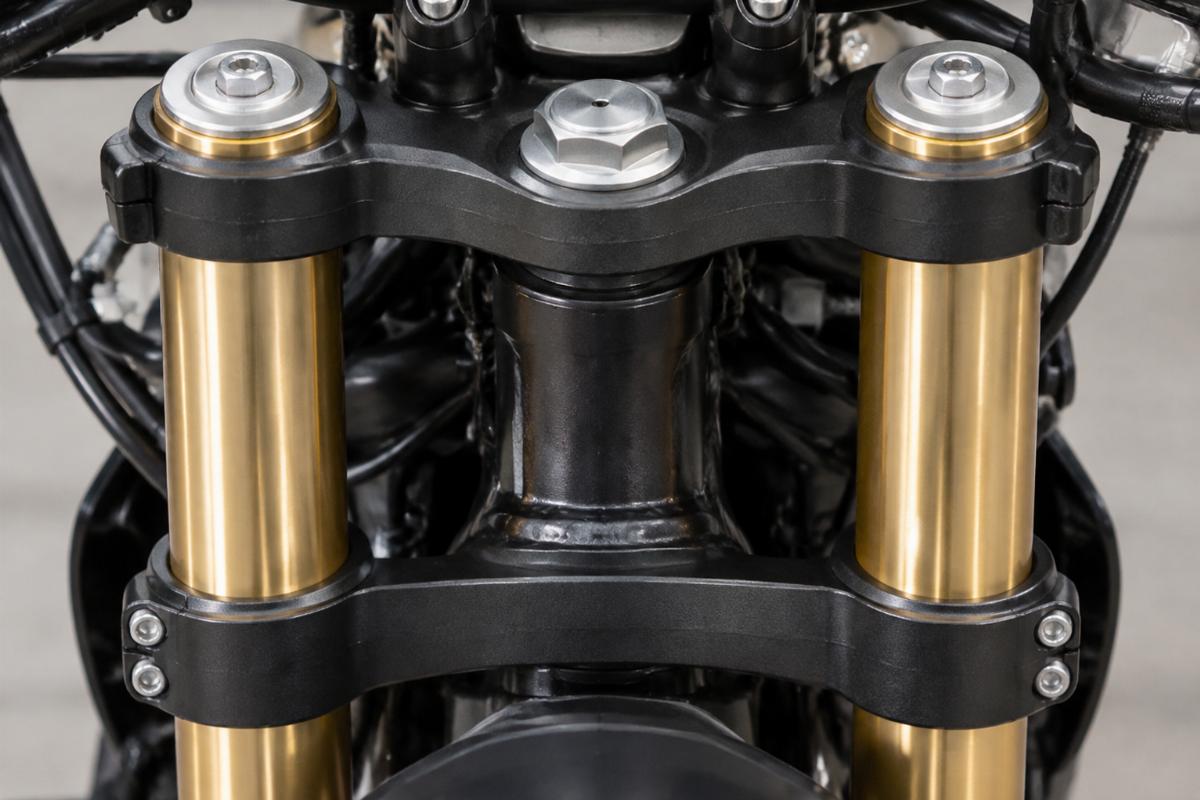
How Do Extended Forks Alter Rake and Trail?
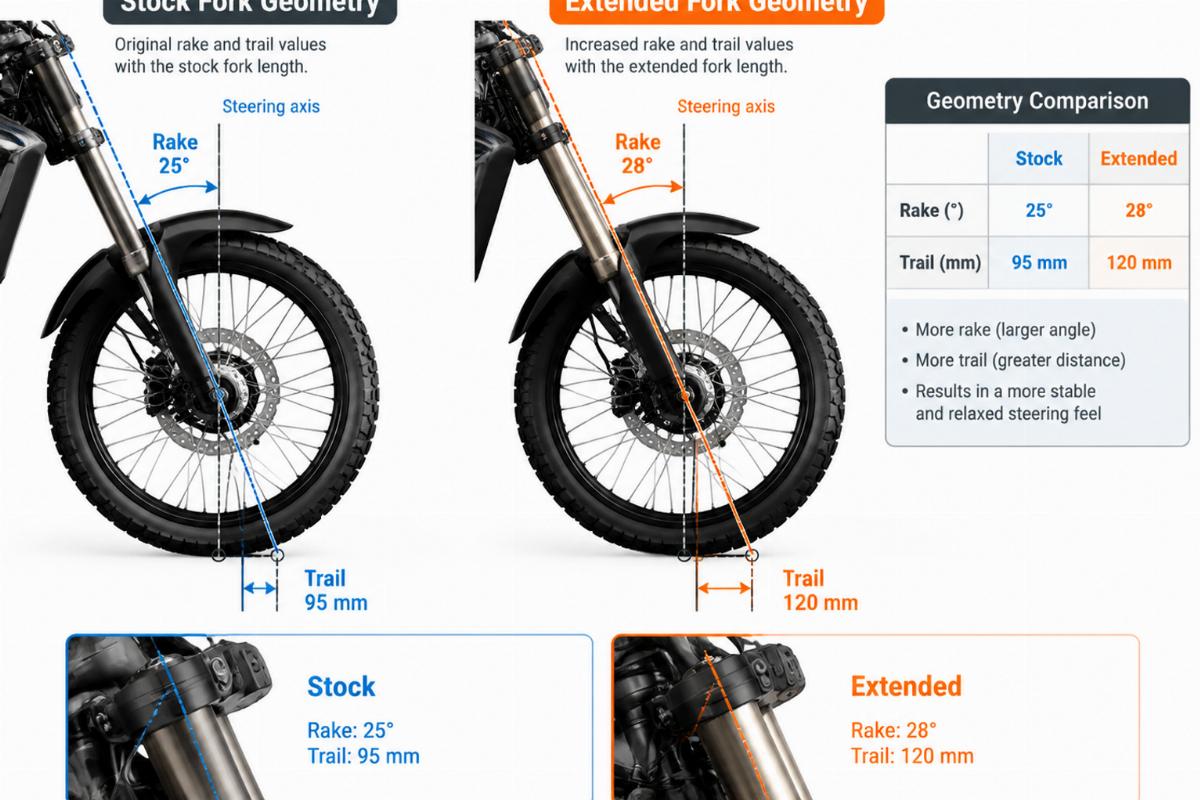
Lengthening forks changes geometry, requiring recalculated triple tree offsets. Many assume longer forks only affect the visual height of the bike. In reality, they significantly alter rake and trail, impacting handling stability.
Rake is the angle of the steering head relative to vertical. Trail is the distance between where the front tire contacts the ground and where the steering axis intersects the ground. Extending the fork tubes increases both rake and trail. Increased rake makes the bike more stable at high speeds but slower to turn. Increased trail enhances straight-line stability but can make low-speed maneuvering difficult.
When extending forks, the change in length must be calculated relative to the stock length to understand the percentage change in geometry. A small increase in length can result in a disproportionate change in trail if the triple tree offset is not adjusted. Standard triple trees have a specific offset that helps manage trail. Using stock trees with significantly extended forks can result in excessive trail, making the bike feel heavy and unresponsive.
[NEED_CITE: motorcycle geometry principles regarding rake and trail]
In the Riyadh case, the extended forks were installed with stock triple trees. The resulting geometry made the bike twitchy at low speeds and unstable during braking. The fix involved swapping to triple trees with a different offset to compensate for the increased length. Without this adjustment, the bike was unsafe to ride. Builders must calculate the rake change percentage relative to stock length and select triple trees that maintain a balanced trail. Consulting a Yamaha XS650 chopper front end parts guide that includes geometric data is essential for these modifications.
What Handlebar Dimensions Prevent Control Interference?
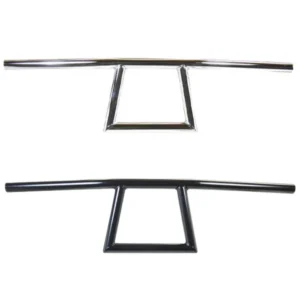
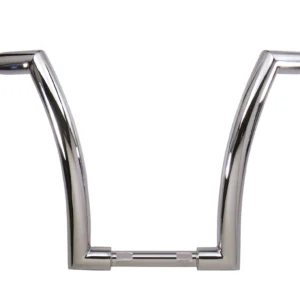
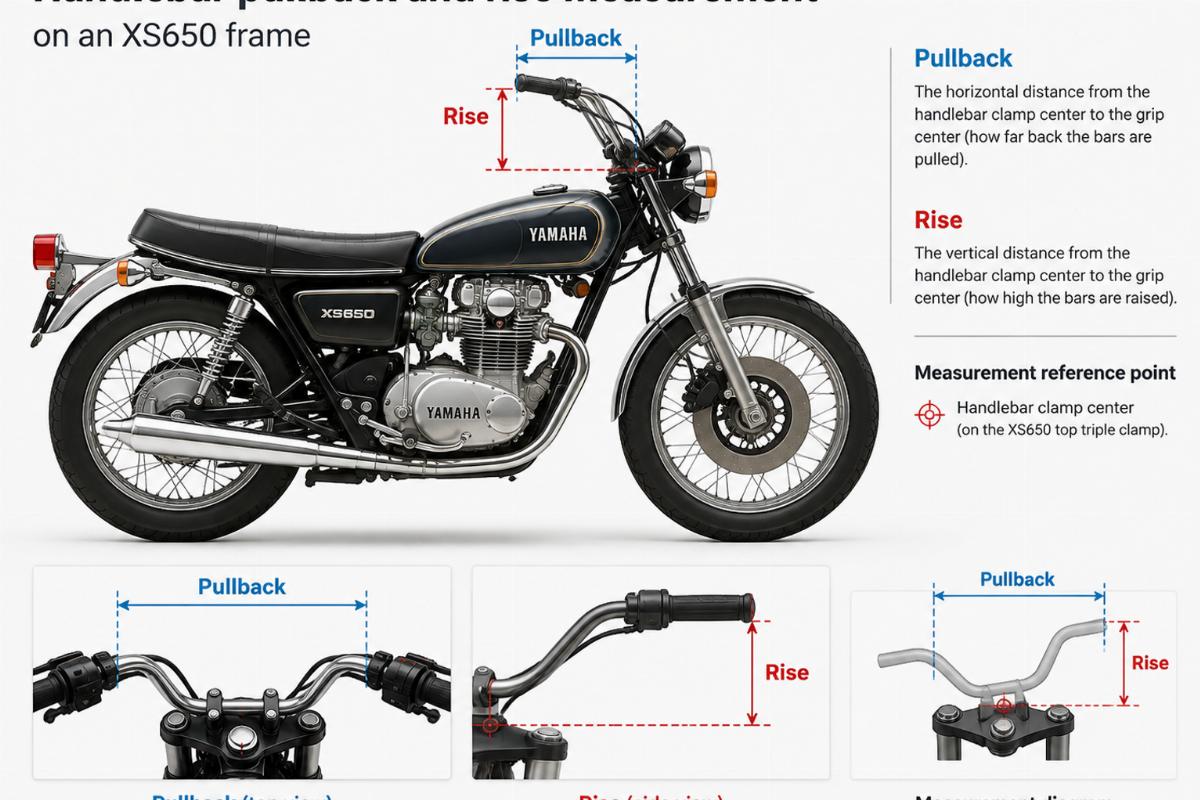
Pullback and rise must be measured against the specific frame and tank setup. Handlebars are not universal. A bar that fits one XS650 frame may hit the tank or instrument cluster on another due to differences in pullback angle and rise.
Pullback is the angle at which the bar bends back toward the rider. Rise is the vertical height of the bar from the clamp area. High-rise bars with aggressive pullback can look great but may interfere with controls or the fuel tank when turned. In the Dubai incident, the handlebars had a steep pullback that was not accounted for. When the rider turned the bars, the grips hit the instrument cluster housing.
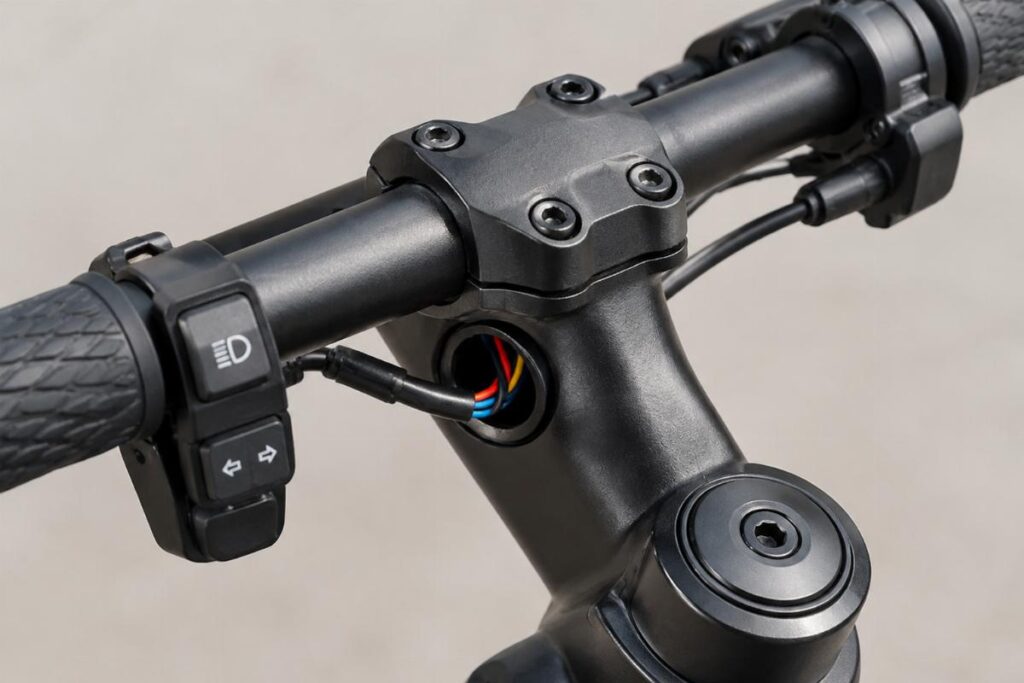
To prevent this, measure clearance in millimeters before ordering. Check the distance from the triple tree clamp to the tank and the instrument cluster. Account for the full range of motion of the steering. Bars with internal wiring holes require additional space for cables to route without pinching. External wiring allows for more flexibility but requires careful management to avoid snagging.
| Handlebar Dimension | Measurement Focus | Risk if Ignored |
|---|---|---|
| Rise | Vertical height from clamp | Cable tension or insufficient clearance |
| Width | Distance between grips | Control reach and leverage |
| Pullback | Angle of bend toward rider | Interference with tank or instruments |
| Clamp Area | Diameter and length | Secure mounting and control placement |
[NEED_CITE: ergonomic handlebar fitment standards]
A US buyer once ordered a set of ape hangers for an XS650 bobber. The bars fit the clamps, but the pullback was so severe that the throttle cable bound up at full lock. The rider could not open the throttle fully when turning left. The solution was to switch to bars with less pullback or to reroute the cables with longer lengths. Verifying handlebar rise, width, and pullback against control clearance is critical. A detailed Yamaha XS650 chopper front end parts guide should include these dimensional checks to avoid such issues.
Which Aftermarket Parts Fit Specific XS650 Years?
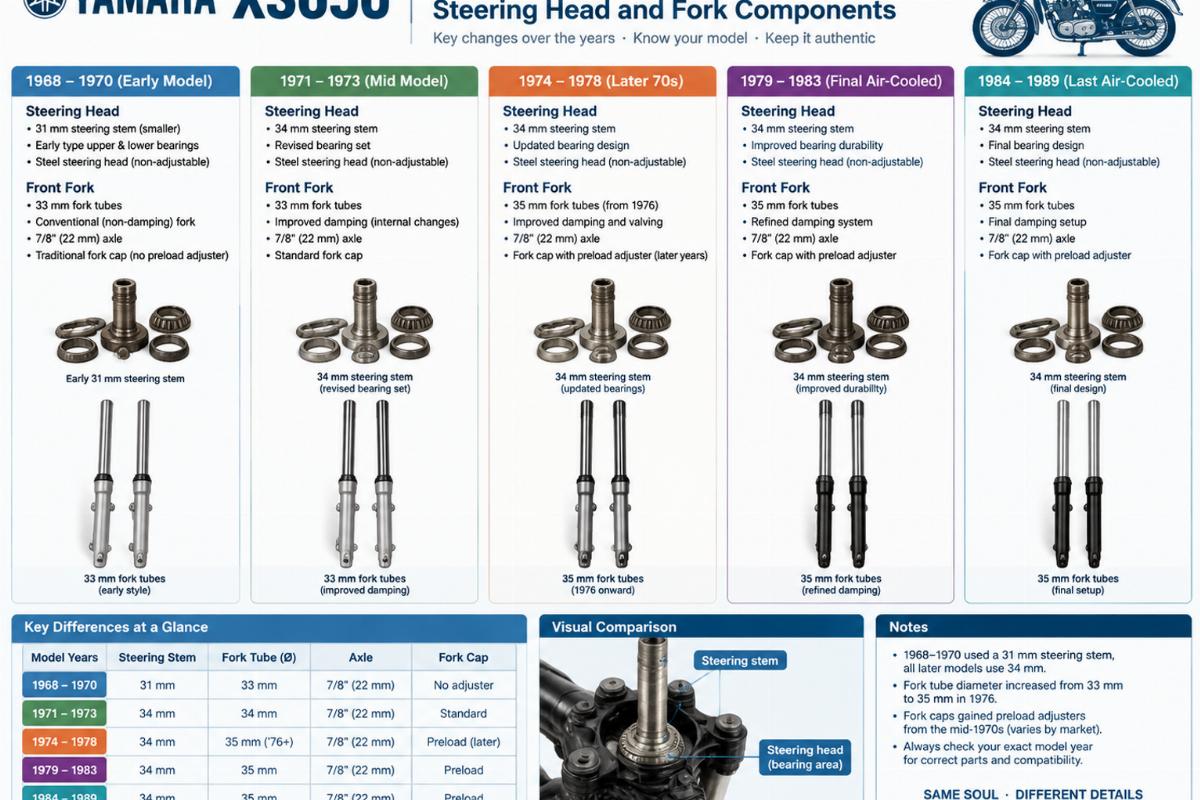
Cross-reference model years to avoid incompatibility with early vs. late models. The XS650 underwent several changes during its production run. Early models have different steering head bearings and triple tree dimensions compared to later models. Using parts designed for one era on another can lead to fitment failures.
Early XS650s often use different head cup sizes and bearing types. Late models may have wider triple trees or different axle diameters. Assuming all XS650 parts are interchangeable is a costly error. Always verify the model year range before purchasing. Factory service manuals provide the definitive specifications for each year. Industry-standard measurement guides can help identify parts when documentation is missing.
[NEED_CITE: Yamaha XS650 model year specification changes]
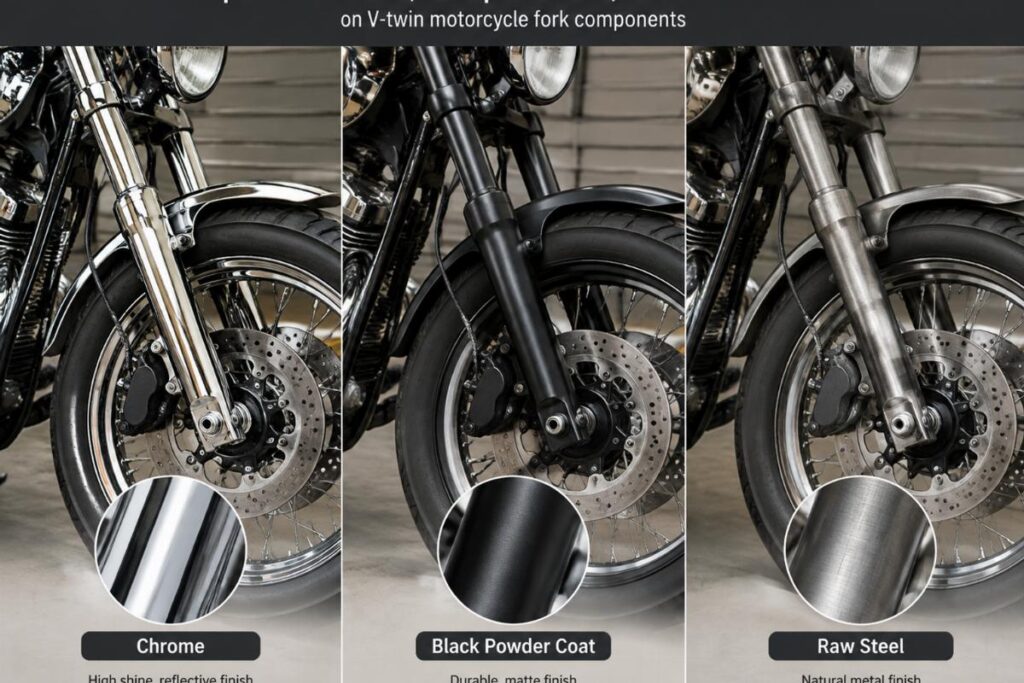
For distributors and builders, maintaining a cross-reference sheet is vital. This sheet should map aftermarket part numbers to OEM references, noting any superseded numbers. It should also specify the finish, whether chrome or black, and any left or right side distinctions. Providing fitment sheets with year ranges ensures accurate B2B orders and reduces returns. When selecting components from a Yamaha XS650 chopper front end parts guide, always confirm the year compatibility.
Conclusion
Precision measurements prevent costly fitment errors. Successful XS650 chopper builds rely on accurate data for triple tree spacing, rake, and handlebar geometry. Ignoring these details leads to returns and unhappy customers. Verify every dimension against the specific frame and model year. Use reliable cross-references and fitment sheets to ensure compatibility. This approach minimizes risk and ensures a smooth build process. For further assistance, send your model and year for a fitment check. A comprehensive Yamaha XS650 chopper front end parts guide is your best tool for avoiding these common pitfalls.