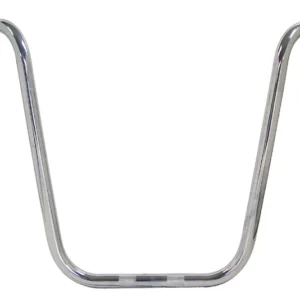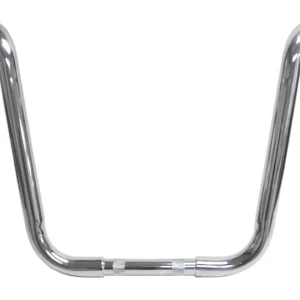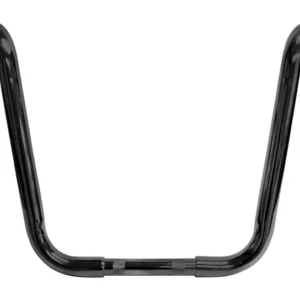

Wholesale Sissy Bar Supplier: Height, Mounts and Finishes Guide
Universal mounts do not exist for modified V-twin frames.
Selecting the right sissy bar requires verifying mount hole spacing against specific model years and choosing finishes that withstand local climate conditions, rather than just matching aesthetics. A wholesale sissy bar supplier must prioritize dimensional accuracy and plating durability over generic compatibility claims to prevent fitment failures and premature corrosion.
I learned this lesson the hard way in a humid port city where salt air eats metal for breakfast. I had secured a large order for chrome sissy bars, focusing entirely on the upright height and the unit price. The samples looked perfect in the showroom lighting. But when the container arrived at the Jebel Ali port, the local custom builders refused to unload the full batch. The issue was not the look. It was the millimeter difference in the rear fender strut holes on their modified Fat Bob frames. The standard spacing did not align with their stretched rear ends. Worse, within months, the standard chrome plating began to peel under the coastal humidity. That shipment taught me that a wholesale sissy bar supplier cannot rely on visual appeal alone. Fitment is mathematical, and durability is chemical. [NEED_CITE: common causes of aftermarket part returns in motorcycle distribution]
To avoid these costly mismatches, buyers must move beyond generic catalogs. This guide breaks down the technical specifics of height measurement, mount verification, and finish selection. It is designed for distributors and builders who need to reduce returns and warranty claims by understanding what actually determines fit and longevity.
How Do You Measure Sissy Bar Height Correctly?
Height is not just about the length of the upright; it is about the ergonomic relationship between the seat pan and the top rail.
Many buyers assume that sissy bar height is a fixed specification listed in a catalog. In reality, the perceived height changes based on the seat thickness and the angle of the rear fender. If you order based solely on the upright tube length, you may end up with a bar that sits too low for passenger comfort or too high for the desired aesthetic profile. [NEED_CITE: ergonomic standards for motorcycle passenger seating]
The correct method involves measuring from the top surface of the seat pan to the highest point of the sissy bar top rail. This ensures that the bar provides adequate back support without interfering with the rider’s head position or helmet clearance. For a wholesale sissy bar supplier, providing this reference dimension is critical. It allows the buyer to cross-check against their specific seat setup.
Consider the case of a European distributor who ordered a batch of low-profile bars. They measured the uprights correctly but failed to account for the thick, custom upholstered seats their customers preferred. The result was a sissy bar that offered no functional support. By measuring from the seat pan, you eliminate this variable.
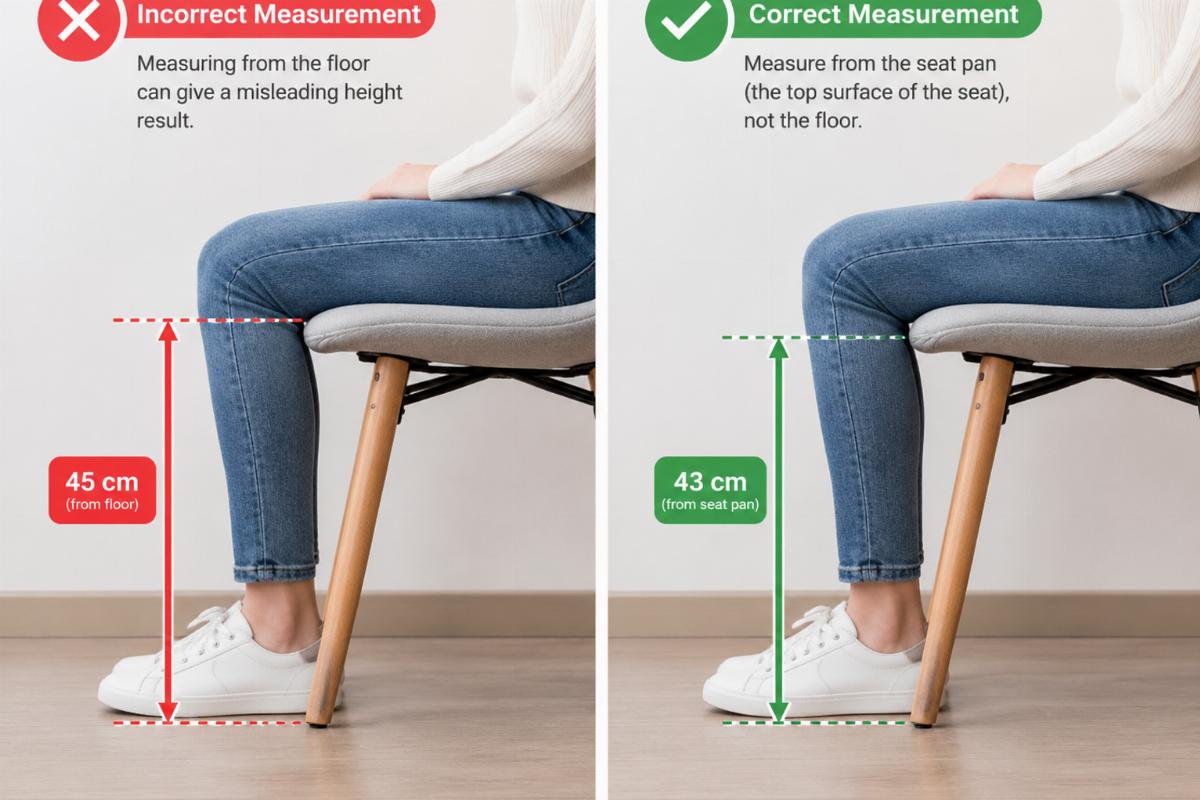
When evaluating products from a wholesale sissy bar supplier, request the total installed height relative to the seat. Do not rely on the raw tube length. This simple shift in measurement protocol ensures that the final installation meets both safety and style expectations. It also reduces the likelihood of customers returning parts because they feel the bar is too short or too tall once installed.
Which Mount Types Fit Your Specific Model Year?
Most assume universal mounts fit all Softails; truly, frame modifications and year-specific changes alter hole patterns.
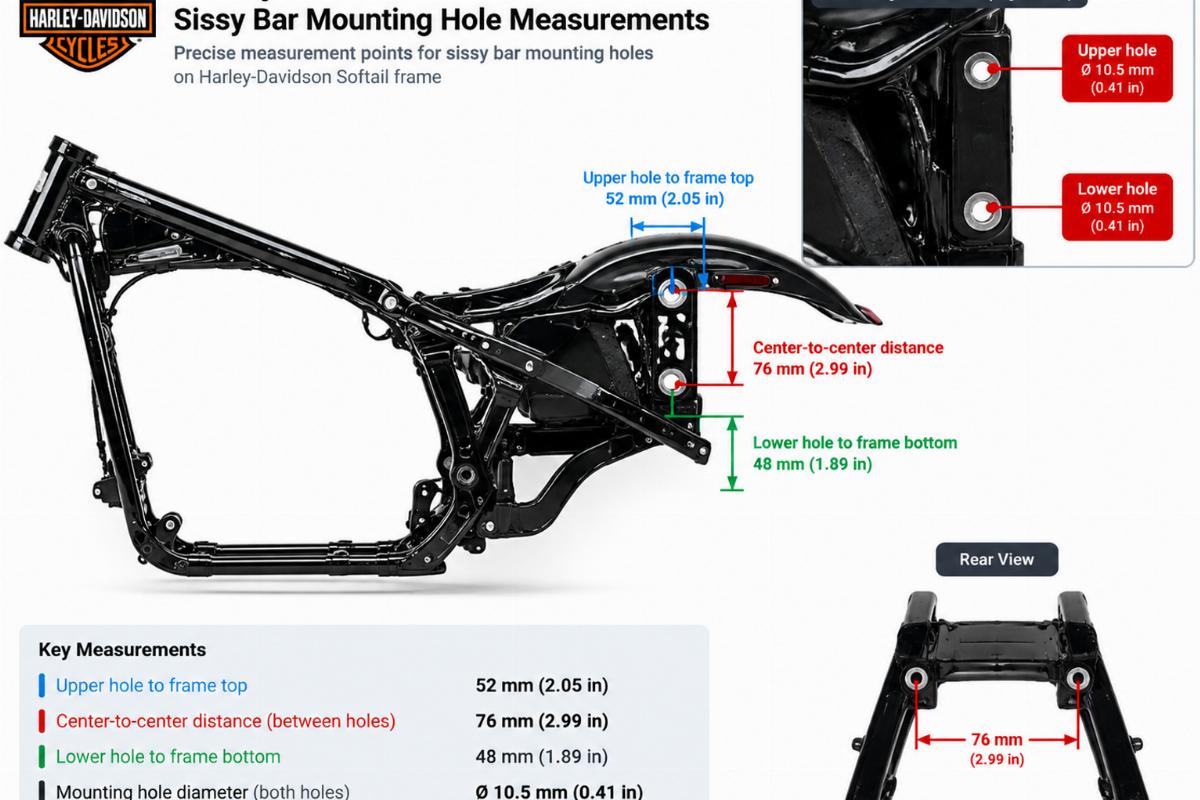
The most common reason for fitment failure is the assumption that a sissy bar designed for a 2006 Softail will fit a 2015 model without modification. Harley-Davidson has made subtle but significant changes to frame geometry and mounting points over the decades. Even within the same model family, such as the Dyna or Sportster, the hole spacing can vary by several millimeters. [NEED_CITE: factory service manual variations for Harley-Davidson Softail models]
A wholesale sissy bar supplier must provide detailed fitment sheets that specify the center-to-center distance of the mounting holes in millimeters. Using calipers to verify this distance on the recipient frame is the only way to guarantee a match. Relying on visual inspection or generic “fits most” labels is a recipe for disaster.
| Mount Characteristic | Standard OEM Frame | Modified/Stretch Frame | Custom Chopper Build |
|---|---|---|---|
| Hole Spacing | Fixed per model year | Variable, often wider | Highly irregular |
| Frame Neck Angle | Standard factory spec | May be altered | Steep or raked |
| Fitment Risk | Low if year matches | High, requires measurement | Very high, custom fab needed |
| Verification Method | Cross-reference OEM number | Measure hole-to-hole | Template required |
I once encountered a batch of sissy bars that failed to install on a set of modified frames because the rear struts had been widened by a fraction of an inch. The bars were perfectly manufactured for stock dimensions, but they were useless for the custom application. This highlights why a wholesale sissy bar supplier should encourage buyers to measure their specific frames before placing bulk orders.
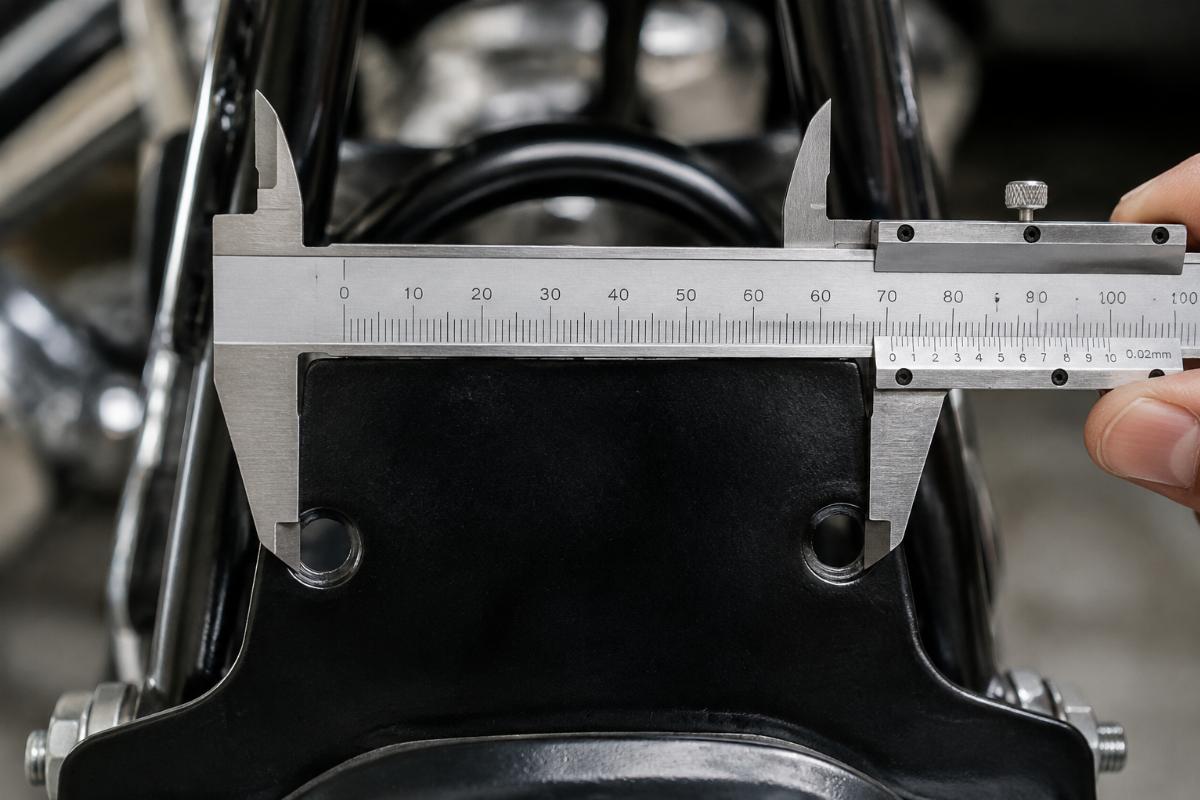
For distributors, this means maintaining a library of fitment data that goes beyond simple model names. It requires knowing which years share the same frame molds and which years introduced new mounting hardware. When a buyer asks a wholesale sissy bar supplier for compatibility info, the answer should always include the specific hole spacing and the model years verified against that spacing.
Chrome vs. Black: Which Finish Lasts Longer?
Many prioritize low cost over plating quality; however, poor adhesion leads to higher long-term replacement costs.
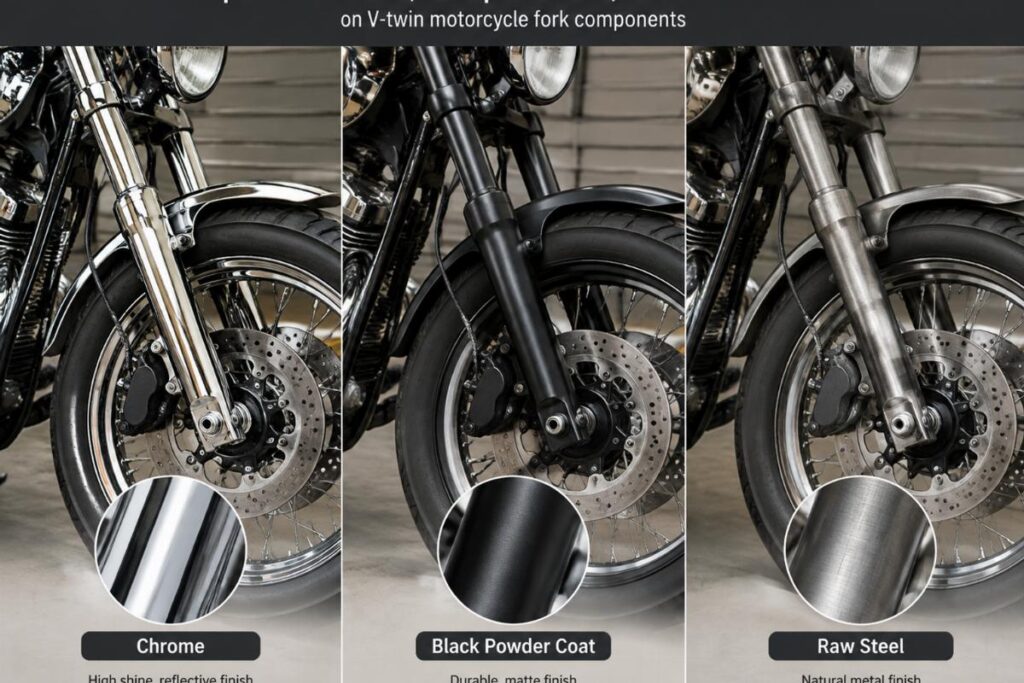
The choice between chrome and black finish is often treated as a purely aesthetic decision. In reality, it is a decision about environmental resistance and maintenance. Chrome plating, when done correctly, offers excellent corrosion resistance. However, cheap chrome jobs suffer from poor adhesion and thin plating layers, leading to peeling and rust spots, especially in humid or salty environments. [NEED_CITE: industry standards for metal plating durability]
Black finishes, particularly powder coating or high-quality black oxide, can offer superior resistance to chipping and fading if applied correctly. But they are not immune to corrosion if the underlying metal is not properly prepped. A wholesale sissy bar supplier should be able to provide information on the plating process used, such as the thickness of the nickel layer under the chrome or the type of powder coat used for black bars.
In my early days, I sourced chrome bars that looked brilliant out of the box. But after a few months in a coastal climate, they began to bubble and peel. The salt spray had penetrated the porous chrome and attacked the base metal. Switching to a supplier who provided details on their salt spray testing protocols changed everything. The new bars, while slightly more expensive, lasted years without showing signs of degradation.
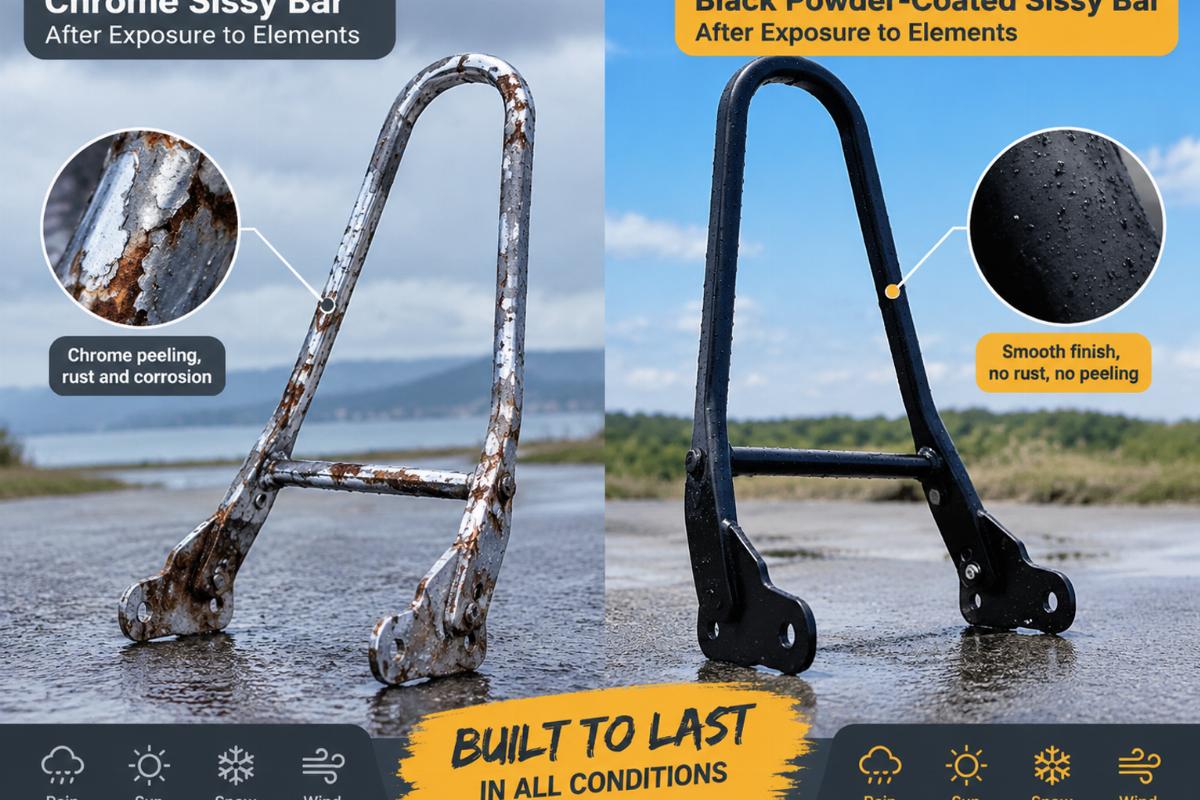
When sourcing from a wholesale sissy bar supplier, ask about the corrosion resistance testing. Do not just ask if it is chrome or black. Ask how the finish holds up under stress. This level of detail separates a reliable partner from a commodity vendor. It ensures that the products you sell will not damage your reputation with end-users who expect longevity.
What Documentation Ensures Fitment Accuracy?
Require fitment sheets and cross-reference lists before bulk ordering.
The final safeguard against fitment errors is comprehensive documentation. A professional wholesale sissy bar supplier does not just ship parts; they ship data. This includes fitment sheets that list compatible model years, cross-reference lists that map aftermarket part numbers to OEM equivalents, and inspection records that confirm quality control checks. [NEED_CITE: best practices for aftermarket parts documentation]
Without these documents, distributors are left guessing. They may list a part as fitting a wide range of models, only to face returns from customers with specific year variants that do not match. By requiring detailed fitment sheets, buyers can update their own catalogs with accurate information. This reduces customer confusion and minimizes the administrative burden of handling returns.
I now insist on receiving packing photos and inspection records for every order. This transparency allows me to verify that the correct items were shipped and that they meet the specified quality standards before they reach the end customer. It is a small step that prevents large problems. A wholesale sissy bar supplier who provides this level of documentation demonstrates a commitment to accuracy and customer success.
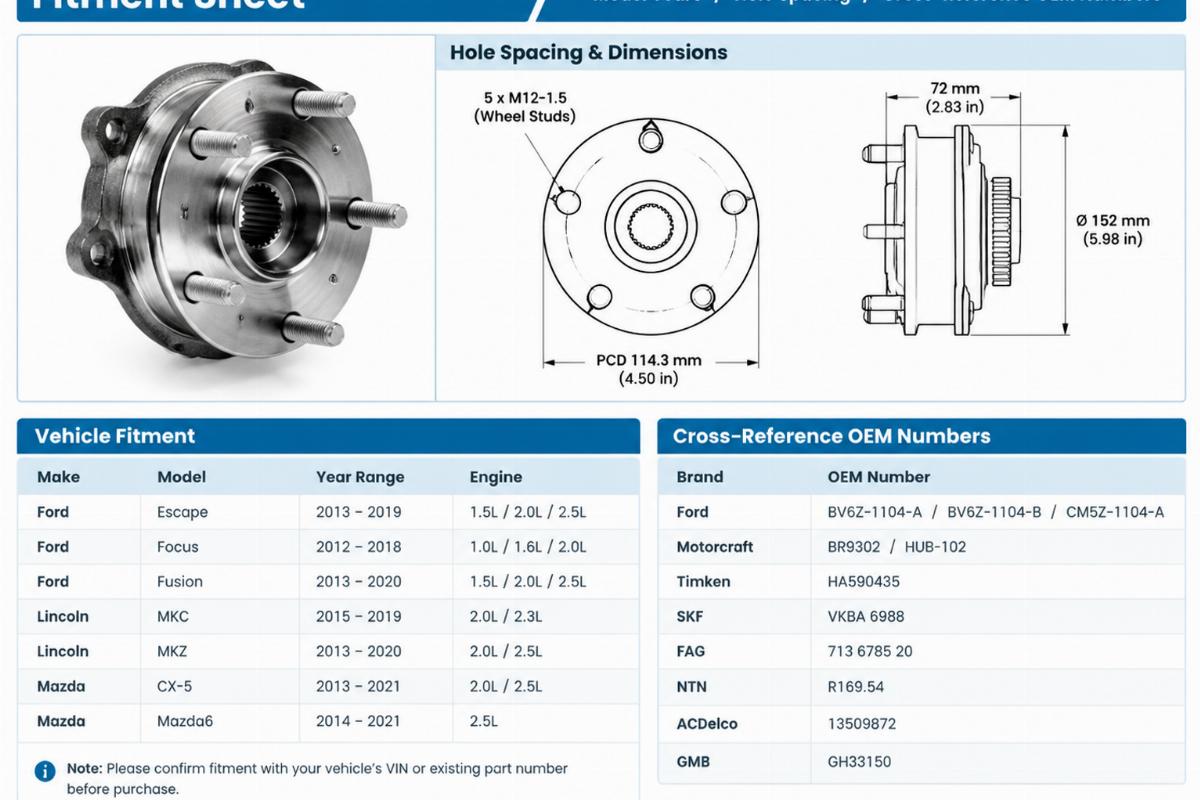
For buyers, this means treating documentation as a core part of the product. Do not accept vague descriptions. Demand precision. Ask for the specific OEM numbers that the part replaces. Verify the hole spacing data. Check the finish specifications. This diligence ensures that the parts you distribute are not just visually appealing but technically sound.
Conclusion
Fitment accuracy and finish durability are non-negotiable for a successful sissy bar line.
Selecting the right product involves more than picking a style. It requires verifying mount hole spacing against specific model years and choosing finishes that withstand local climate conditions. A wholesale sissy bar supplier who prioritizes these technical details helps distributors reduce returns and build trust with their customers. By focusing on precise measurements and robust plating, you ensure that every bar installed is a perfect fit that lasts.