
Most importers think lower declared value saves money; truly, wrong HS code causes disproportionate penalty and demurrage costs.
Correct HS classification determines landed cost and clearance speed; misclassification leads to penalties and storage fees, not just higher tax. For V-twin motorcycle parts, distinguishing between chassis components, electrical systems, and bodywork is the primary factor in avoiding border delays in both the US and EU markets.
I spent my early years on the assembly line, fitting springer front ends by hand before moving into international trade. The transition from workshop floor to export documentation revealed a harsh reality: customs officers do not care about your production quality if your paperwork is ambiguous. I recall a specific shipment of hydraulic fork tubes destined for Los Angeles. The forwarding agent classified them under general hardware codes rather than specific motorcycle part classifications. The result was not merely a tax adjustment. The cargo sat in Long Beach port for weeks, accruing storage fees that exceeded the potential duty savings from the misclassification. That incident shifted my focus entirely. Now, the first step in any order preparation is verifying the tariff codes against current US and EU regulations. This approach ensures that import duty motorcycle parts US EU compliance is handled proactively, preventing profit from evaporating into port滞纳金.
Understanding these regulatory nuances is critical for purchasing managers who need clarity on tariff codes and compliance to avoid border delays. The following sections break down the specific requirements for V-twin components, highlighting where errors commonly occur and how proper documentation mitigates risk.
Why Does HS Code Accuracy Matter More Than Price?
Misclassification triggers audits and storage fees that exceed potential duty savings.
Many buyers assume that declaring a lower commercial value is the most effective way to reduce costs. However, customs authorities in both the United States and the European Union use automated risk assessment systems that flag inconsistencies between product descriptions and their assigned codes. When a discrepancy is found, the shipment is held for manual inspection. This process halts the supply chain and incurs daily demurrage charges.
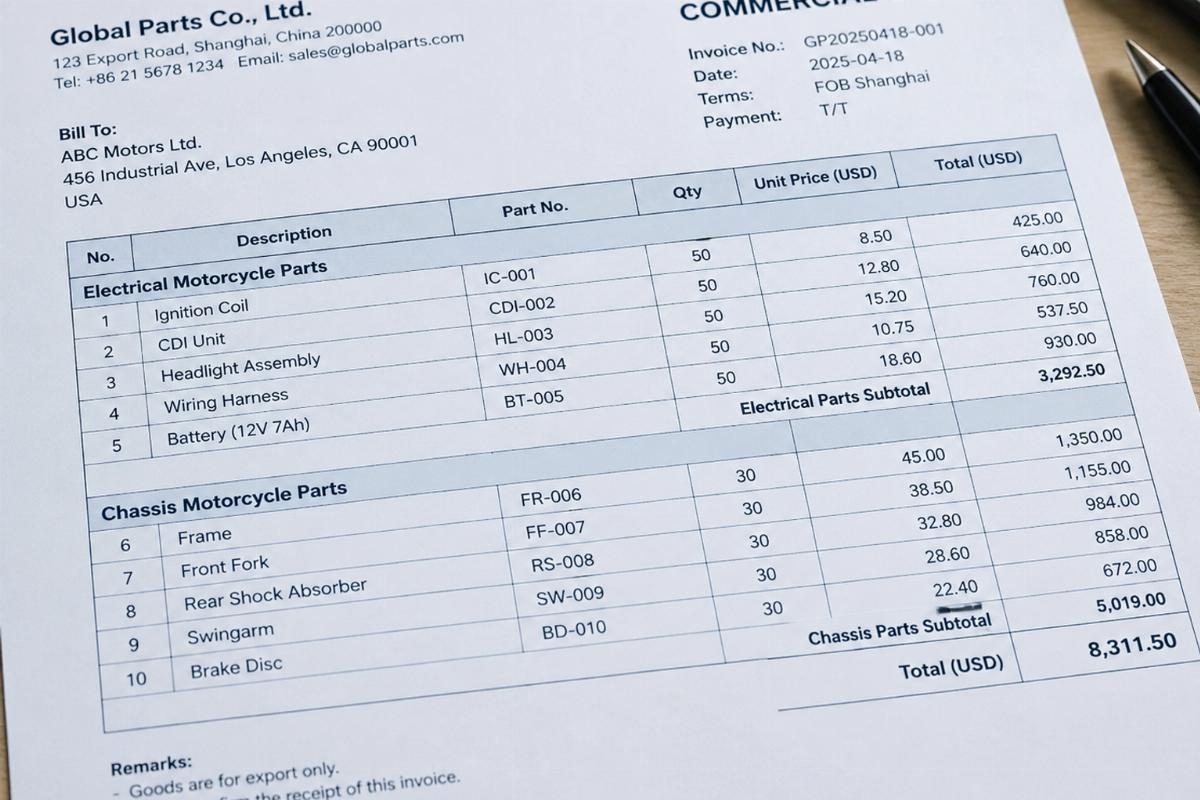
The core issue lies in the specificity of the Harmonized System. A “motorcycle part” is not a single category. Suspension components, electrical wiring, and body panels fall under distinct chapters with different duty rates. For instance, a springer front end involves complex mechanical assemblies that must be distinguished from simple steel brackets. If a mixed shipment contains both electrical regulators and chassis hardware, they require separate line items on the commercial invoice. Combining them under a single generic code invites scrutiny.
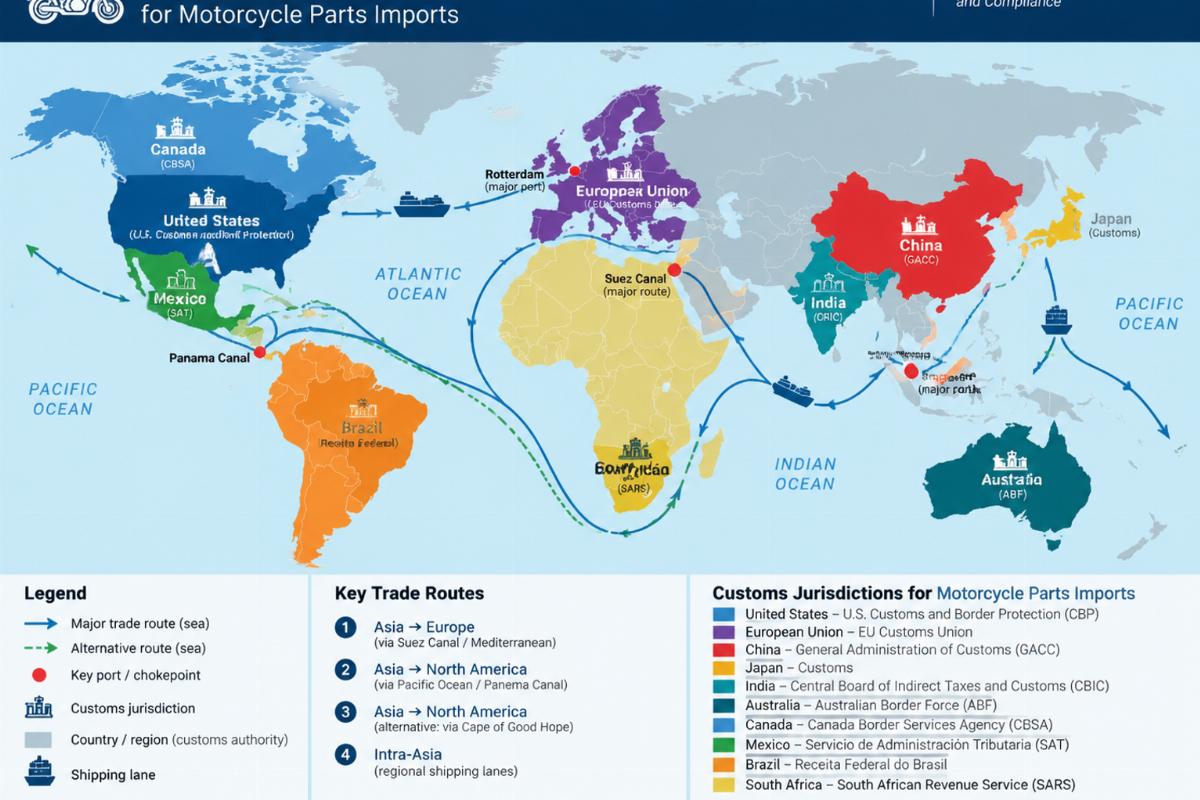
A common error involves aftermarket suspension parts. I have seen shipments of springer legs and rockers delayed because they were declared without specific motorcycle part codes. In Rotterdam, such declarations often trigger physical inspections to verify if the goods match the description. The delay disrupts inventory planning for distributors and repair shops. To avoid this, each component type must be listed with its precise technical description. This level of detail supports accurate duty assessment and demonstrates compliance intent.
When dealing with import duty motorcycle parts US EU regulations, remember that the penalty for error is not just financial. It is operational. A two-week delay can mean missing a seasonal sales window or leaving a custom build incomplete. Therefore, accuracy in classification is a strategic priority, not just an administrative task.
What Are the Key HS Codes for V-Twin Parts?
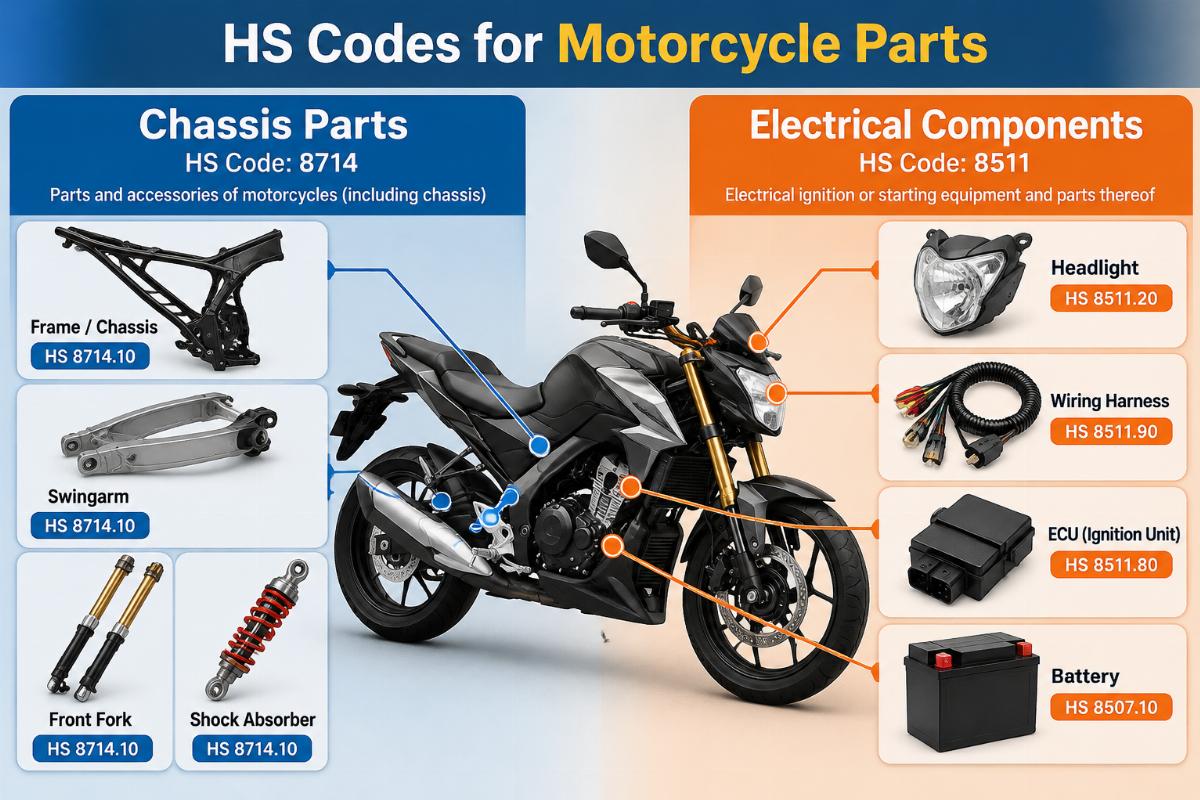
Distinguish between chassis (8714), electrical (8511), and body components for accurate filing.
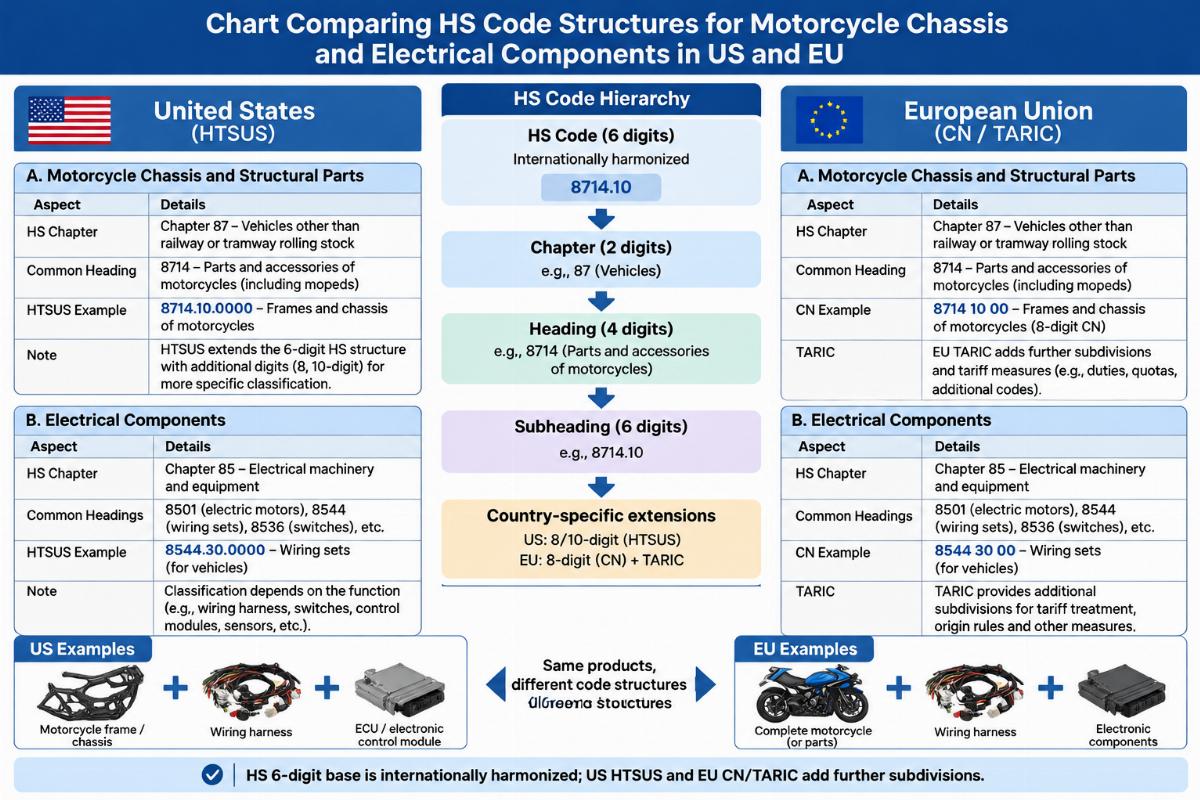
The Harmonized Tariff Schedule in the US and the Combined Nomenclature in the EU share a common structure up to the first six digits. For motorcycle enthusiasts and importers, Chapter 87 is the primary reference point. However, the devil is in the details. Parts of motorcycles generally fall under heading 8714. This includes frames, forks, wheels, and other chassis components. Yet, many V-twin accessories do not fit neatly here.
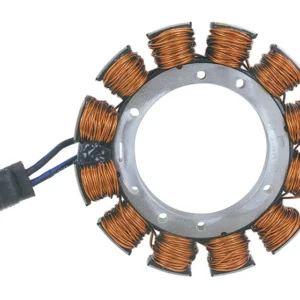
Electrical components, such as voltage regulator rectifiers and stator kits, belong to Chapter 85. Specifically, heading 8511 covers ignition apparatus and starting equipment. Misclassifying a stator kit as a general motorcycle part under 8714 is a frequent mistake. This error can lead to incorrect duty application and potential fines if discovered during an audit. Similarly, handlebars and control cables may have different classifications depending on whether they are considered part of the steering mechanism or separate accessories.
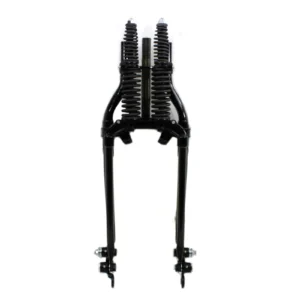
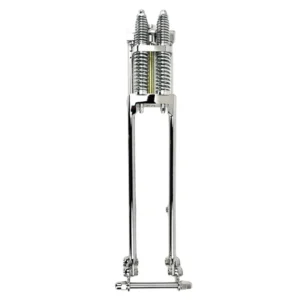
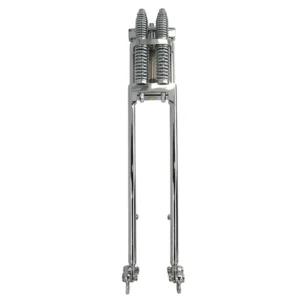
For springer front ends, which are a core part of our production, the classification depends on whether they are imported as complete assemblies or individual parts. Complete assemblies might be treated differently than loose rockers, springs, or legs. It is essential to consult the latest tariff schedules for the specific destination country. The US HTS Chapter 87 and EU CN Code 8714 provide the framework, but national notes can alter the interpretation.
| Component Type | Primary HS Heading | Description Notes |
|---|---|---|
| Chassis Parts | 8714 | Frames, forks, swingarms, and structural components. |
| Electrical Systems | 8511 | Ignition apparatus, starters, generators, and regulators. |
| Body Components | 8714 / Other | Fenders, sissy bars, and non-structural aesthetic parts. |
This table illustrates the broad categories. Note that specific subheadings vary by country. For example, the EU may have additional subdivisions for environmental or safety compliance that do not exist in the US schedule. Importers must verify the full ten-digit code for the US and the eight-digit code for the EU to ensure precision. Providing these correct codes with your samples helps buyers clear customs smoothly. This practice aligns with the goal of minimizing friction in the supply chain for import duty motorcycle parts US EU.
How Do US and EU Duty Structures Differ?
Compare ad valorem rates and specific tariffs for aftermarket suspension and engine parts.
While the HS code system is global, the application of duties is national. The United States and the European Union have different approaches to taxing imported motorcycle components. In the US, duties are often ad valorem, meaning a percentage of the declared value. However, certain categories may be subject to additional tariffs based on country of origin. These anti-dumping duties can significantly increase the landed cost if not anticipated.
The EU operates under the Common Customs Tariff. Duty rates can vary depending on trade agreements and specific product classifications. For aftermarket parts, the distinction between original equipment and replacement parts can sometimes influence the rate, although most aftermarket components are treated uniformly. It is crucial to note that the EU also imposes Value Added Tax (VAT) upon import, which is calculated on the total landed cost including duty. This compounding effect makes accurate valuation even more critical.
Another key difference lies in the treatment of complete assemblies versus kits. In some cases, importing a complete springer front end may attract a different rate than importing the individual components separately. This is known as the “essential character” rule in customs valuation. If a kit contains all necessary parts to assemble a functional unit, it may be classified as the complete unit. Importers should be aware of this when structuring their orders.
Country of origin plays a significant role in both jurisdictions. Parts manufactured in countries with specific trade restrictions may face higher tariffs. Verifying the origin status of each component is a necessary step in compliance. This is particularly relevant for electrical parts sourced from various manufacturing partners. Ensuring that all suppliers provide accurate origin declarations prevents surprises at the border.
Understanding these structural differences allows purchasing managers to forecast costs more accurately. It also helps in deciding whether to ship components separately or as assembled units. The goal is to optimize the supply chain while remaining fully compliant with import duty motorcycle parts US EU regulations.
What Documentation Prevents Customs Delays?
Essential papers include detailed fitment sheets, material declarations, and correct commercial invoices.
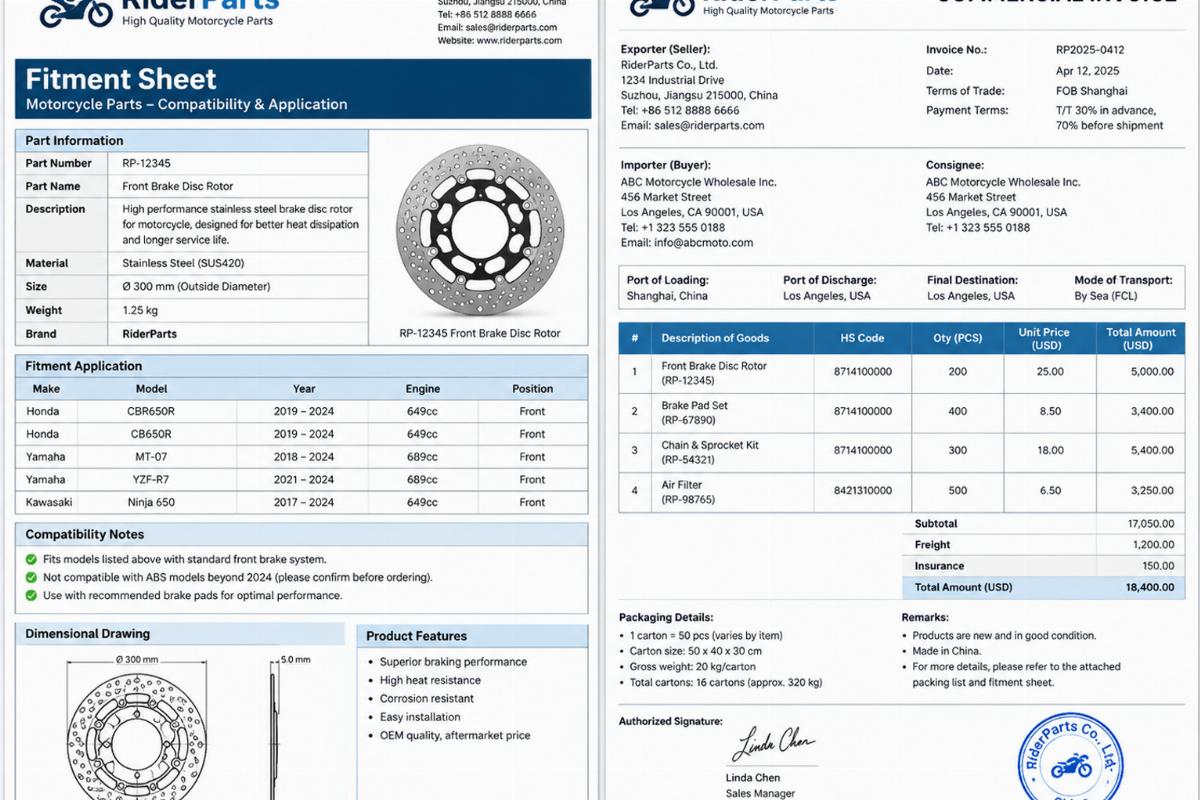
Documentation is the backbone of smooth customs clearance. A commercial invoice alone is often insufficient for complex mechanical parts. Customs officers need to understand what the product is, what it is made of, and what vehicle it fits. This is where detailed fitment sheets become invaluable. By providing a document that lists the specific Harley-Davidson or Yamaha XS650 models a part fits, you remove ambiguity.
Material declarations are another critical element. For chrome-plated parts, specifying the base metal and plating thickness can help in classification. Some jurisdictions have specific rules for coated metals. Including this information proactively answers questions before they are asked. Additionally, cross-reference sheets that link aftermarket part numbers to OEM numbers (marked as reference only) provide further clarity. This helps customs officials verify that the goods are indeed replacement parts for specific motorcycles.
Inspection records and packing photos also serve as supporting evidence. They demonstrate that the goods match the description on the invoice. In case of a dispute, having a paper trail that includes pre-shipment verification can expedite resolution. I always ensure that samples sent for fitment confirmation are accompanied by these documents. This habit carries over to bulk orders, creating a consistent standard of compliance.
Risk Checklist for Documentation:
- Ensure HS codes are listed on every line item.
- Include detailed fitment sheets with model years.
- Provide material declarations for plated or treated surfaces.
- Attach cross-reference sheets for OEM numbers (reference only).
- Include inspection records and packing photos for high-value shipments.
By adopting this comprehensive documentation strategy, importers can reduce the likelihood of manual inspections. It shows a commitment to transparency and compliance. This approach is particularly effective for mixed shipments containing various types of V-twin parts. Each item is clearly identified, reducing the cognitive load on customs brokers and officers. Ultimately, this leads to faster clearance and lower overall logistics costs for import duty motorcycle parts US EU.
Conclusion
Accurate classification and thorough documentation are the keys to efficient customs clearance.
Navigating the complexities of international trade requires more than just competitive pricing. It demands a deep understanding of regulatory requirements and a proactive approach to compliance. By focusing on correct HS codes, understanding regional duty structures, and providing detailed documentation, importers can avoid costly delays and penalties. This strategy ensures that the supply chain remains resilient and efficient, allowing businesses to focus on their core operations.