
Wholesale Springer Front Ends: Shipping Motorcycle Front Ends Overseas
Bubble wrap is not packaging. It is a surface protector that offers zero structural support against the crushing forces of ocean freight.
Successful overseas shipping of long, heavy front ends relies on rigid crating and precise pallet planning, not just basic wrapping, to prevent bending and finish damage during transit. Without internal bracing and reinforced corners, even high-quality chrome springer assemblies will arrive with bent necks or scratched legs, leading to immediate rejection by distributors.
I learned this lesson the hard way in Chicago. A container of springer front ends arrived at a trade show booth, but the wooden crates had splintered at the corners during handling. The chrome legs were covered in deep scratches, and two assemblies had visible bends in the neck area. The buyer refused the entire shipment. That loss was not due to poor manufacturing; it was due to poor logistics planning. Since then, I have adjusted every aspect of how we prepare shipping motorcycle front ends overseas to ensure that what leaves the factory floor arrives in the same condition.
The difference between a successful delivery and a costly claim often comes down to understanding the physics of long, heavy metal components in transit. This guide breaks down the specific packing methods, pallet strategies, and documentation required to protect your inventory.
Why Do Front Ends Arrive Damaged?
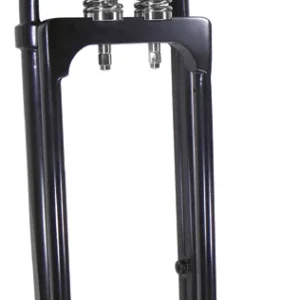
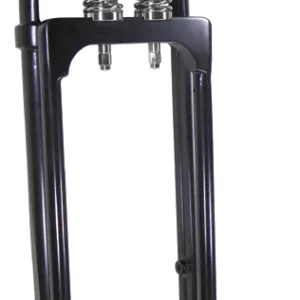
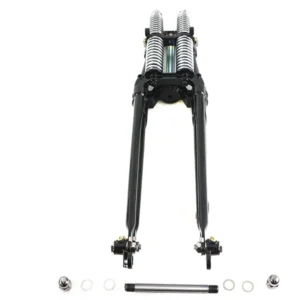
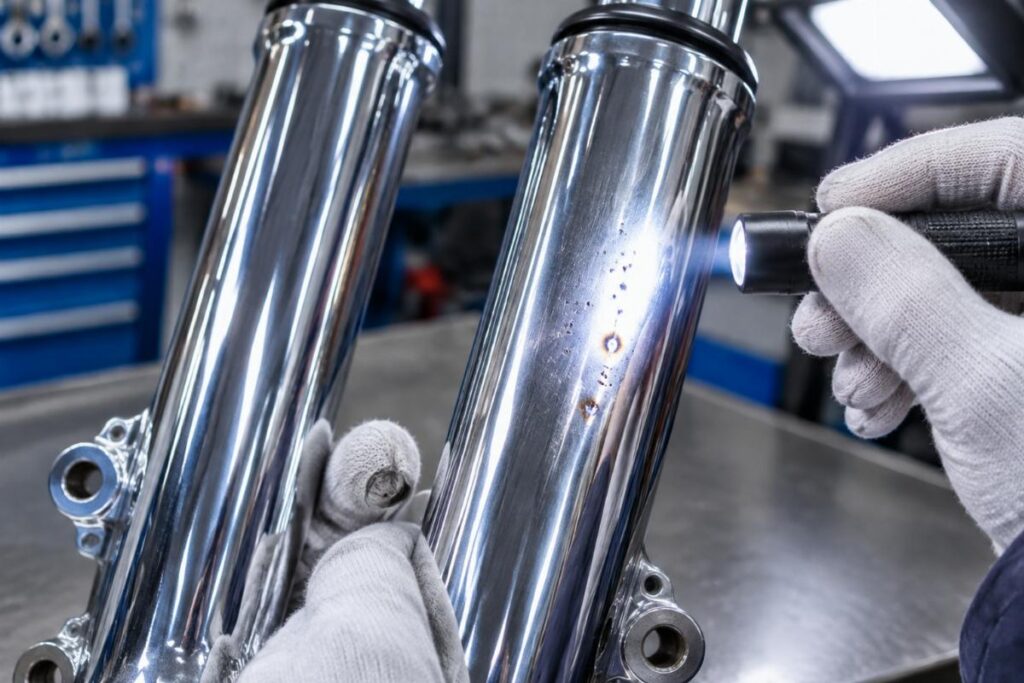
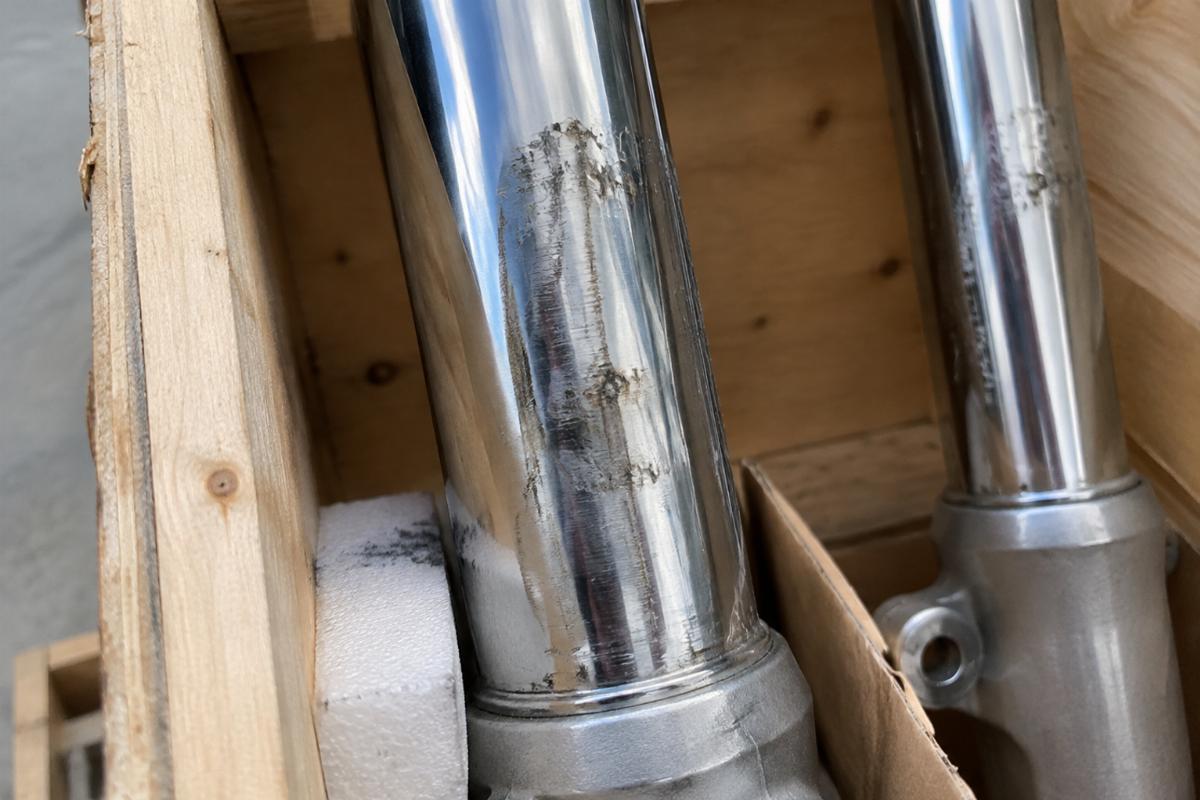
Structural bending and finish abrasion are the primary risks during ocean transit. A springer front end is not a compact box; it is a long, asymmetrical assembly with protruding legs and heavy springs. When placed in a standard cardboard box or a weak wooden crate, it becomes a lever. Any impact on the corner of the crate transfers force directly to the weakest point of the assembly, usually the neck or the lower leg mounts.
Most importers assume that thick foam or bubble wrap is sufficient. This is a critical error. Foam compresses under sustained pressure, such as when other cargo is stacked on top of your pallet. Once the foam compresses, the metal parts touch the crate walls. If the crate shifts during loading or unloading, the metal grinds against the wood, destroying the chrome or black powder coat finish. [NEED_CITE: industry standards for packaging heavy metal goods]
The second major issue is vibration. Ocean containers experience constant low-frequency vibration. If the front end is not securely blocked within the crate, it will micro-shift thousands of times during the voyage. This movement wears away protective coatings and can loosen hardware. For shipping motorcycle front ends overseas, the goal is not just to cushion the part, but to immobilize it completely within a rigid structure.
How Should You Pack Springer Forks?
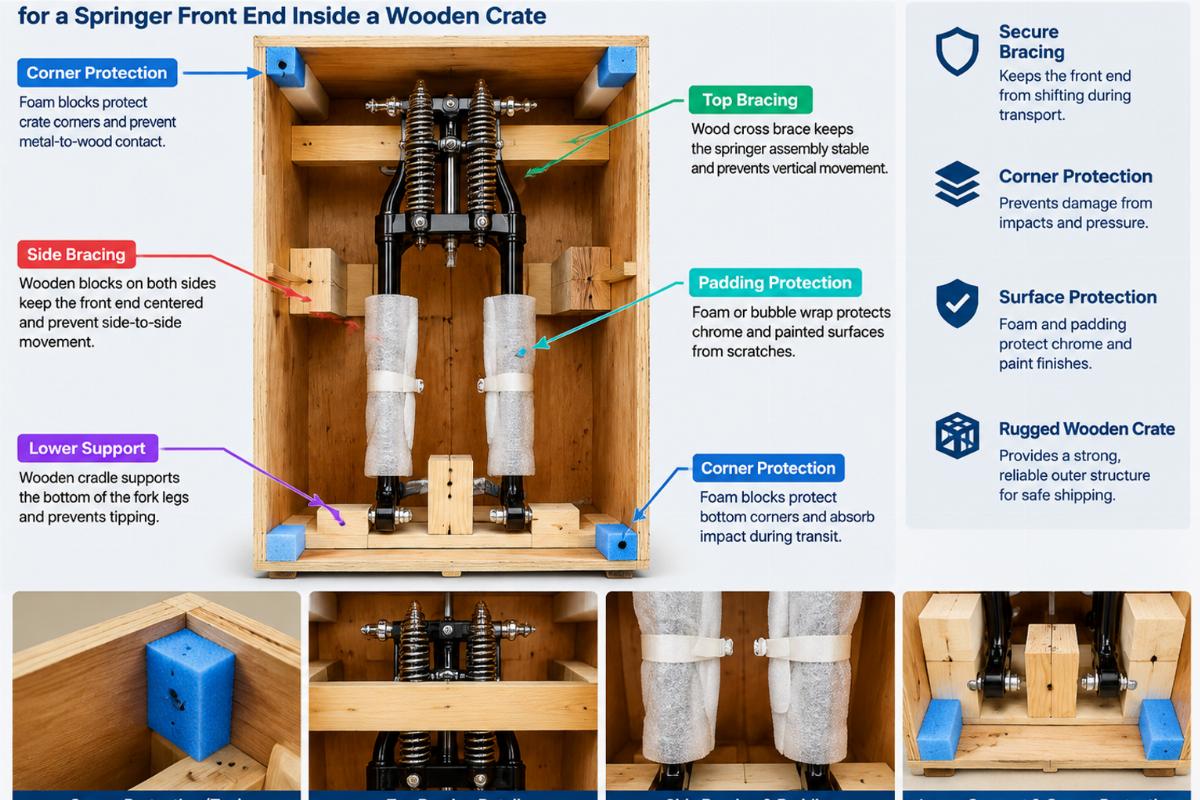
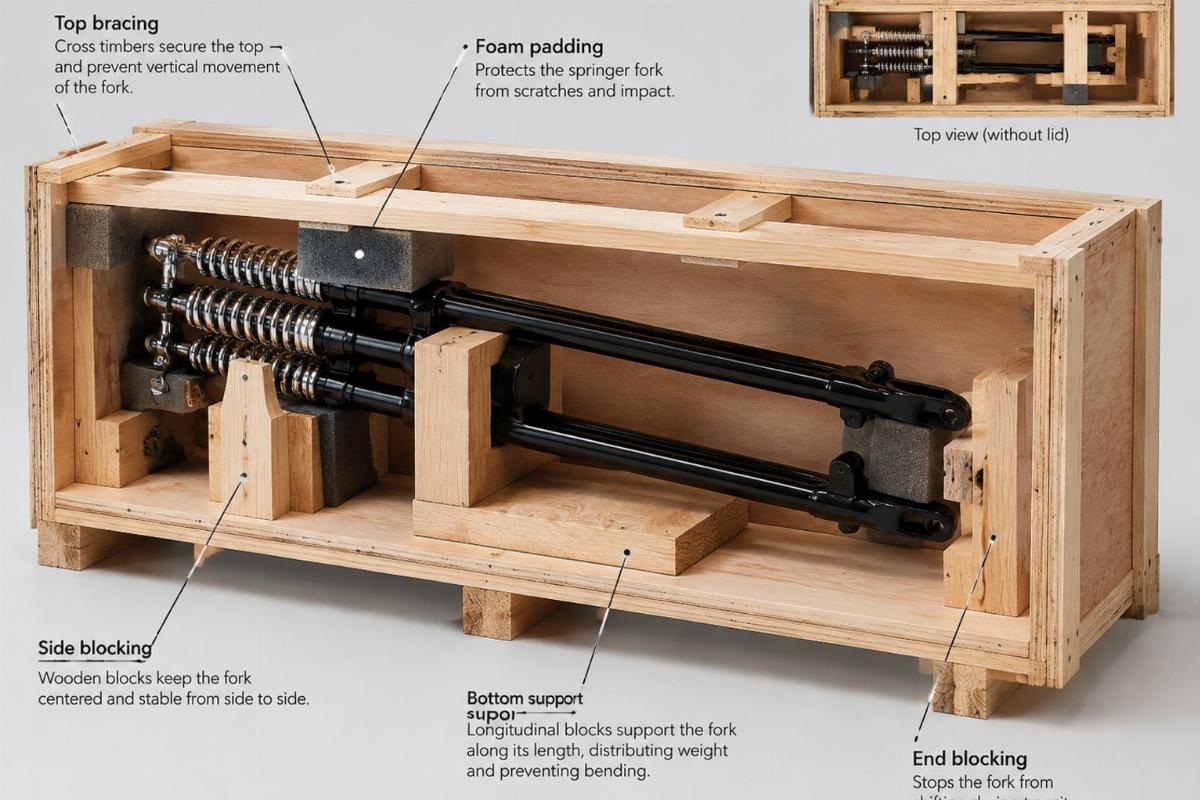
Rigid crating with reinforced corners and internal bracing is non-negotiable for long components. The crate must be constructed from plywood or solid wood, not particle board, which lacks the shear strength needed for heavy loads. The corners are the most vulnerable points. If a forklift tine hits a corner, the entire crate can collapse if the joints are not reinforced with metal brackets or extra lumber.
Internal bracing is equally important. The front end should never float in the center of the box. It must be secured to the base of the crate using wooden blocks that match the contour of the frame neck and lower legs. These blocks prevent lateral movement. Additionally, a top brace should be added to prevent vertical shifting. This creates a “cage” around the part, ensuring that any external force is absorbed by the crate, not the motorcycle component.
When preparing for shipping motorcycle front ends overseas, consider the weight distribution. Springer assemblies are heavy. The base of the crate must be thick enough to support the weight without sagging. If the base sags, the crate becomes unstable during stacking. We use double-layered plywood bases for all full-size springer kits to ensure stability.
What Are the Best Palletizing Strategies?
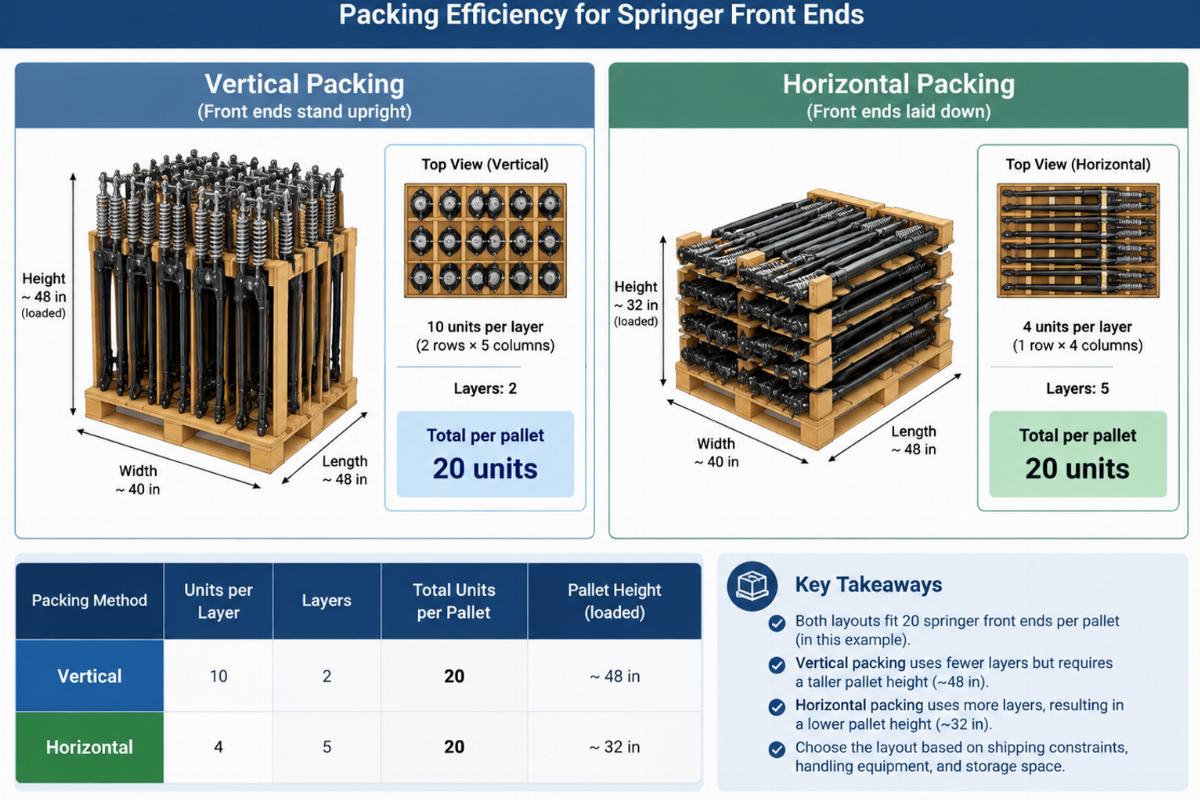
Mix vertical and horizontal placements based on frame geometry to optimize container space. Many buyers assume that vertical packing is always safer because it mimics the installed position on the motorcycle. However, improper blocking in vertical positions can cause more frame neck damage than secured flat packing. If the vertical block is too narrow, the weight of the upper section can torque the neck during a sudden stop.
Flat packing is generally safer for the structural integrity of the neck, provided there is sufficient internal bracing to prevent bending. The key is to lay the assembly flat on a wide, supportive base. To save space, you can stack multiple flat-packed units if they are separated by thick plywood dividers. This method allows for higher stacking in the container without risking crush damage.
For mixed orders, such as forks combined with hardware boxes, custom pallet sizing is essential. Standard pallets often leave unused space, which allows cargo to shift. By building a crate that matches the exact footprint of the contents, you eliminate voids. This optimization increases volume efficiency and reduces the risk of movement. When planning shipping motorcycle front ends overseas, calculate the pallet footprint based on the fork length and triple tree width to maximize cube usage without compromising safety.
Which Documents Prevent Customs Delays?
Accurate HS codes and detailed fitment sheets ensure smooth clearance and verification. Customs officials in many countries are strict about motorcycle parts, especially those that could be interpreted as safety-critical. Using the wrong HS code can lead to inspections, delays, and additional fees. The correct classification for motorcycle steering components varies by region, so it is vital to verify the code with your freight forwarder before shipping. [NEED_CITE: standard HS code classification for motorcycle steering components]
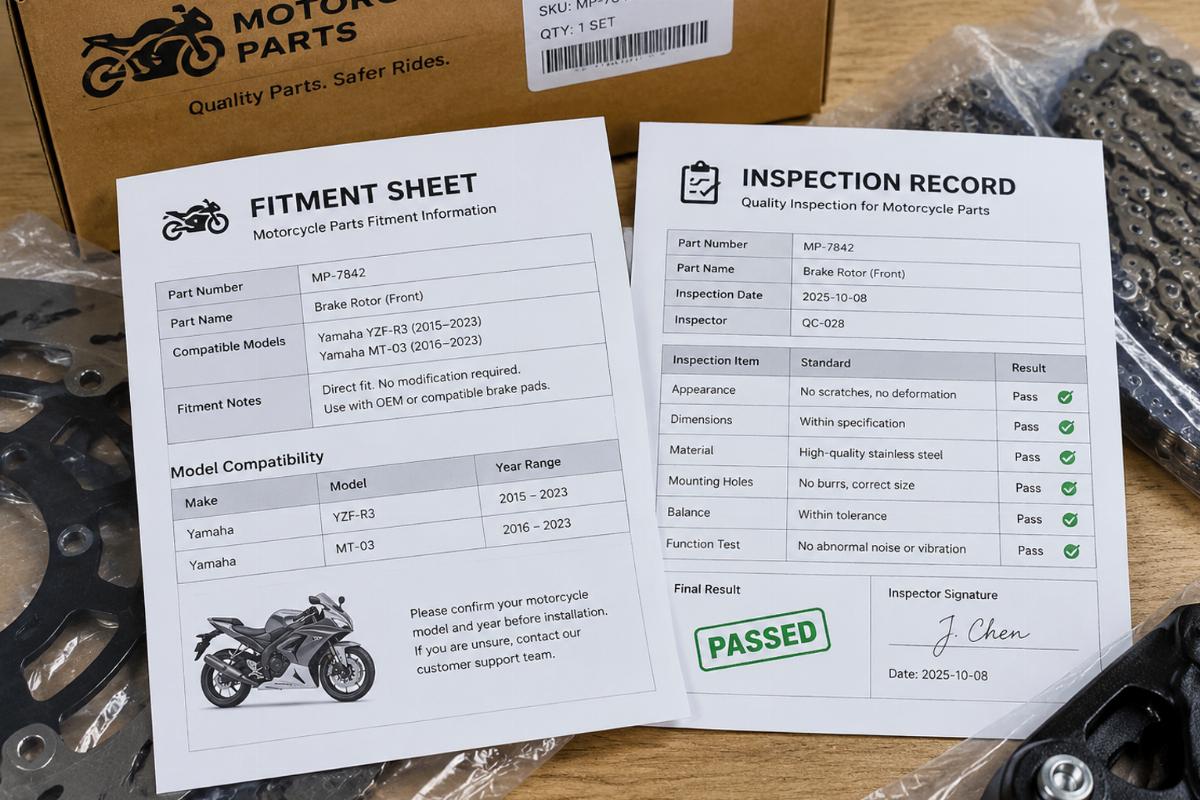
Beyond customs, documentation is crucial for the buyer. A fitment sheet that lists the specific model years and compatibility details helps the distributor verify the order upon arrival. This reduces the likelihood of returns due to fitment errors. An inspection record, signed by the quality control team, provides proof that the parts were in good condition before packing.
We also include packing photos in our documentation package. These photos show the condition of the parts and the packing method used. If damage occurs during transit, these photos serve as evidence for insurance claims. They prove that the item left the facility in perfect condition, shifting the liability to the carrier. For shipping motorcycle front ends overseas, this level of documentation is not just administrative; it is a risk management tool.
Conclusion
Protecting your investment requires more than just good parts; it demands rigorous logistics discipline. By focusing on rigid crating, strategic palletizing, and complete documentation, you can significantly reduce the risk of damage and delays. Proper preparation ensures that your shipping motorcycle front ends overseas process is smooth, cost-effective, and reliable for your customers.