
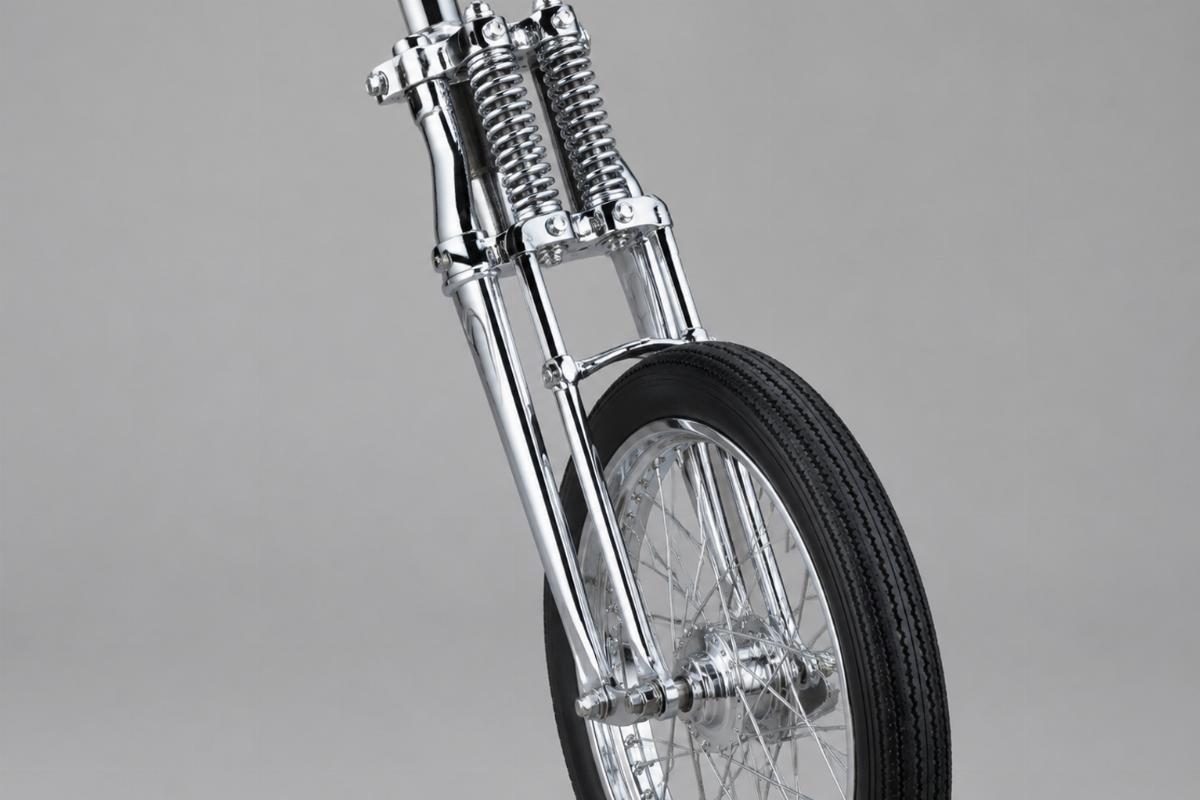
Pre-Production Sample Narrow Springer Fork Assembly 2″ Over Stock Chrome
Front-end depth for custom builds — This narrow springer fork assembly is offered 2″ over stock, allowing builders to verify custom ride height and steering geometry before committing to a full batch.
Product Specification
| Parameter | Value |
|---|---|
| Part Type | Custom Springer Fork Assembly |
| Finish | Chrome |
| Length | 2″ over stock |
| Axle Hole | 3/4″ |
| Top Tree | without ears |
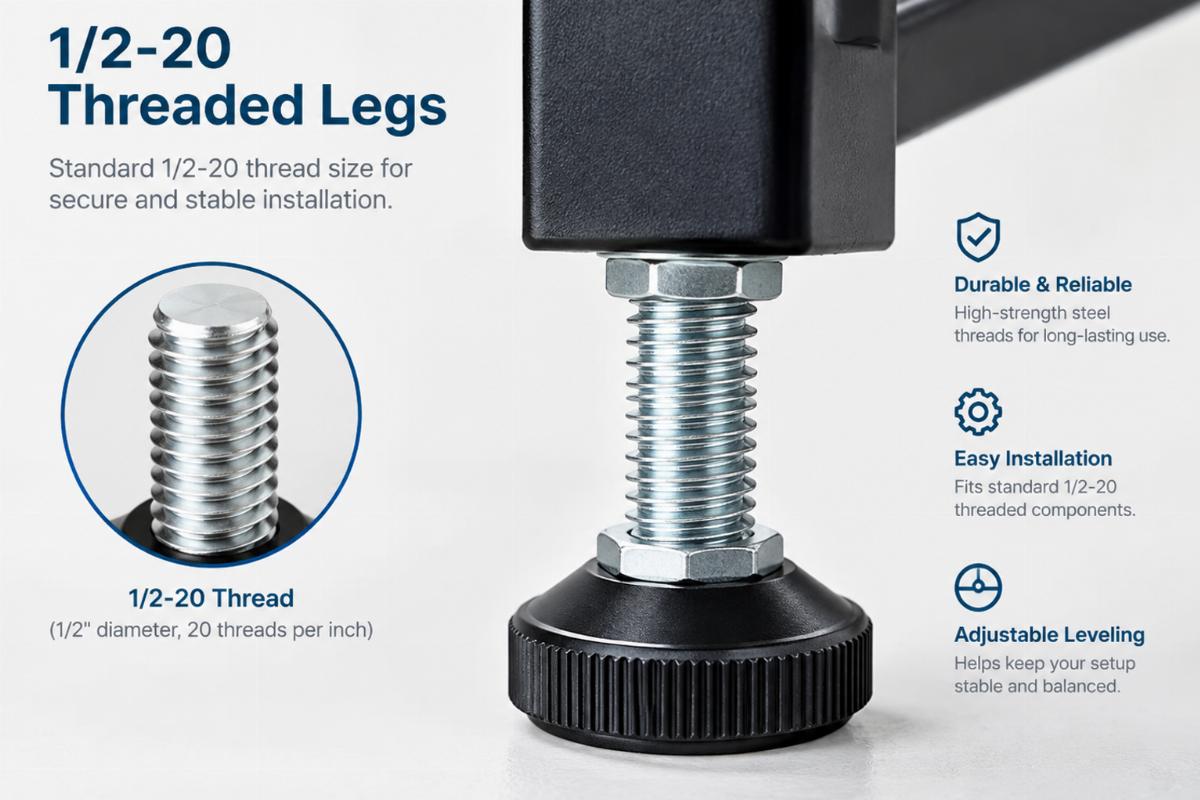
| Thread (Legs) | 1/2″-20″ (drilled and tapped to mount risers) |
| Rockers | same on each side, not offset on right side |
| Condition | pre-production sample with cosmetic imperfections only (excess plating in threaded and bearing holes, marks from installation test and fitment); no physical defects such as cracks or holes |
Fitment
| Platform | Year Range | Notes |
|---|---|---|
| Not stated | Not stated | 2″ over stock length |
Independent aftermarket part. Not manufactured, sold or endorsed by any motorcycle manufacturer. Model names and OEM numbers are used for fitment reference only.
Verifying Geometry on a 2″ Over Stock Narrow Springer
Adding length changes rake and trail, which alters how the front end tracks through corners.
When a builder swaps to a 2″ over stock narrow springer fork assembly, the visual stance changes immediately, but the steering geometry shifts just as much. Without confirming how the extra length interacts with the specific frame neck angle, the bike can feel vague at speed or require excessive effort to turn. We always advise checking the frame geometry charts before finalizing the length to ensure the custom build handles as intended [NEED_CITE: frame geometry charts by model year and rake angle].
Checking Top Tree Spacing and Axle Alignment
A top tree without ears requires a specific triple tree clamp setup, and the 3/4″ axle hole must match the hub spacing exactly. If the clamp width is off by even a fraction, the steering stem binds or the axle pulls at an angle. Measuring the existing triple tree spacing and comparing it to the top tree dimensions prevents binding before the forks are fully assembled.
Evaluating the Chrome Finish on Pre-Production Samples
This narrow springer fork assembly is a pre-production sample, meaning the chrome finish shows the baseline plating quality you can expect from the batch. Cosmetic imperfections like excess plating in the threaded holes and marks from fitment tests are present, but there are no physical defects like cracks. Inspecting the chrome under direct light helps you judge if the plating thickness and clarity meet your shop’s display standards for the final production run [NEED_CITE: chrome plating thickness standards for aftermarket front ends].
Understanding the Rocker Configuration and Leg Threading
The rockers on this assembly are identical on each side and not offset on the right side, which is a critical detail for brake and linkage routing. If your build requires an offset rocker for a specific caliper mount, this configuration will not work without modification. Additionally, the legs are drilled and tapped 1/2″-20″ to mount risers, so you must verify that your chosen riser base matches this thread pitch to avoid cross-threading during assembly.
The Hidden Cost of Unverified Rocker Setups
Early in my career, I shipped a batch of custom springer forks without double-checking the rocker setup, assuming they were standard. The rockers were the same on each side, not offset on the right side, and the builder tried to install them the usual way. The right-side axle simply would not align, forcing us to pull the entire front end apart and re-evaluate the linkage. That mistake taught me to always verify if the rockers are offset or symmetrical before clearing any springer assembly, saving the shop days of downtime and the builder frustration [NEED_CITE: service manual specifications for springer rocker alignment by model].
Sourcing Front End Depth with One-Piece Minimums
We produce complete springer assemblies and offer multiple over-stock lengths in one catalogue, giving you options without forcing a massive minimum order. You can order a single pre-production sample like this narrow springer fork assembly to verify the fitment and finish before committing to a bulk purchase. This approach ensures the chrome and black batches remain consistent and the geometry matches your frame, backed by a single warranty account for the entire front end.
Documentation Provided
- Fitment sheet listing applicable platforms and year ranges for this 2″ over stock length
- Cross-reference sheet with OEM numbers marked reference only
- Key dimensions including fork length over stock and axle hole diameter
- Finish specification detailing the chrome plating process and expected sample imperfections
- Quality inspection record noting the excess plating in threaded and bearing holes
- Packing photographs showing the top tree without ears and rocker configuration
Receiving and Inspecting the Sample
- Verify the 3/4″ axle hole diameter matches your hub spacing before mounting the wheel.
- Check the threaded and bearing holes for excess plating and clean them before installation.
- Confirm the 1/2″-20″ thread on the legs matches your riser base to prevent cross-threading.
- Inspect the chrome finish for the noted cosmetic marks and ensure there are no physical cracks.
- Store the assembly in a dry environment to prevent surface oxidation before final mounting.
Requesting a Fitment Check
Send your model and year, along with a photograph or measurements of your current triple tree spacing, so we can verify if this 2″ over stock length suits your frame geometry. Let us know if you need the specific chrome finish details or if you require a single sample for a test fit before placing a larger order. We will confirm the fitment against the platform and provide the necessary dimension sheets to ensure the narrow springer fork assembly aligns perfectly with your build.
Frequently Asked Questions
Q: How do I verify if this 2″ over stock springer fork fits my custom frame geometry?
A: You need to measure your frame neck angle and triple tree spacing, then compare those dimensions to the 2″ over stock length and 3/4″ axle hole of this assembly. Adding length changes the rake and trail, so checking the frame geometry charts for your specific build ensures the steering tracks correctly without binding or feeling vague at speed.
Q: What cosmetic imperfections should I expect on pre-production sample parts?
A: As a pre-production sample, this narrow springer fork assembly features cosmetic imperfections such as excess plating in the threaded and bearing holes, along with minor marks from installation tests and fitment checks. There are no physical defects like cracks or holes, but the chrome finish reflects the baseline plating quality you should expect from the final production batch.
Q: Are the rockers offset for the right side, or are they identical on both sides?
A: The rockers on this assembly are identical on each side and are not offset on the right side. If your custom build requires an offset rocker for a specific brake caliper mount or linkage routing, this configuration will not work without modification. Always verify the rocker setup against your specific brake and linkage requirements before finalizing the assembly.
Q: Can I order a single sample fork assembly to check fitment before placing a bulk order?
A: Yes, we offer a minimum order of one piece, allowing shops and custom builders to purchase a single pre-production sample for fitment confirmation. This ensures you can verify the 2″ over stock length, chrome finish quality, and rocker configuration on your specific frame before committing to a full batch order for your catalogue or build pipeline.
Q: How do I check for excess plating in the threaded and bearing holes before installation?
A: Before installation, visually inspect the 1/2″-20″ threaded legs and the bearing holes for any buildup of excess chrome plating. Use appropriate threading tools or files to carefully clean out the threads and bearing seats, ensuring that risers and bearings seat fully without cross-threading or binding during the final assembly process.