
Wholesale Mini Ape Hangers vs Tall Apes Handlebars for Sale
Rise height is the most misleading metric in handlebar selection.
Selecting between mini ape hangers and tall apes requires analyzing pullback and control clamp area dimensions, not just rise height, to ensure proper cable routing and control fitment. Ignoring these geometric factors leads to installation errors, excessive cable tension, and costly returns for distributors.
I still remember the heat of the Chicago AIMExpo floor when a custom shop owner slammed a set of twelve-inch bars onto our display table. He was furious because the internal wiring holes did not align with his control clamps. At that time, I had just moved from quality control to the front lines of sales. My focus was entirely on visible parameters like rise and width. I had completely overlooked the critical importance of pullback and the specific position of internal wiring holes. That entire batch had to be returned to the workshop for re-drilling. It was a costly lesson in fitment accuracy. Since then, running through trade shows across North America and Europe has clarified one thing: selling mini ape hangers vs tall apes is never about height alone. The hidden pitfalls lie in the control clamp area dimensions and wire harness slack. These are the factors that determine whether a customer becomes a repeat buyer or a source of returns. [NEED_CITE: common causes of aftermarket handlebar return rates]
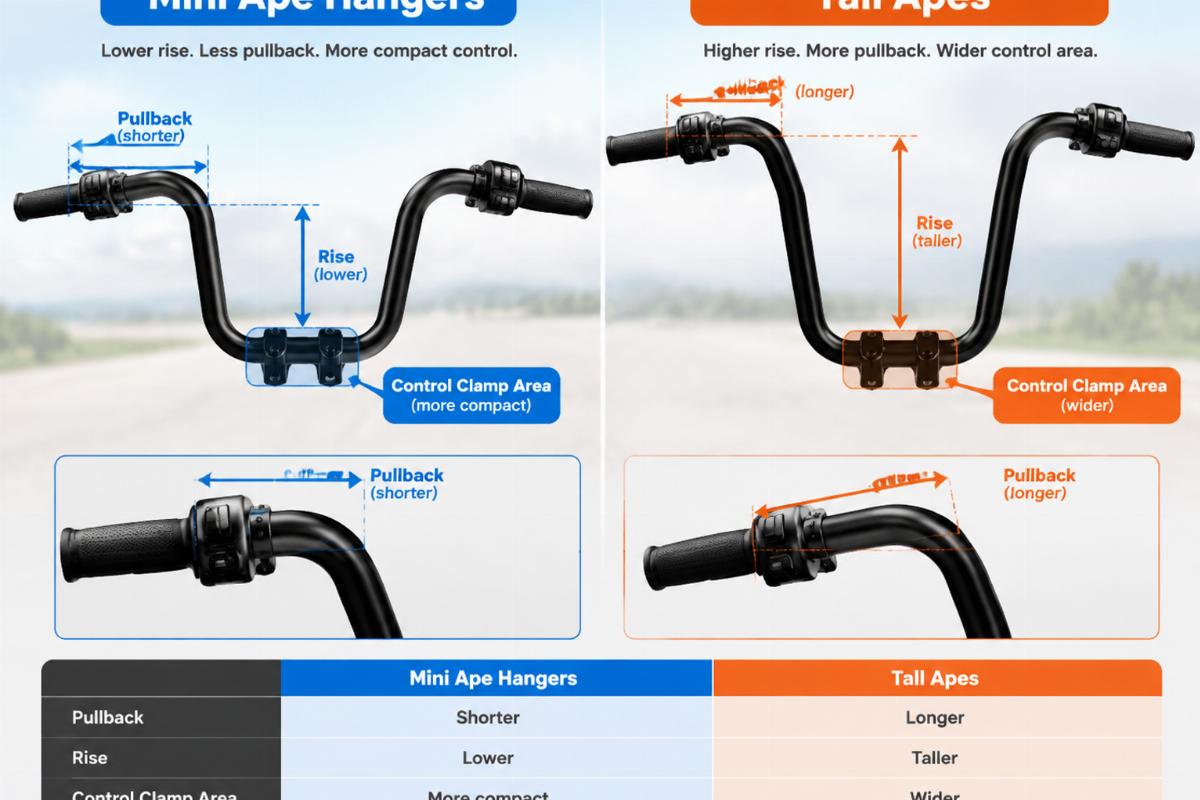
Understanding these technical nuances is essential for any distributor building a reliable V-twin catalog. Let us break down why geometry matters more than aesthetics.
Why Rise Height Is Not the Only Metric?
Most buyers start their search by looking for a specific rise, such as ten inches or fourteen inches. This is a natural starting point but often leads to fitment failures. The core conclusion is that ignoring pullback and clamp dimensions leads to installation errors. Rise determines how high the hands sit, but it does not dictate how the controls interface with the motorcycle’s existing systems.
When a builder installs tall apes based solely on rise, they often encounter issues with throttle and clutch cables. If the pullback is insufficient, the cables may stretch too tightly when the handlebars are turned to full lock. This creates dangerous resistance and can damage the cable ends or the throttles themselves. Conversely, mini ape hangers often have a different pullback profile that may leave excessive slack if not matched correctly to the frame rake. [NEED_CITE: relationship between handlebar pullback and cable length requirements]
The mistake is treating all bars of the same rise as identical. They are not. A ten-inch bar with two inches of pullback fits differently than a ten-inch bar with four inches of pullback. The latter moves the grips closer to the rider, changing the ergonomics and the angle at which cables exit the triple tree. For distributors, this means that stocking only by rise is a recipe for inventory mismatch. You need to verify the pullback depth to ensure throttle and clutch cable slack sufficiency for the specific model year.
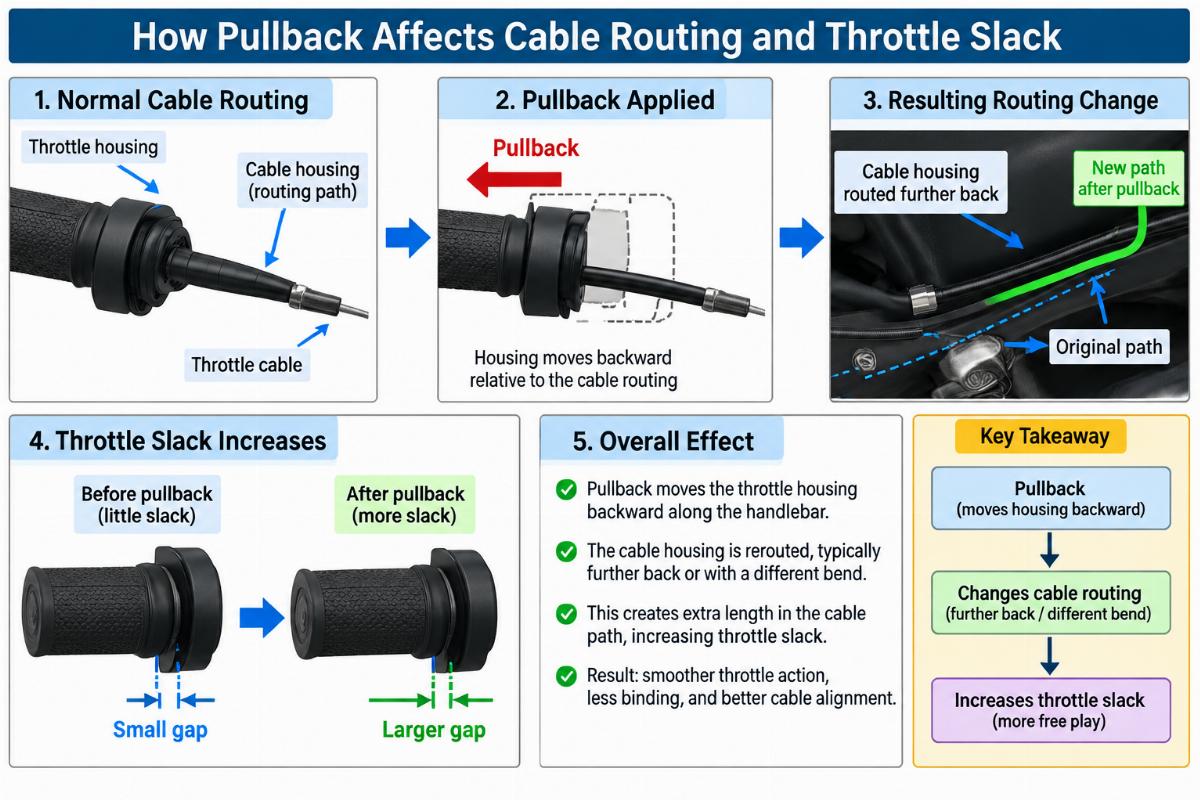
This geometric reality is why we emphasize checking the full dimensional spec sheet before quoting. It prevents the scenario where a bar fits the risers but fails the controls.
How Do Control Clamp Areas Differ?
The control clamp area is the section of the handlebar where the switches, levers, and master cylinders mount. This is often the point of failure for mini ape hangers vs tall apes fitment. Mini and tall apes have distinct clamp widths affecting switchgear fitment. Many aftermarket bars do not match the original equipment manufacturer dimensions exactly in this zone.
A common issue arises when the clamp area is too wide or too narrow for standard Harley-Davidson switch housings. If the diameter varies even slightly from the standard one-inch or one-and-a-quarter-inch specification, the clamps may not close properly. This can lead to loose controls that rotate under braking or acceleration. In worse cases, the bar material may be too soft, allowing the clamps to crush the tubing over time. [NEED_CITE: OEM handlebar clamp diameter specifications for Big Twin models]
Consider a case where a custom shop ordered a bulk batch of tall apes. The rise was correct, but the control clamp width was inconsistent. The result was a hundred percent return rate for that batch because the switch housings would not seat flush. The shop had to machine each bar individually to make them work, destroying their profit margin. This happened because the supplier did not verify the control clamp area dimensions against the OEM specs.
To avoid this, measure the control clamp area width against OEM handlebar specs. Ensure that the bar diameter is consistent in the mounting zone. For distributors, this means requesting detailed dimension maps from your supplier. Do not rely on generic descriptions. Ask for the exact diameter at the clamp zone and the length of the straight section available for mounting. This level of detail separates a professional supplier from a generic trader.
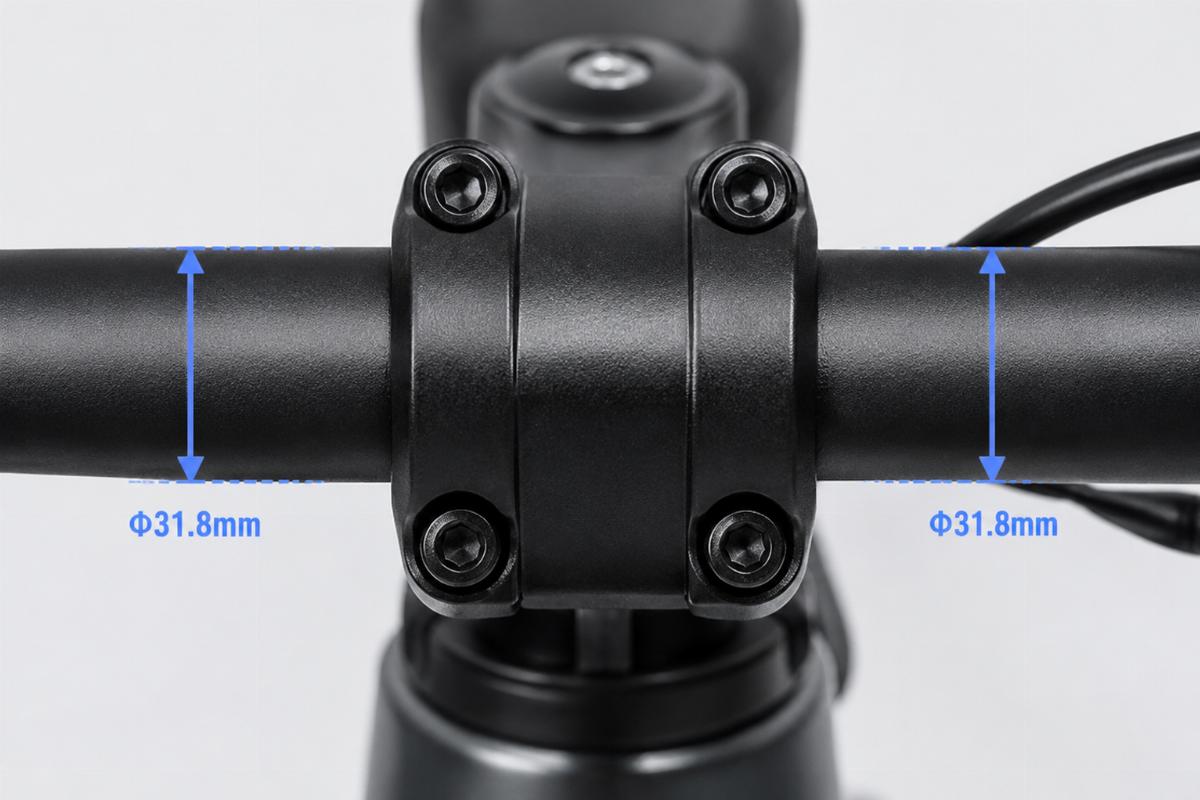
Precision in this small area saves hours of labor in the workshop. It ensures that the controls stay where the rider puts them.
What Is the Impact of Internal Wiring Holes?
Internal wiring is a major differentiator between modern custom builds and stock configurations. Many riders prefer to route their wires inside the handlebars for a clean look. However, the position of the internal wiring hole is not standardized across all aftermarket bars. Hole position dictates cable routing complexity and harness length requirements.
Many assume internal wiring holes are standard. In reality, their actual position varies significantly between mini and tall profiles. On some tall apes, the entry hole is located far back from the clamp area. This forces the wiring harness to take a sharp turn inside the bar, which can damage the insulation or make pulling the wires through nearly impossible. On mini ape hangers, the hole might be positioned too close to the end, leaving insufficient room for the connector heads.
I recall a distributor who mixed mini and tall stock without checking the hole positions. The offset caused a thirty percent installation delay because technicians had to rewire the entire harness to accommodate the new entry points. Some bars required longer wires, while others needed shorter ones. The lack of consistency meant that the shop could not standardize their wiring kits. [NEED_CITE: challenges of internal wire routing in aftermarket handlebars]
To mitigate this, check the internal wiring hole position relative to the center clamping zone. Verify the diameter of the hole to ensure it accepts standard connector plugs. For Harley-Davidson Softail and Dyna models, the wiring harness length is critical. If the hole is too far forward, you may need to extend the harness. If it is too far back, you may have excess wire bunching up inside the bar. Providing fitment sheets with key dimensions helps distributors verify compatibility before ordering.
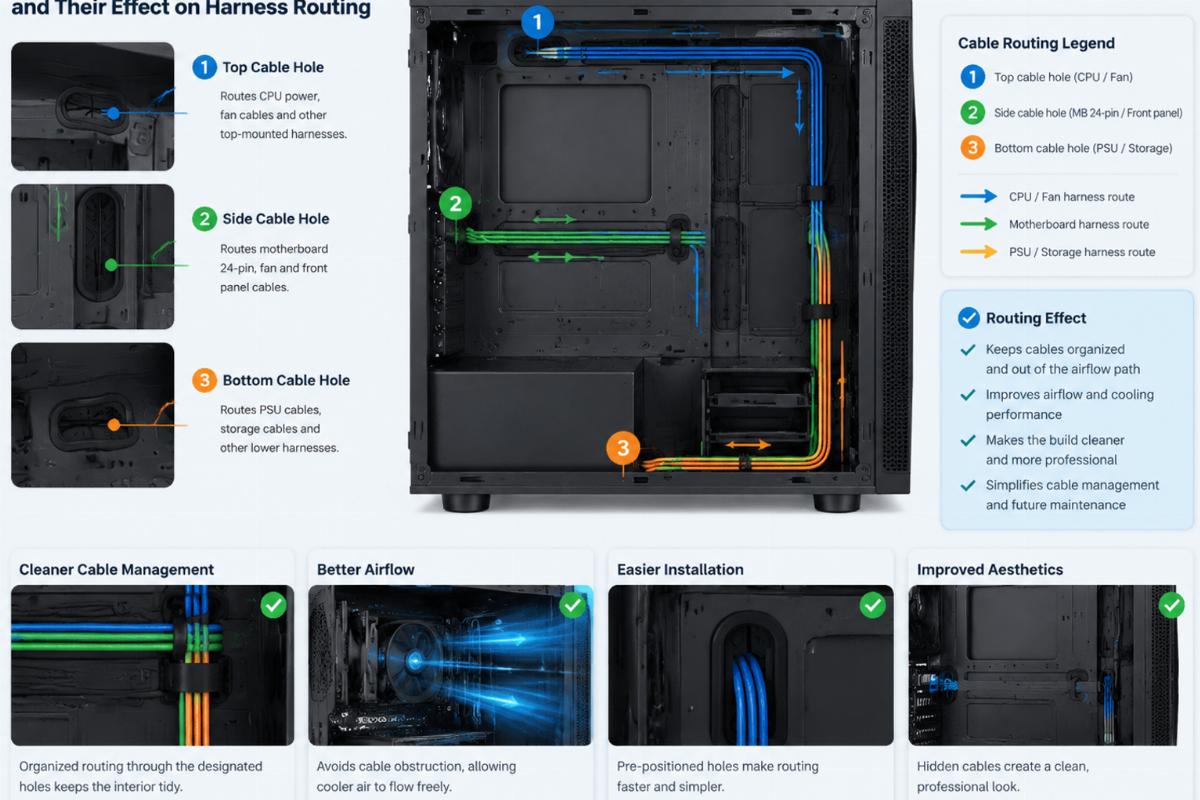
Attention to this detail prevents the frustration of stripped wires and failed electrical connections.
Which Profile Fits Your Build?
Choosing the right profile depends on the specific motorcycle and the desired riding posture. Match bar geometry to frame rake and cable length for optimal fitment. Mini ape hangers typically offer a more upright but compact stance. They are popular on Sportster models and smaller Softails where space is limited. Tall apes provide a more relaxed, arms-outstretched position, suitable for long-distance cruising on Big Twin frames.
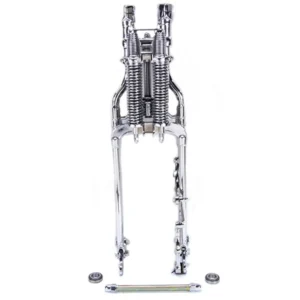
However, the frame rake plays a crucial role. A steep rake may require more pullback to bring the grips within reach. A shallow rake might work better with less pullback. Throttle cable slack is another limiting factor. Springer Softail builds, for example, have unique cable routing paths. Pullback variance affects throttle cable slack by several inches, requiring different line lengths. [NEED_CITE: cable length requirements for Springer Front End conversions]
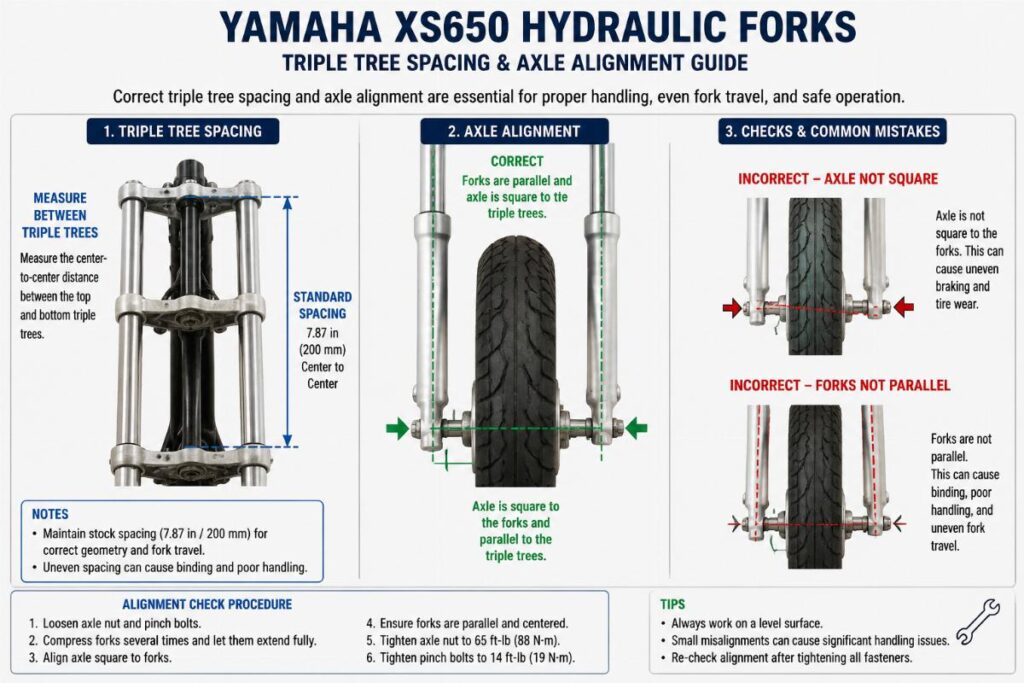
For Yamaha XS650 builds, the fitment criteria are similar but with different baseline dimensions. The narrower frame of the XS650 means that wide pullback bars can look disproportionate and may interfere with the fuel tank. Mini ape hangers often complement the slim profile of these classic twins better than tall apes.
When advising customers, ask about their current cable setup. If they are keeping stock cables, the choice of handlebars is severely limited. Most stock cables only allow for a few inches of rise increase. If they are installing tall apes, they must upgrade to extended cables. This is a critical upsell opportunity for distributors. By bundling the correct cable kit with the handlebars, you ensure a complete solution that works out of the box.
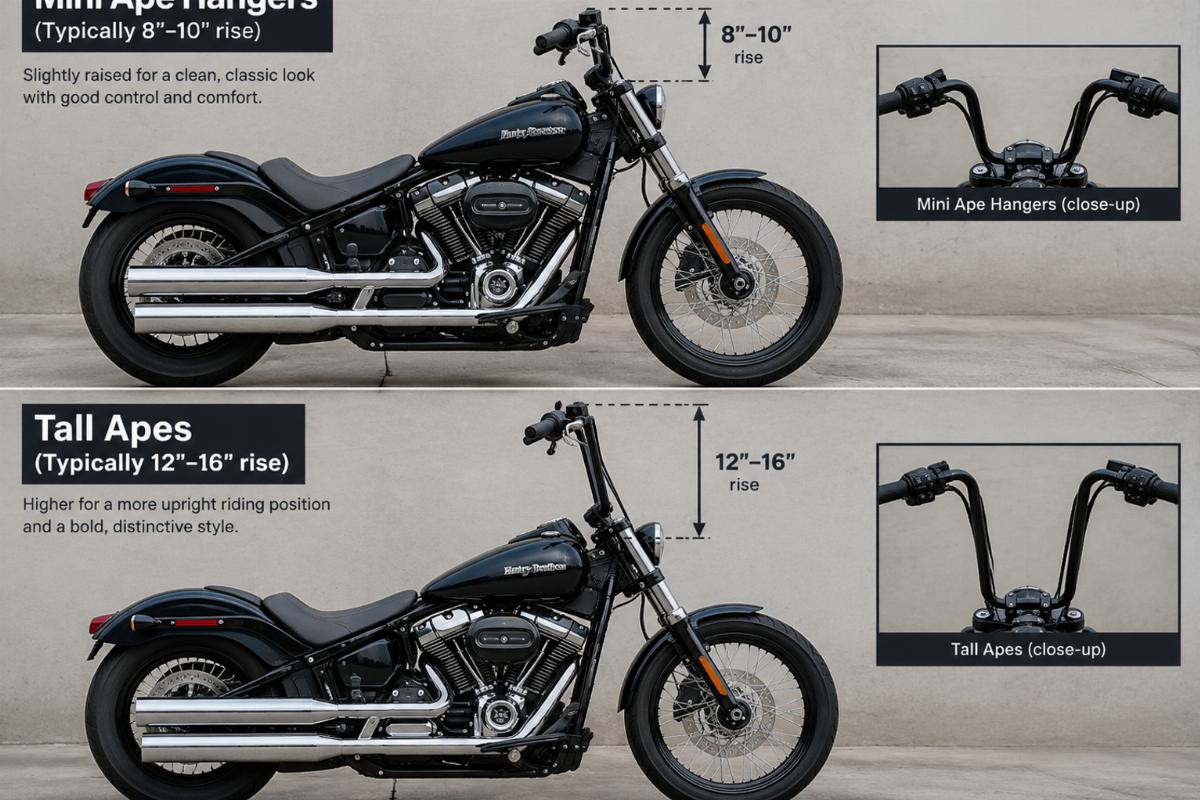
The right fitment enhances both the look and the rideability of the motorcycle.
Conclusion
Fitment is defined by geometry, not just height.
Selecting the correct handlebars requires a holistic view of pullback, clamp dimensions, and wiring needs. Distributors who prioritize these technical details reduce returns and build trust with their customers. Always verify dimensions against the specific motorcycle model and year. Send your model and year for a fitment check to ensure compatibility before placing bulk orders.