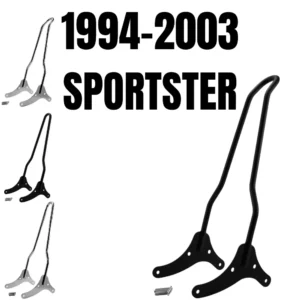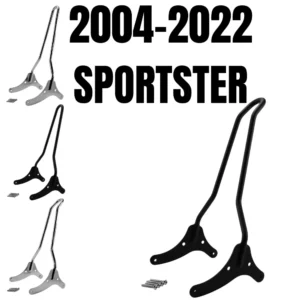

Wholesale Softail FL Sissy Bars (1984-Up) Fitment Options
“1984-up” is not a universal fitment code; it is a starting point for identifying distinct mounting interfaces.
Correct Softail sissy bar fitment depends on precise strut spacing and fender configuration, not just model year. Identifying the correct mounting interface prevents installation failures and costly returns. The physical distance between support struts and the specific base plate bolt pattern are the decisive factors, overriding broad generational labels. [NEED_CITE: Harley-Davidson service manual frame geometry specifications]
I learned this the hard way in a dusty workshop in Monterrey, Mexico. I had shipped what I thought was a standard batch of rear backrests for a distributor’s inventory. The customer called, furious, claiming the holes did not align. He was right. His Softail had a shortened fender retrofit, which shifted the strut mounting points inward by several millimeters. My catalog listing said “fits 1984-2005,” but the metal in his shop said otherwise. That mistake cost me more than just the shipping fees; it damaged trust. Since then, I do not rely on year ranges alone. I verify the strut-to-strut center distance and the upright diameter before any order leaves the facility. This approach ensures that when you receive Softail sissy bar fitment 1984-up components, they match the physical reality of the motorcycle, not just a database entry.
Understanding these nuances is critical for distributors who want to minimize returns. Let us break down why these mismatches happen and how to specify the right parts.
Why Does My Sissy Bar Not Fit My Softail?
Misalignment often stems from overlooked strut spacing or fender modifications rather than manufacturing defects.
Many buyers assume that if a part is listed for a specific decade, it will bolt on without issue. This is a dangerous assumption for the Softail platform. The term Softail sissy bar fitment 1984-up covers multiple frame evolutions, each with subtle but critical differences in rear end geometry. The primary culprit for fitment failure is the variation in strut spacing. On stock models, this distance is consistent within certain sub-groups. However, the aftermarket is filled with modified fenders. A shortened fender, a common customization for bobber styles, often requires the struts to be moved closer together. If a buyer orders a standard width sissy bar for a bike with narrowed struts, the base plate will simply not sit flat, or the bolts will not thread into the existing holes.
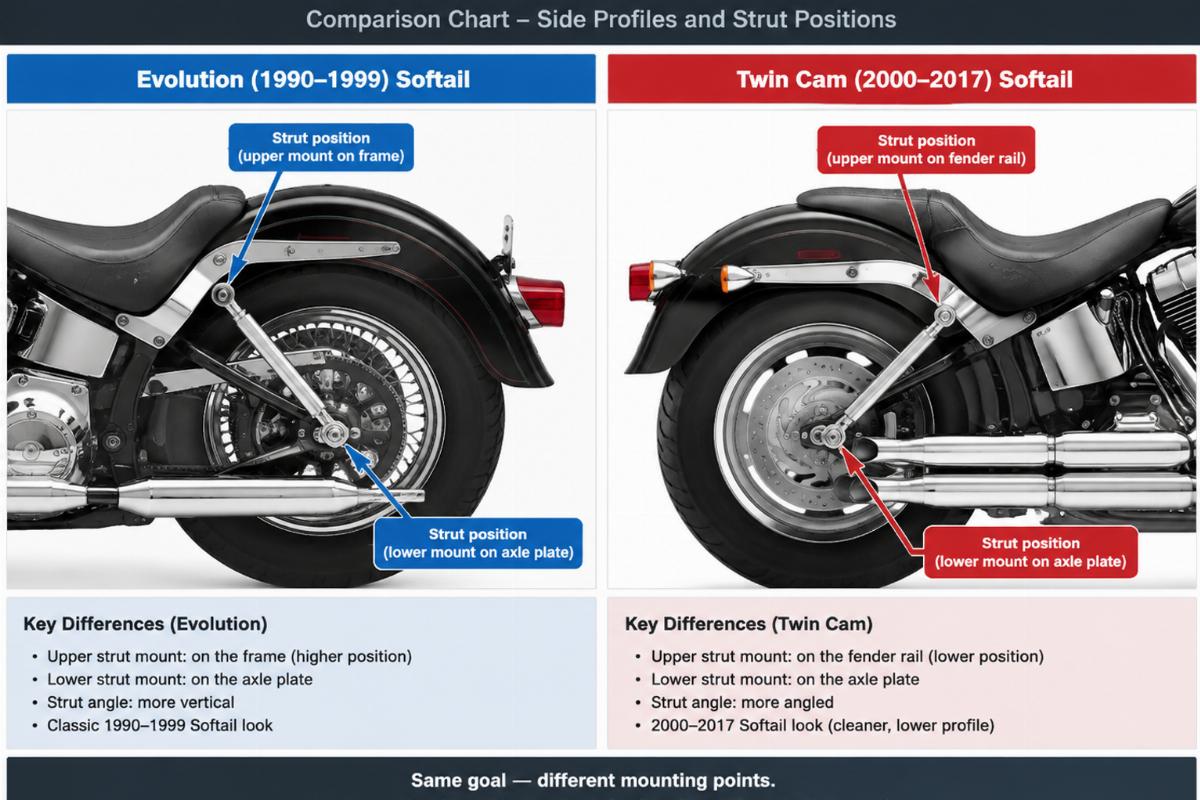
Another frequent issue is the confusion between Evolution and Twin Cam era mounting points. While the general aesthetic remains similar, the underlying frame tabs and fender strut attachments changed. Some early models use a different bolt pattern on the base plate compared to later iterations. Without verifying the specific Harley Softail rear backrest mounting points, distributors risk sending parts that require drilling or welding to install—processes that most end-users are not equipped to handle. [NEED_CITE: OEM parts catalogue supersession notes for Softail rear accessories]
I recall a case where a European builder ordered a set of bars for a custom build. He sent a photo of the rear fender, which looked standard. However, upon closer inspection of the strut bases, I noticed they were aftermarket replacements with a wider stance than factory spec. Had I shipped the standard item, he would have faced a significant delay. By catching this detail early, we adjusted the base plate width. This level of scrutiny is what separates a reliable supplier from a mere order taker. When evaluating aftermarket sissy bar upright compatibility, always look beyond the model year. Look at the hardware itself.
How to Measure Strut Spacing for Accurate Fitment
Provide a step-by-step guide to measuring center-to-center distance and identifying compatible base plates.
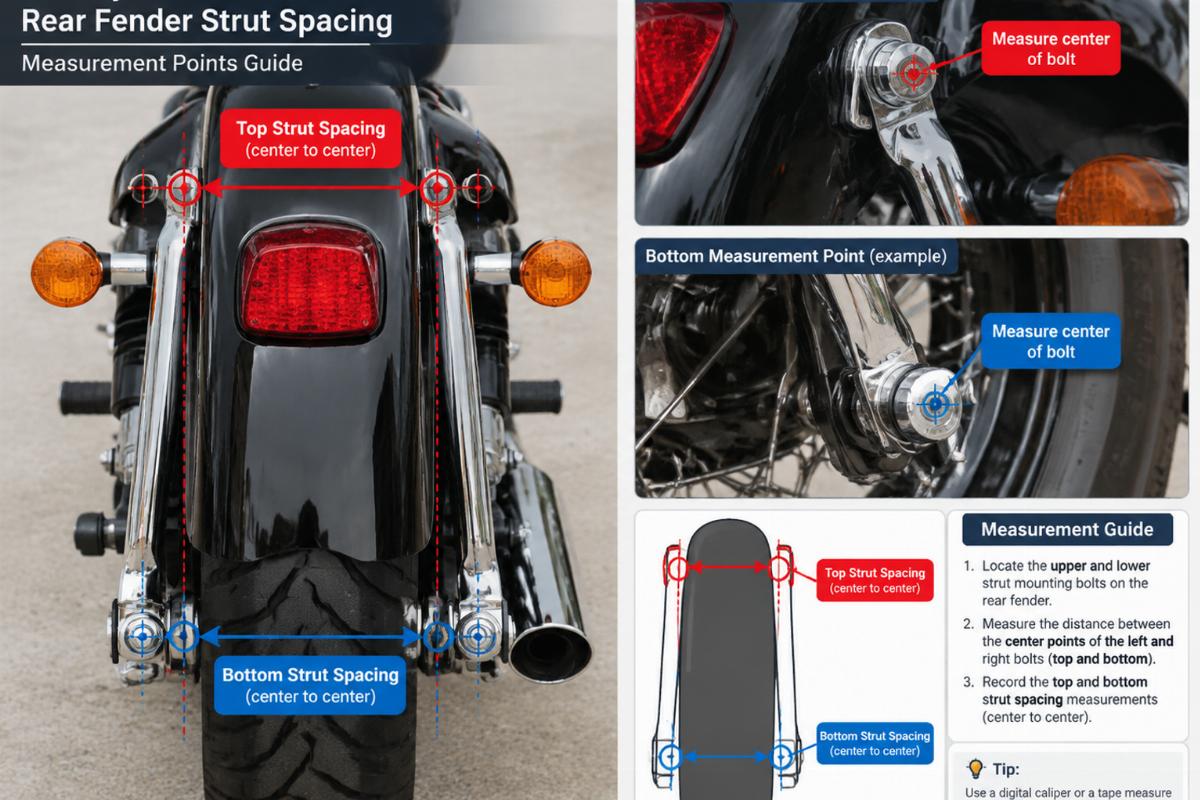
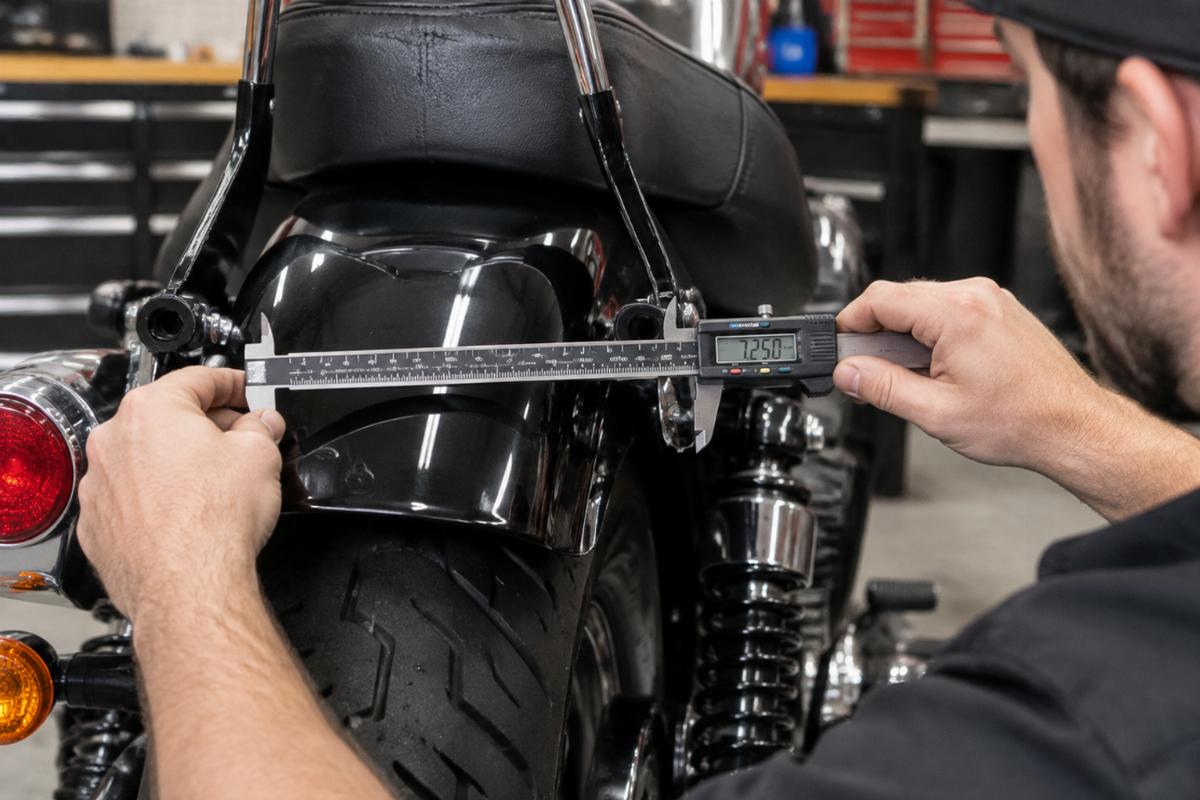
To ensure accurate Softail sissy bar fitment 1984-up, you must move beyond visual estimation. Precise measurement is the only way to guarantee compatibility. Here is the method we use to verify fitment before shipment. This process helps distributors avoid the guesswork that leads to returns.
- Identify the Strut Mounting Points: Locate the two vertical struts that support the sissy bar. These are typically attached to the rear fender or the frame rails, depending on the model year and customization level.
- Measure Center-to-Center Distance: Using a caliper or a precise tape measure, determine the distance between the center of the left strut mount and the center of the right strut mount. Do not measure edge-to-edge; the center point is critical for bolt alignment. Record this measurement in millimeters for higher precision.
- Check Upright Diameter: Measure the diameter of the upright tubes where they connect to the base plate. Standard sizes vary, and mixing diameters can lead to loose fits or inability to insert the uprights. Common diameters include standard OEM sizes and larger aftermarket variants.
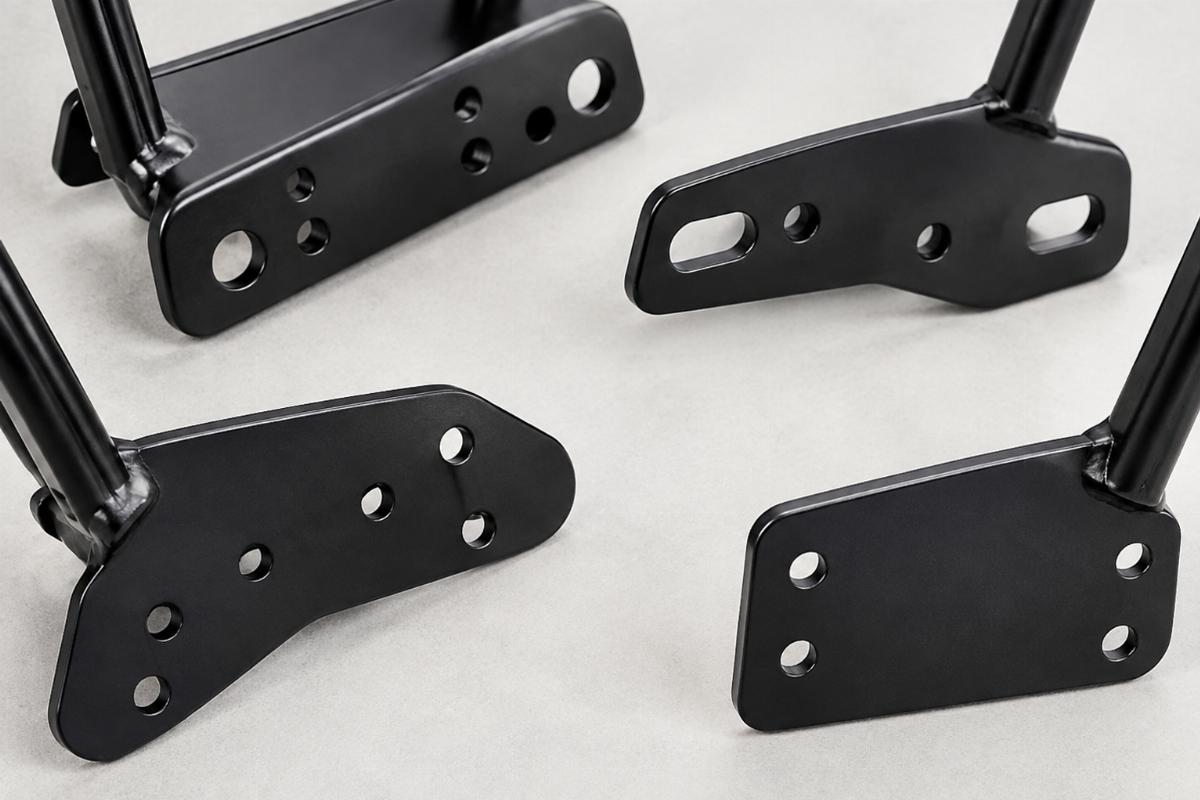
- Verify Base Plate Bolt Pattern: Count the number of bolt holes on the base plate and measure the distance between them. Compare this with the bolt pattern on the motorcycle’s strut mounts. Some older models use a two-bolt pattern per side, while others may use a single central mount or a four-bolt square pattern.
[NEED_CITE: General mechanical engineering principles for fastener alignment and tolerance]
A common mistake is ignoring the fender curvature. Even if the strut spacing is correct, a base plate designed for a flat mount may not conform to a highly curved fender, causing stress on the bolts. In our facility, we check these dimensions against our internal database of known variations. For example, a FXST model from the late nineties may have different strut spacing than an FLST from the same year due to fender width differences. By providing these critical dimensions in our fitment sheets, we empower buyers to make informed decisions. When you request a quote for Softail sissy bar fitment 1984-up items, including these measurements ensures you receive the correct variant.
What Are the Key Differences Between Softail Generations?
Distinguish mounting interfaces for Evolution, Twin Cam, and later Softail models, noting critical changes.
The Softail lineage spans decades, and while the name remains constant, the hardware has evolved. Understanding these generational shifts is essential for maintaining an accurate catalog. The term Softail sissy bar fitment 1984-up encompasses at least three distinct eras of frame design, each with unique mounting characteristics.
The Evolution era (roughly 1984-1999) introduced the modern Softail look. During this period, the rear fender struts were typically bolted directly to the frame or fender supports with a relatively consistent spacing. However, even within this era, there were changes. Early models might have different thread pitches or bolt head sizes compared to late nineties models. Distributors should note that some parts from this era are no longer in production, requiring careful cross-referencing of superseded part numbers.
The Twin Cam era (2000-2017) brought further refinements. While the overall silhouette remained similar, the mounting points for accessories became more standardized in some aspects but also more complex in others. For instance, the introduction of new fender shapes on certain models like the Heritage Classic or Fat Boy required specific base plates that would not fit a standard Sportster-style fender. [NEED_CITE: Harley-Davidson model year change documentation for Softail line]
Later models, particularly those leading up to the current generation, saw additional changes in frame geometry and accessory mounting standards. Some newer frames incorporate integrated mounting points that differ significantly from the bolt-on struts of the past. It is crucial to distinguish between these generations when selecting aftermarket sissy bar upright compatibility options. A base plate designed for a Twin Cam frame may not align with the strut positions on an Evolution frame, even if the uprights themselves are identical.
We maintain a detailed cross-reference sheet that maps these generational differences. This document helps buyers identify which parts are interchangeable and which are model-specific. By understanding these distinctions, you can reduce the risk of ordering incompatible parts. When discussing Harley Softail rear backrest mounting points, always specify the generation to ensure clarity.
Which Upright Options Match Your Build Style?
Overview of available upright heights and finishes, emphasizing compatibility with verified base plates.
Once the base plate fitment is confirmed, the next step is selecting the right uprights. The uprights determine the height and style of the sissy bar, impacting both aesthetics and passenger comfort. However, not all uprights are compatible with all base plates. The key is to match the upright diameter and mounting mechanism to the base plate specified for the motorcycle.
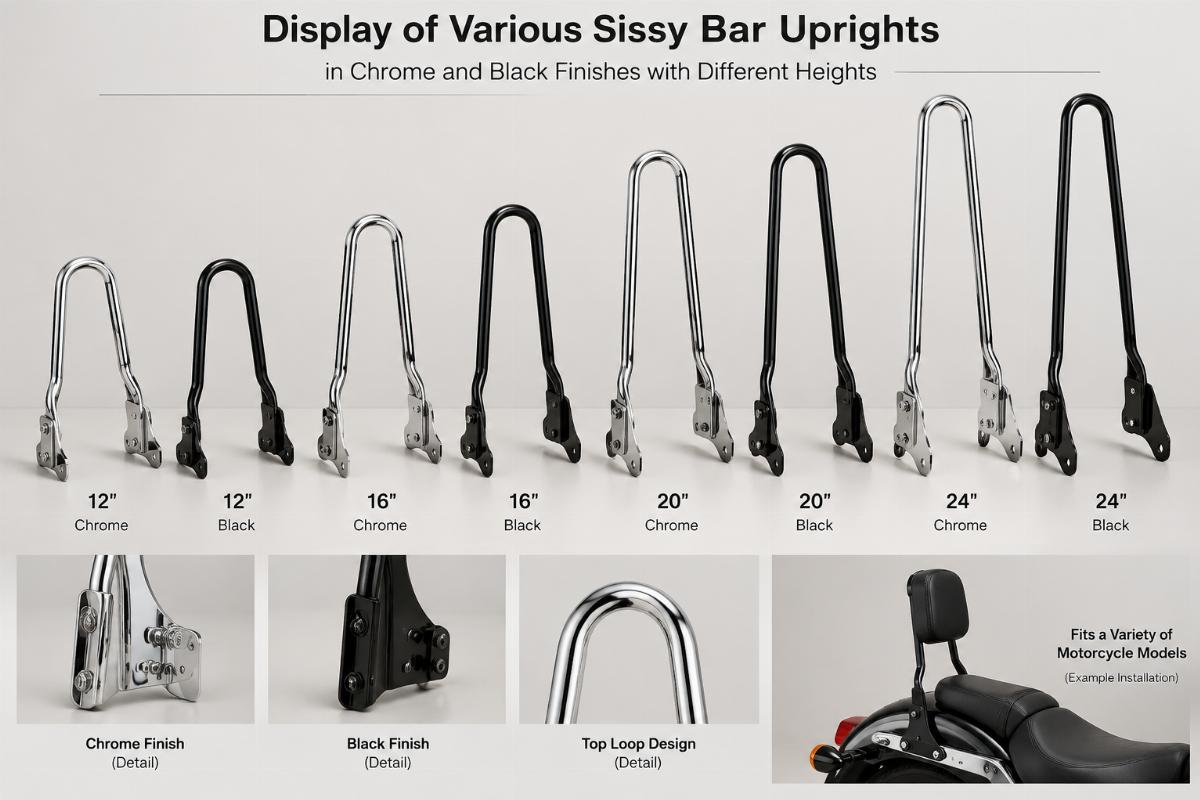
Standard uprights typically come in fixed heights, such as low-profile for a sleek bobber look or taller versions for improved passenger support. Custom builders often prefer adjustable or interchangeable uprights, allowing for greater flexibility. When sourcing Softail sissy bar fitment 1984-up components, it is important to verify that the uprights are designed for the specific base plate type. For example, a slip-fit upright requires a precise inner diameter match, while a bolt-on upright needs aligned holes.
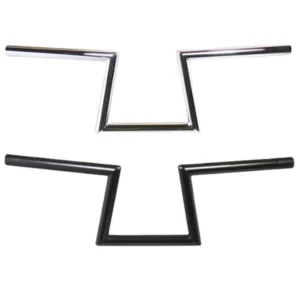
Finishes also play a role in compatibility, not mechanically, but aesthetically. Chrome uprights may have slightly different dimensions due to plating thickness compared to black powder-coated versions. While this difference is usually minimal, it can affect fitment in tight tolerances. We offer both chrome and black finishes, ensuring consistent quality across batches. This consistency is vital for distributors who sell to customers expecting a specific look.
Additionally, consider the material quality. High-grade steel uprights provide durability and resistance to vibration, which is crucial for long-distance riding. Cheaper alternatives may bend or fail under stress. By offering verified aftermarket sissy bar upright compatibility options, we help builders create reliable and stylish motorcycles. Always check the upright specification against the base plate requirements to ensure a seamless assembly.
Conclusion
Fitment accuracy relies on physical measurements, not just model years.
Successful distribution of Softail sissy bar fitment 1984-up parts requires a deep understanding of strut spacing, base plate patterns, and generational differences. By prioritizing precise verification over broad assumptions, distributors can minimize returns and build trust with their customers. Always measure before you order, and consult detailed fitment guides to ensure compatibility.