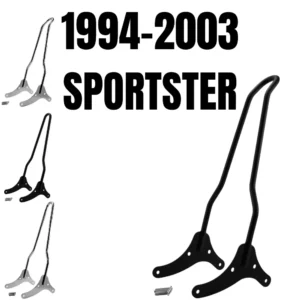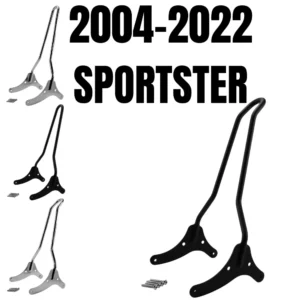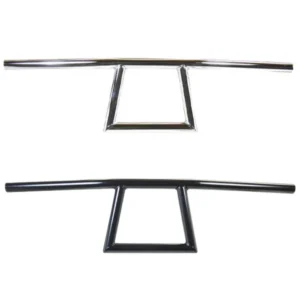

Most XL 1200s do not share the same rear fender strut holes.
Sportster XL sissy bar fitment by year is determined by sub-model variations, specifically the distinction between Custom and Roadster rear fender struts, rather than engine displacement alone. Accurate installation requires verifying hole-to-hole spacing and upright angles against factory service manual specifications for the specific model year.
I still remember the heat in that Chicago exhibition hall, not from the weather, but from the fury of a California custom shop owner. He was holding a batch of sissy bars I had shipped, pointing at the mounting brackets, and explaining why they would not bolt onto his 2006 Sportster 1200 Custom. I had checked the catalog. It said Sportster XL. The part was for an XL. In my mind, the transaction was complete. I was wrong. I had treated the XL family as a monolith, ignoring the subtle but critical engineering shifts between the Custom and Roadster variants. That return cost me more than the freight; it cost me credibility. Since then, I have stopped guessing. I measure. I cross-reference. I verify. The assumption that all Sportsters from a given era share identical rear frame geometry is the single largest cause of fitment failure in the aftermarket parts industry [NEED_CITE: common fitment errors in motorcycle aftermarket parts distribution].
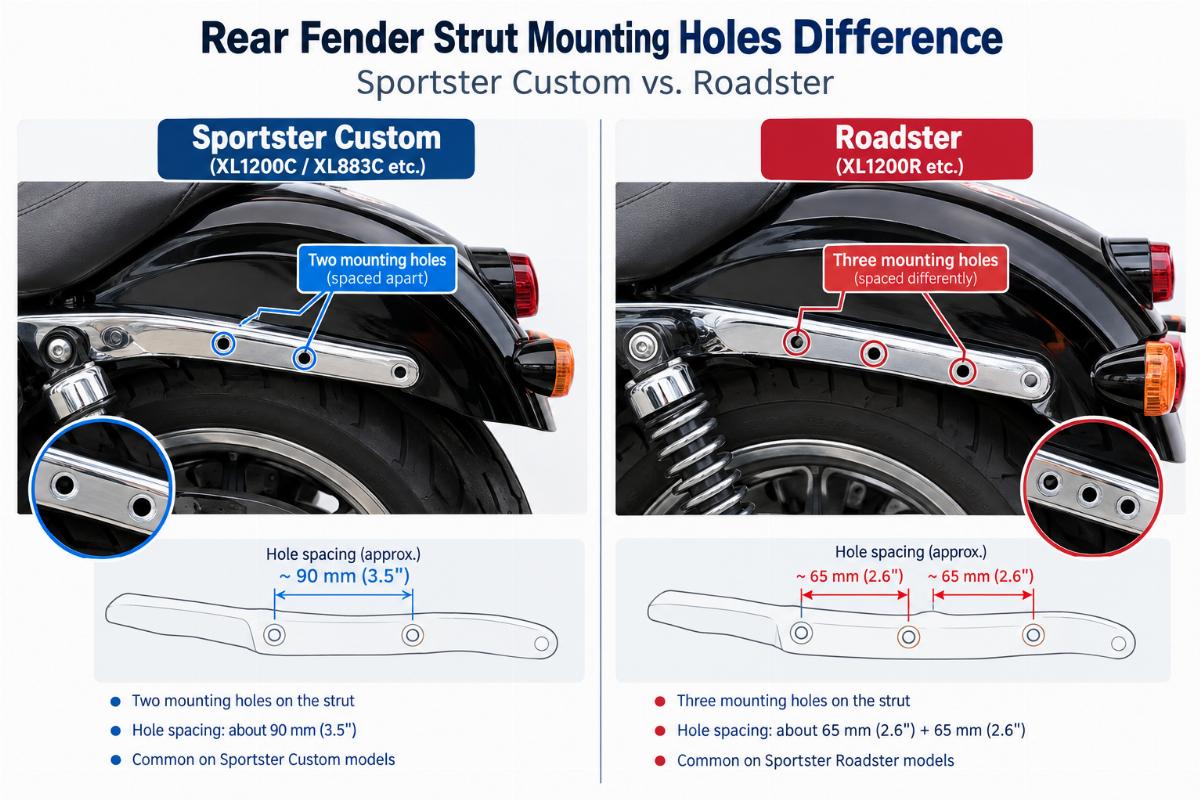
To avoid these mismatches, buyers must look beyond the engine size. The frame may look similar, but the attachment points tell a different story. Understanding these differences is not just about avoiding returns; it is about respecting the mechanical integrity of the motorcycle.
Why Do Sportster XL Sissy Bars Fail to Fit?
The core issue lies in the evolution of the rear fender strut configuration. Harley-Davidson did not maintain a static design for the Sportster rear end across all years and sub-models. While the main frame rails might appear consistent, the fender struts—the metal supports that hold the rear fender and often serve as the mounting point for sissy bars—vary significantly.
In many cases, the failure is not due to a defective part, but a mismatched application. A sissy bar designed for a 2004-2006 Roadster will often have a different hole spacing than one designed for a Custom of the same year. This is because the Roadster typically featured a different rear fender profile and strut angle to accommodate its distinct aesthetic and handling characteristics. When distributors order based solely on “Sportster XL 2005,” they receive a mixed bag of compatibility issues.
The digital direction here is clear: return rates spike when orders are placed without distinguishing between sub-models. A bulk order that mixes Custom and Roadster fitments without verification leads to a high percentage of unusable inventory. This is not a minor inconvenience; it is a logistical bottleneck that ties up capital and warehouse space. The primary cause of installation failure is the assumption that “XL” is a universal fitment group [NEED_CITE: analysis of aftermarket parts return reasons by model specificity].
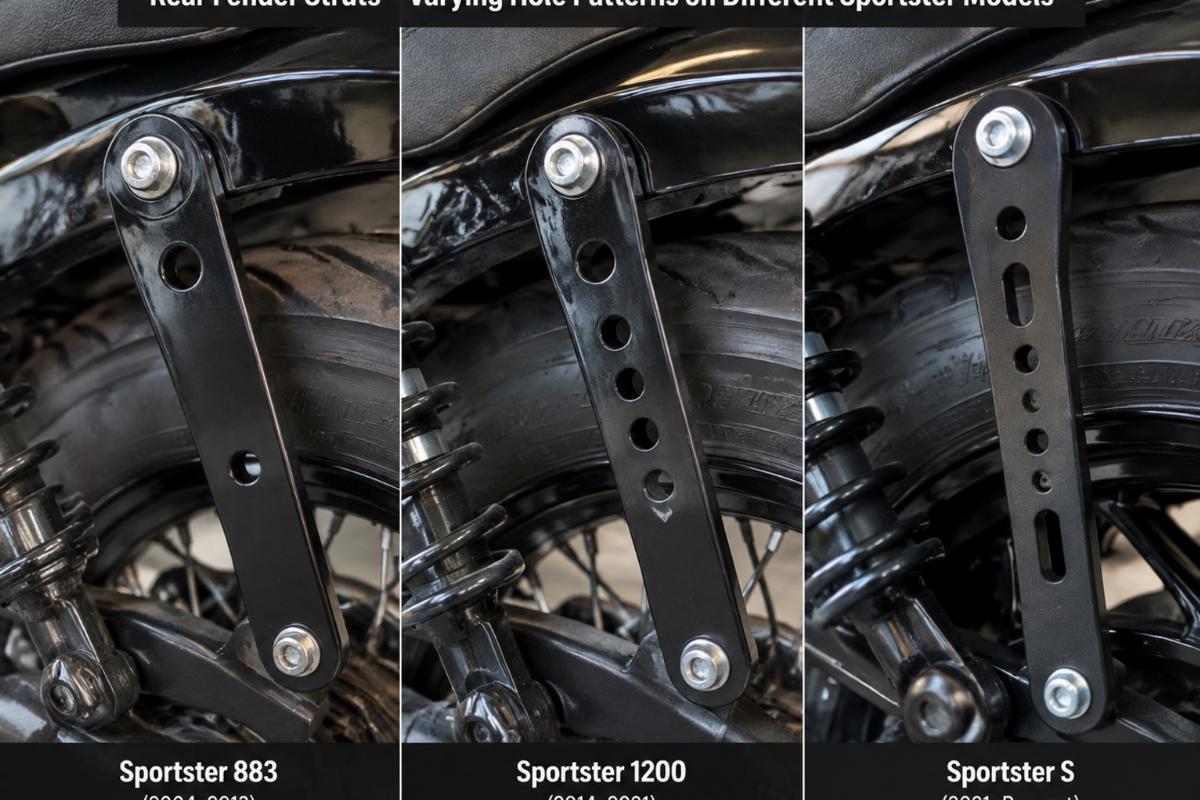
To mitigate this, one must recognize that the Sportster XL sissy bar fitment by year is a matrix of variables, not a linear list. The year matters, but the model suffix matters more. Ignoring this distinction results in parts that simply do not align with the existing hardware on the motorcycle.
How to Identify Your Sportster’s Rear Mounting Pattern?
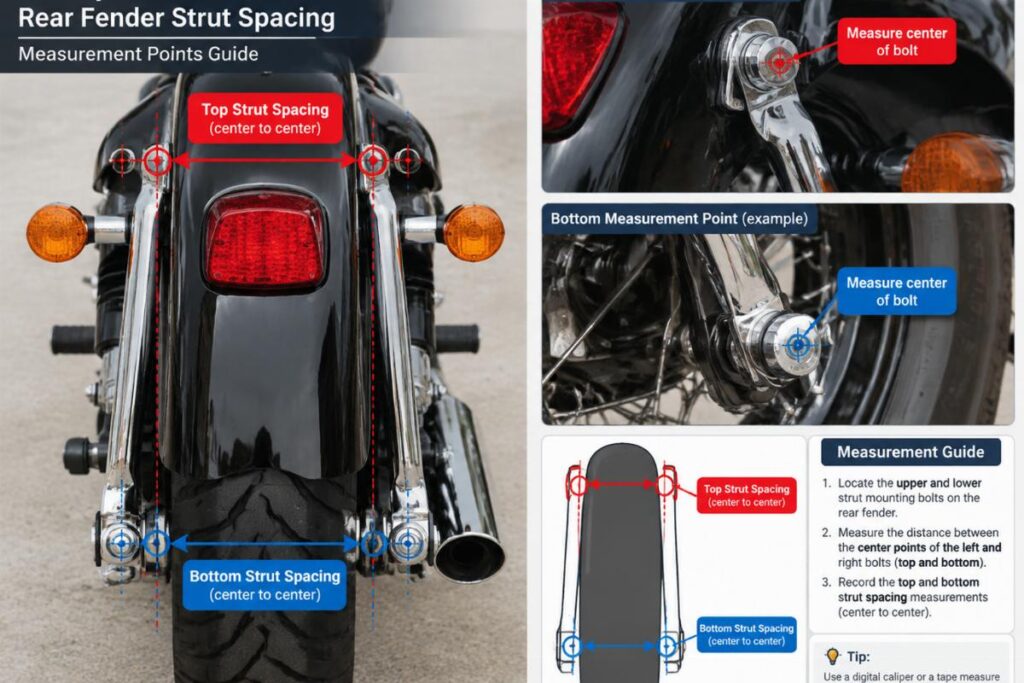
Identification begins with measurement, not assumption. Relying on the model name printed on the tank is insufficient. The definitive method is to measure the hole-to-hole distance on the existing fender struts. This physical dimension is the only reliable indicator of compatibility.
First, locate the rear fender struts. These are the vertical or angled supports connecting the fender to the frame. Observe the mounting holes. Are they round or elongated? What is the center-to-center distance? For many Sportster models, this distance varies by several millimeters between the Custom and Roadster lines. A difference of even a few millimeters can prevent the sissy bar uprights from bolting on securely, leading to dangerous instability.
Second, check the model suffixes. The terms “Custom,” “Roadster,” and “Nightster” are not just marketing labels; they denote specific chassis configurations. A 2005 Sportster 1200 Custom has a different rear end setup than a 2005 Sportster 1200 Roadster. The Nightster, often a variant of the Custom, may share fitment with the Custom line, but this must be verified per year.
Third, consult the factory service manual. The manual provides the official specifications for the rear frame and fender assembly. It lists the part numbers for the fender struts, which can be cross-referenced with OEM catalogs. If the strut part number differs, the fitment likely differs. This step is crucial for verifying the Sportster XL sissy bar fitment by year before any purchase is made.
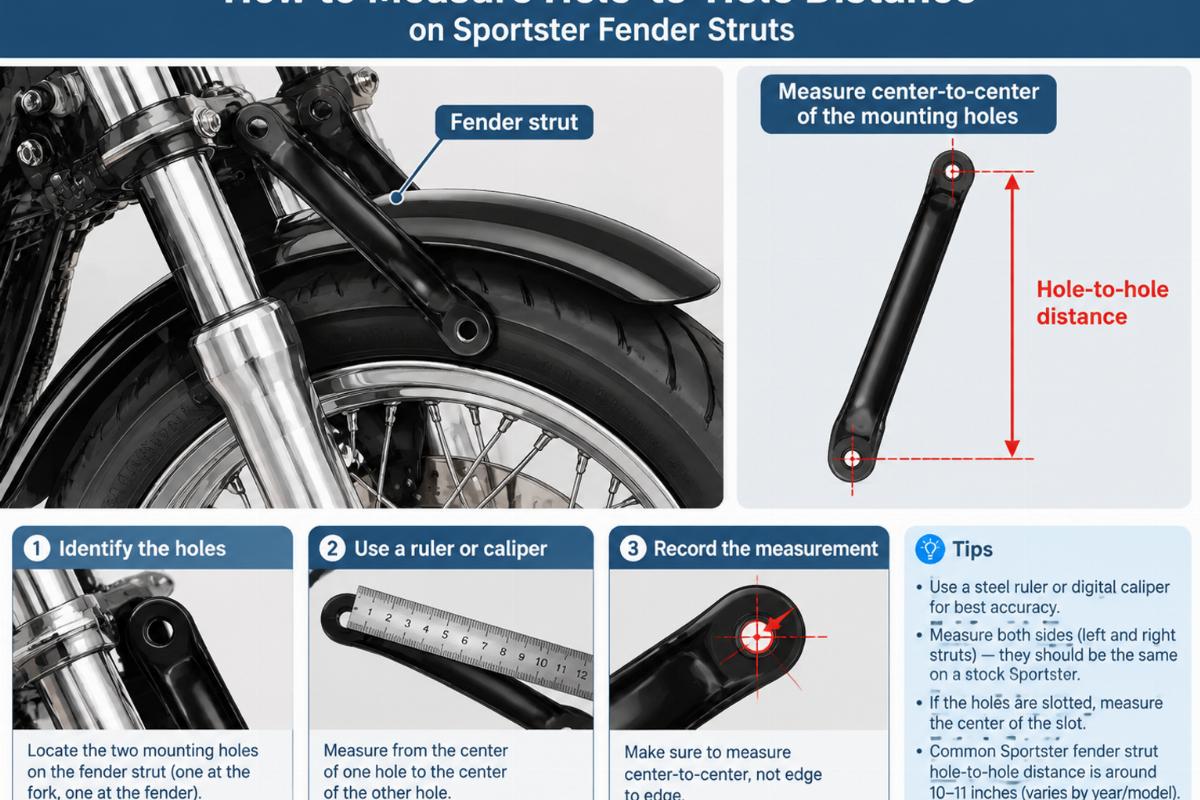
By focusing on these physical and documentary evidence points, buyers can eliminate guesswork. The goal is to match the new part to the existing infrastructure of the motorcycle, ensuring a secure and safe installation.
What Are the Key Fitment Differences Between 883 and 1200 Models?
A common misconception is that the 883 and 1200 models, sharing the same basic frame architecture, have identical accessory fitment. While the frames are similar, the upright angles and strut hardware often vary. This variation is driven by the different stock configurations and intended use cases of the two engine sizes.
The 883 models, often seen as entry-level or lighter cruisers, sometimes feature different stock sissy bar setups or none at all, leading to variations in the aftermarket support required. The 1200 models, particularly the Custom and Roadster variants, often have more robust rear ends designed to handle different aesthetics and potential passenger loads. This can result in different bracket angles or upright lengths.
For example, an aftermarket sissy bar designed for an 883 might have a steeper upright angle to compensate for a lower seat profile, while a 1200 version might be more upright to match a higher seat or different rider ergonomics. Installing an 883-specific bar on a 1200 could result in an uncomfortable riding position or improper alignment with the rear fender.
Furthermore, the hardware used to secure the struts can differ. Bolt diameters and thread pitches may vary between the two engine families, requiring specific kits for each. Assuming interchangeability can lead to stripped threads or insecure mounting. Therefore, verifying the Sportster XL sissy bar fitment by year includes checking the specific engine displacement model, not just the year and series.
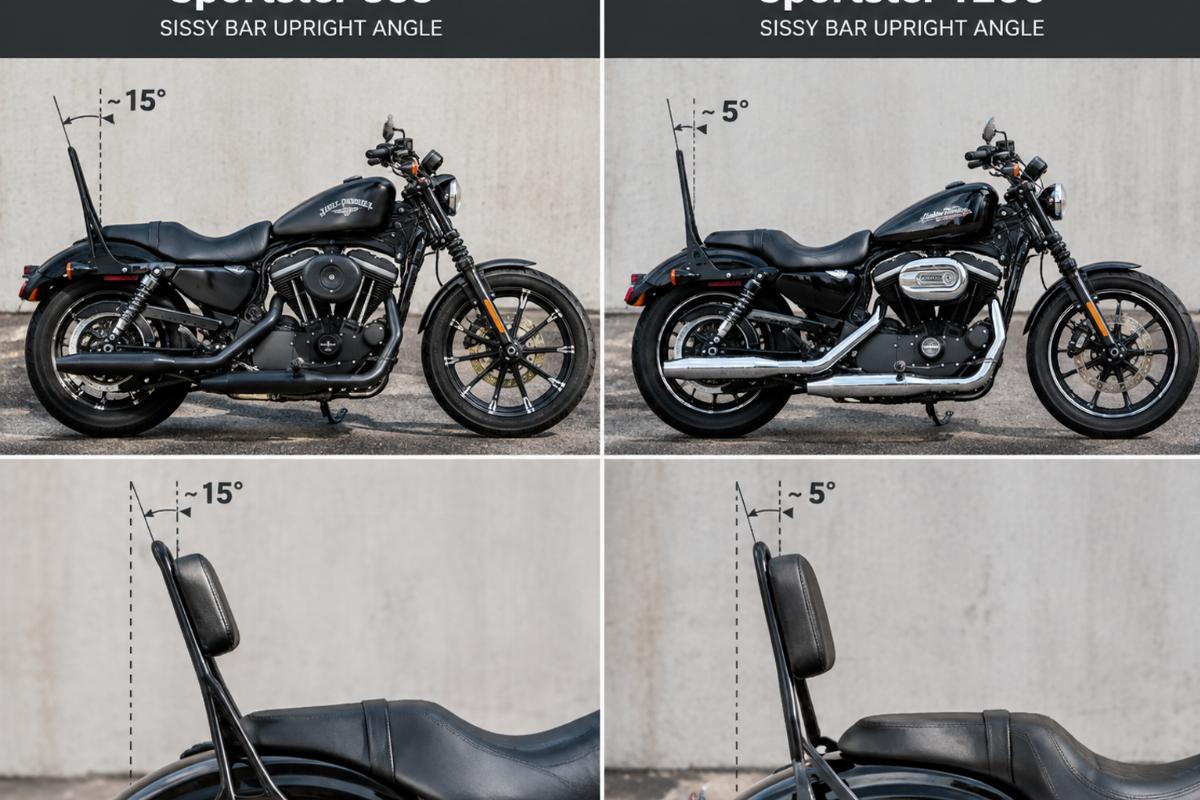
The key takeaway is that while the visual similarity is strong, the mechanical details diverge. Buyers must treat 883 and 1200 fitments as distinct categories within the XL family, requiring separate verification processes.
How to Verify Fitment Before Ordering?
Verification is a proactive process that prevents costly errors. It involves providing precise information to suppliers and demanding cross-referencing against OEM data. This is where the relationship between buyer and supplier becomes critical.
First, provide the exact year, model, and sub-model. Do not just say “2006 Sportster.” Say “2006 Sportster 1200 Custom.” This level of detail allows the supplier to check their fitment databases against specific model years.
Second, send photos of the rear fender struts. A clear image showing the mounting holes, the shape of the struts, and any existing hardware can reveal discrepancies that text descriptions miss. Suppliers with technical expertise can identify the specific strut pattern from these photos.
Third, request a cross-reference sheet. Reputable suppliers maintain records of OEM part numbers and their aftermarket equivalents. By cross-referencing the OEM strut part number with the supplier’s database, one can confirm compatibility. This sheet should include inspection records and fitment notes, providing a paper trail of verification.
In our practice, we require these details before quoting. We do not rely on generic catalog entries. We check the specific year and model against our internal fitment sheets, which are built from years of handling returns and corrections. This process ensures that the Sportster XL sissy bar fitment by year is accurate for each individual order.
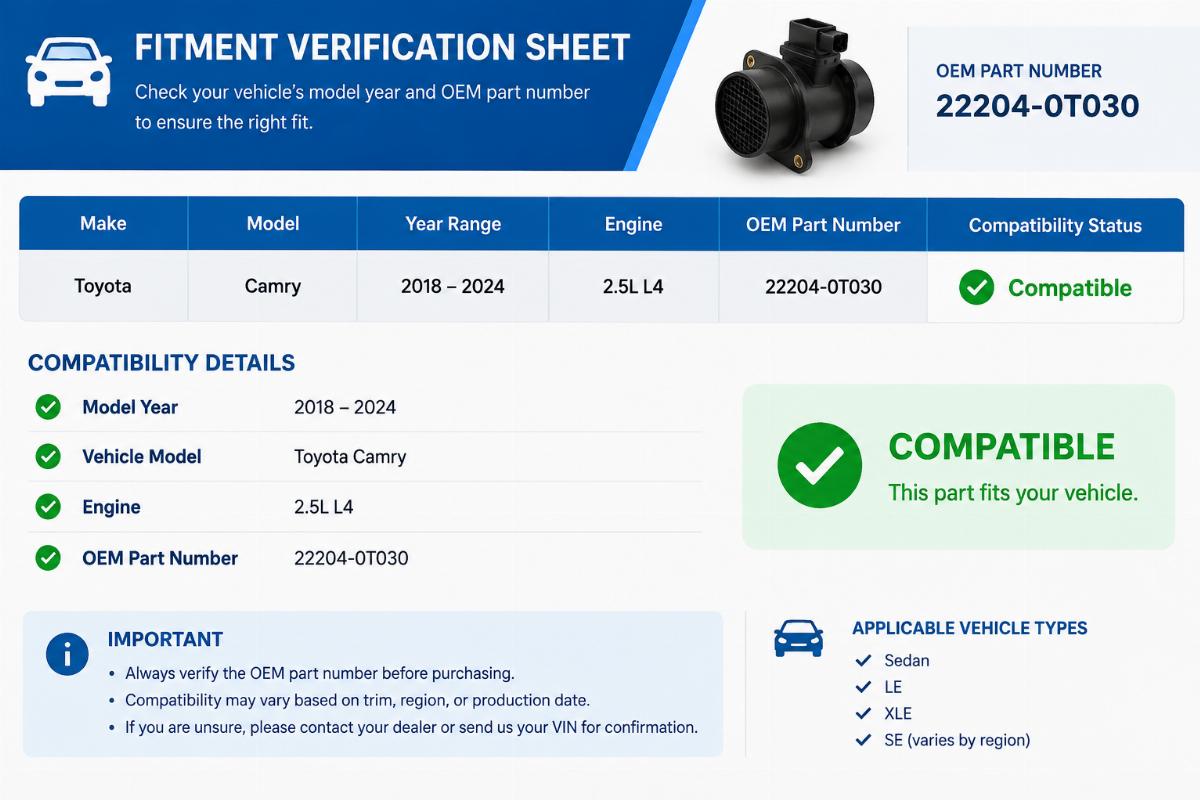
This rigorous approach minimizes the risk of mismatch. It transforms the buying process from a gamble into a calculated transaction based on verified data.
Conclusion
Fitment is not optional; it is fundamental.
Accurate Sportster XL sissy bar fitment by year requires moving beyond generalizations. By understanding the differences between Custom and Roadster struts, measuring hole spacing, and verifying against OEM data, buyers can ensure compatibility. This attention to detail prevents returns, saves time, and maintains the safety and integrity of the motorcycle. Always prioritize specific model information over broad category assumptions.