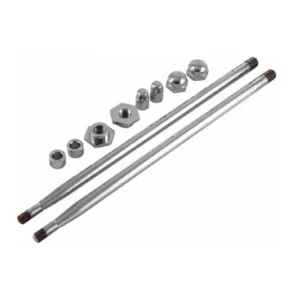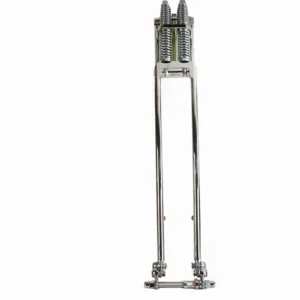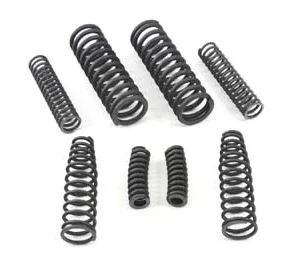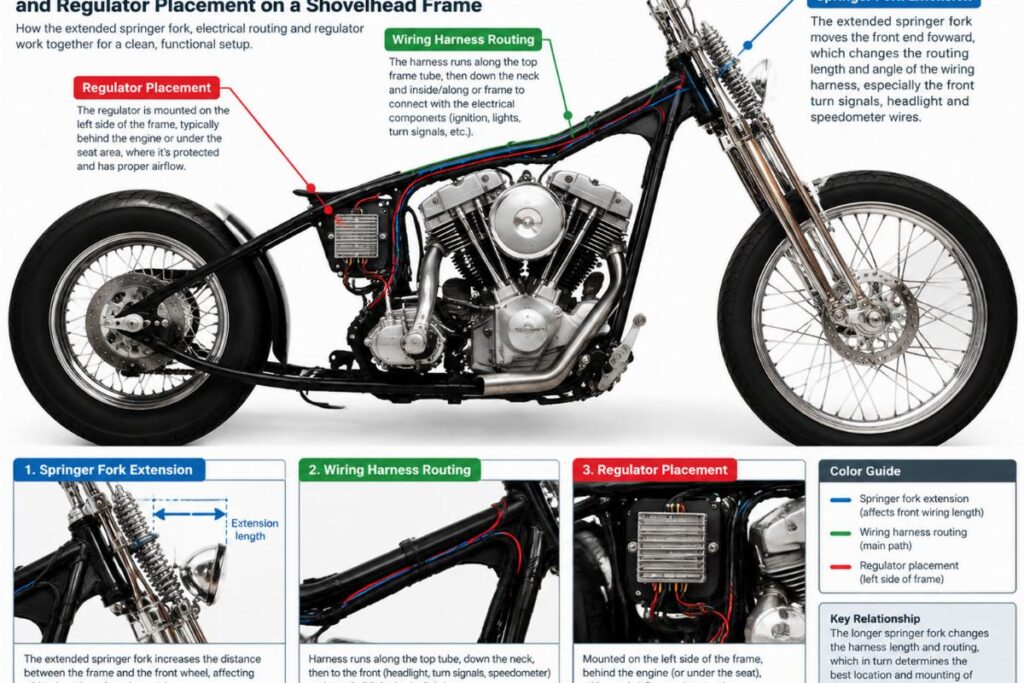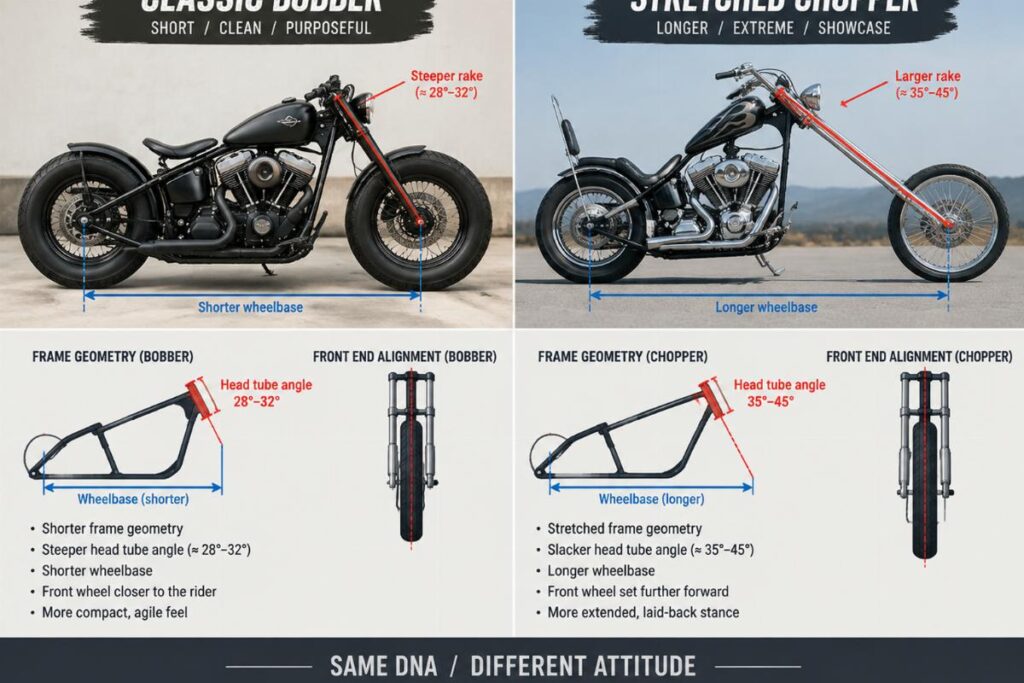

Softail Springer Conversion Parts Wholesale Supplier
Overall length is a trap. It is the single most misleading metric quoted by inexperienced vendors, leading to catastrophic frame interference and ruined builds.
Successful Softail Springer conversions depend entirely on matching frame geometry, specifically neck angle and triple tree spacing, rather than just overall extended length. Ignoring these critical dimensions causes the front wheel to bottom out against the engine or oil pan, regardless of how well the chrome finish looks.
I remember the sound of metal grinding against aluminum before I even saw the bike. A custom builder from Los Angeles slammed a box onto my workbench, the contents rattling with the weight of a costly mistake. He had purchased a springer front end based solely on a quoted overall length from another source. The part looked impressive in photos, but once mounted on his late-model Softail, the geometry was all wrong. The neck angle did not match the frame’s steering head, and the triple tree spacing was off by a fraction of an inch. That small discrepancy meant the front wheel sat too high and too far back. When he hit a bump, the tire smashed directly into the oil pan. [NEED_CITE: common fitment errors in V-twin custom builds] This was not a manufacturing defect in the springer itself; it was a failure of fitment verification. Since then, I have made it a rule to never quote a part without first confirming the specific model year and frame neck specifications.
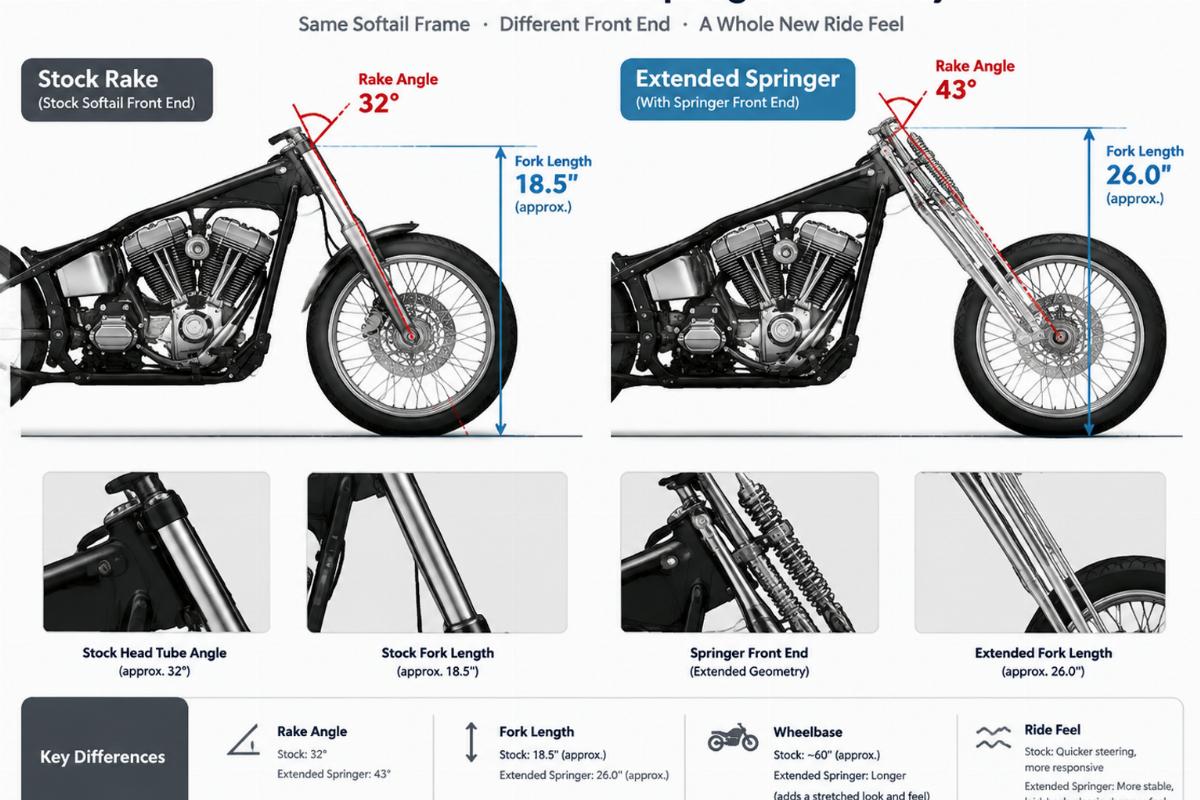
This experience highlights why distributors and builders must look beyond basic dimensions. Sourcing a Softail Springer conversion kit fitment solution requires a deep understanding of how steering head components interact with the frame across different eras of production.
Why Does Overall Length Mislead in Springer Conversions?
Length ignores the critical relationship between neck angle and triple tree spacing, which are the true determinants of frame clearance.
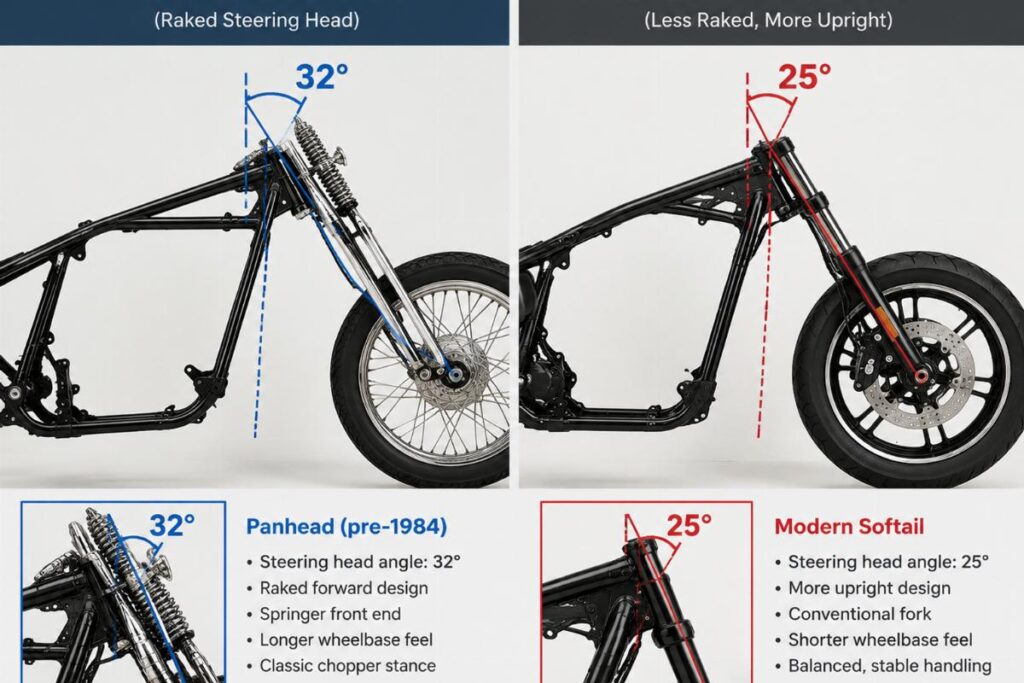
Many buyers assume that if a springer assembly is listed as “10 inches over stock,” it will fit any Softail. This is a dangerous assumption. The overall length tells you how far the wheel moves forward, but it does not tell you how the assembly sits in the neck. The neck angle of the frame dictates the trajectory of the fork legs. If the springer assembly is designed for a different neck angle than your frame possesses, the entire front end will sit at an incorrect inclination. [NEED_CITE: impact of steering head angle on fork trajectory]
Consider the triple tree spacing. This is the distance between the upper and lower triple clamps. On a stock Softail, this spacing is engineered to keep the fork tubes parallel to the frame’s intended line. In a conversion, if the triple tree spacing on the aftermarket springer does not match the frame’s bearing cups, the forks will bind or sit crooked. More importantly, incorrect spacing changes the pivot point of the suspension. This can cause the wheel to arc upward during compression, leading to the very oil pan contact seen in the LA case.
| Fitment Factor | Stock Configuration | Incorrect Conversion Approach | Correct Verification Method |
|---|---|---|---|
| Primary Metric | OEM specified rake and trail | Overall extended length only | Neck angle and triple tree spacing |
| Frame Interaction | Matches bearing cup alignment | Ignores steering head geometry | Cross-references frame year and neck specs |
| Risk Level | None (Factory tested) | High (Wheel-to-frame contact) | Low (Verified compatibility) |
A Softail Springer conversion kit fitment check must start with the frame, not the part. Measure the existing neck angle and compare it to the springer assembly’s design specs. Do not rely on generic “Softail” labels. The difference between a smooth ride and a destroyed engine case lies in these millimeters of geometric alignment.
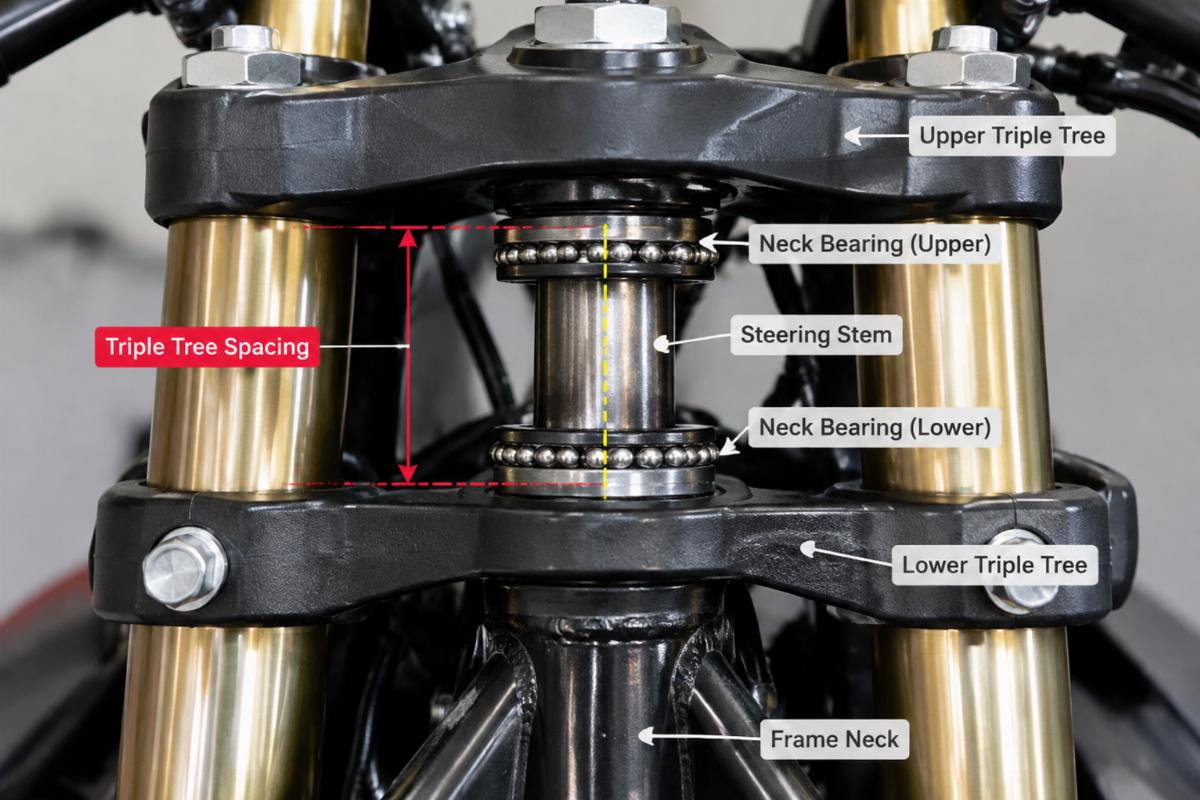
Which Softail Years Require Specific Steering Head Parts?
Frame neck bearings and cups change significantly across Evolution and Twin Cam eras, demanding precise year matching to avoid structural failure.
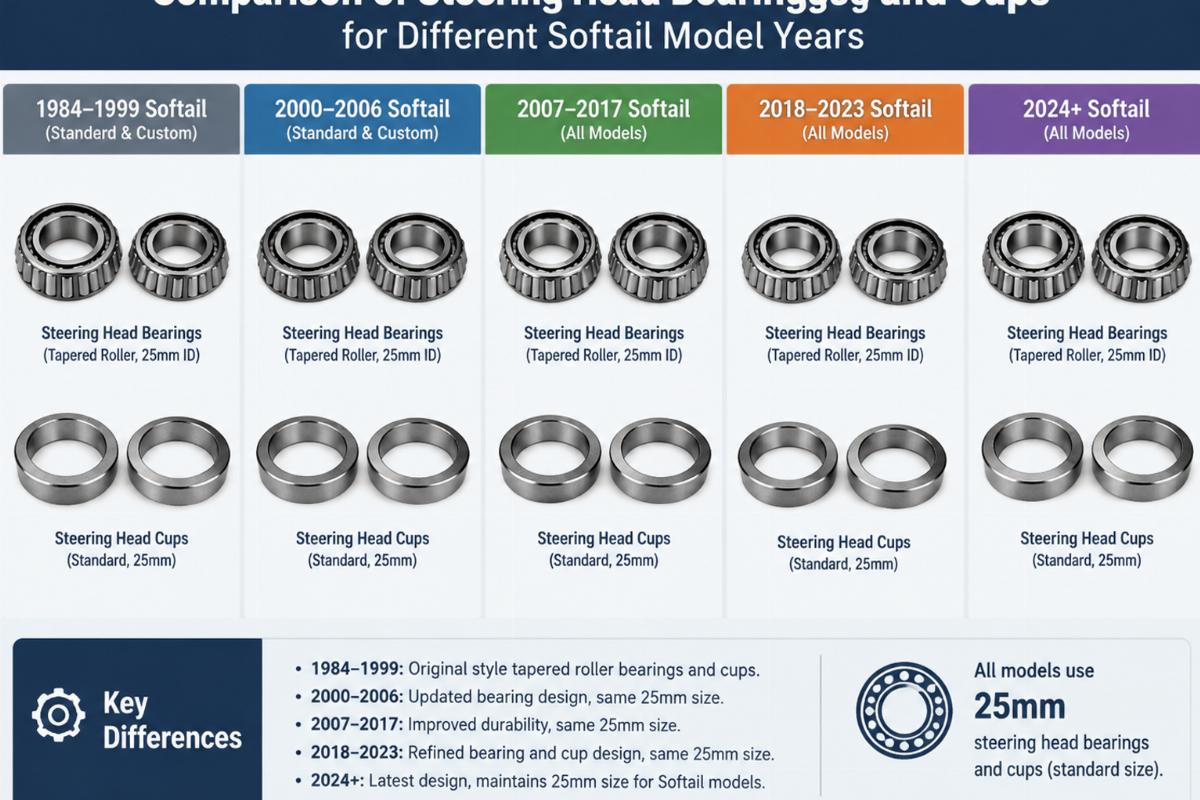
It is a common misconception that all Softails share the same steering head components. In reality, the transition from the Evolution engine era to the Twin Cam era brought subtle but critical changes to the frame geometry. Pre-1984 frames, while often used as a base for choppers, have entirely different steering head dimensions compared to the 1984-and-later Softail models. Even within the Softail line, the bearing types and cup diameters evolved. [NEED_CITE: Harley-Davidson frame evolution timeline]
For example, early Softail models used specific head cups that differ from those found on later Twin Cam frames. If you install a springer assembly designed for a Twin Cam neck onto an Evolution frame, the bearings will not seat correctly. This leads to premature wear, steering wobble, and potential catastrophic separation under load. Conversely, using an older style assembly on a newer frame may result in insufficient clearance for the wider tires or modern brake calipers.
I once assisted a European distributor who was receiving returns on a batch of springer kits. The parts were high quality, but they were being shipped to customers with early 1990s Softails without verifying the bearing type. The kits were designed for later models with larger diameter neck bearings. The mismatch caused the steering to feel notchy and loose. By implementing a strict year-range verification process, we eliminated these returns. [NEED_CITE: importance of year-specific steering components]
When sourcing a Softail Springer conversion kit fitment solution, always specify the exact model year. Do not just say “1990s Softail.” Specify whether it is an early Evolution or a late-model Twin Cam. This ensures that the head cups, races, and dust shields provided with the assembly match your frame’s requirements.
How to Verify Fitment Before Ordering a Springer Assembly?
Provide model year, frame neck specs, and photos to confirm compatibility and avoid costly errors before shipment.
Verification is not just a courtesy; it is a necessity for complex conversions. The most effective way to ensure a Softail Springer conversion kit fitment is correct is to share detailed information with your supplier before placing an order. This process should involve more than just a part number.
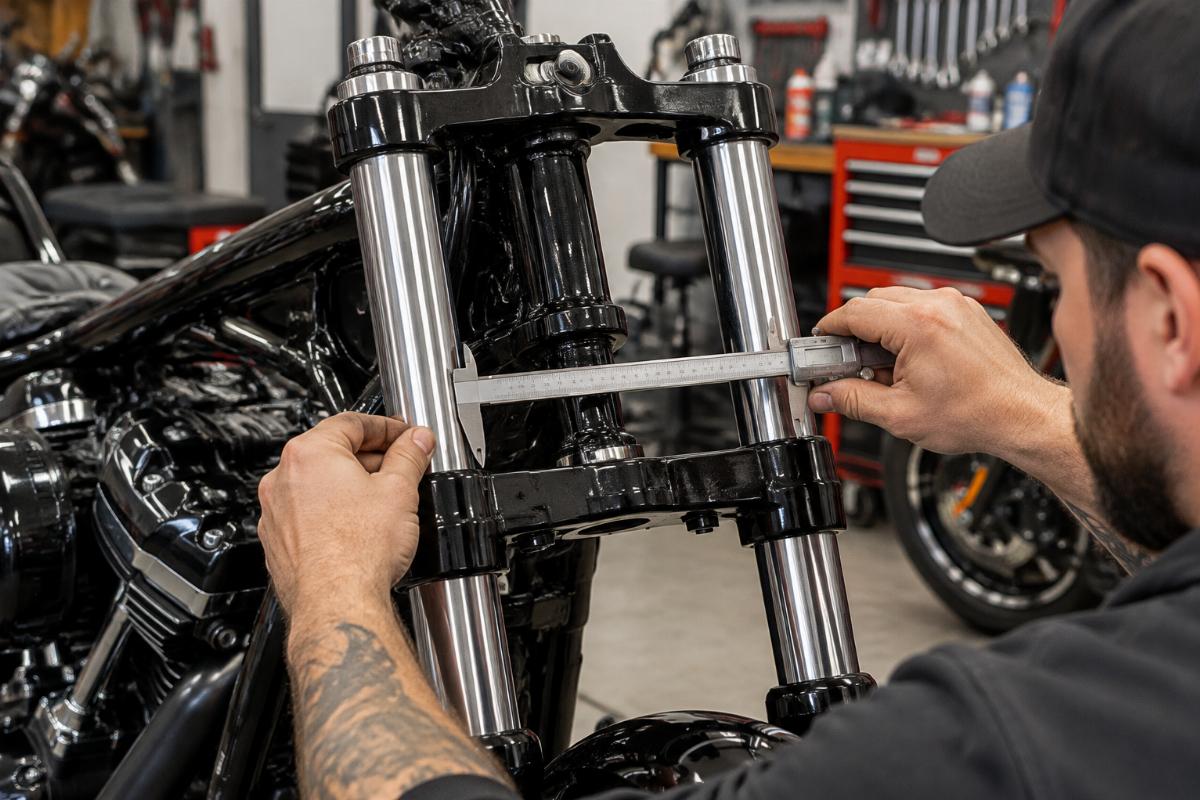
Start by identifying your frame’s specific characteristics. Take clear photos of the steering head area, showing the neck bearings and cups. Measure the existing triple tree spacing if possible. Provide the exact model year and any modifications already made to the frame, such as stretched necks or modified downtubes. [NEED_CITE: best practices for motorcycle part fitment verification]
A reliable supplier will use this information to cross-reference their inventory against your frame’s needs. They should be able to provide a fitment sheet that outlines the compatible year ranges and any necessary adapters. If a supplier cannot answer technical questions about neck angles or bearing types, consider it a red flag.
In my own workflow, I request sample assemblies for fitment confirmation before approving bulk orders. This allows distributors to physically check the dimensions against their reference frames. It also helps verify the finish quality and hardware inclusion. By catching discrepancies at the sample stage, you avoid the expense and delay of returning a full container of mismatched parts.
| Verification Step | Action Required | Outcome |
|---|---|---|
| Documentation | Send model year and frame photos | Confirms bearing and cup compatibility |
| Measurement | Check triple tree spacing and neck angle | Ensures geometric alignment |
| Sampling | Order a single unit for test fit | Validates physical fit and finish quality |
| Cross-Reference | Compare against OEM numbers (marked reference) | Confirms part equivalence and supersessions |
This proactive approach saves time and money. It transforms the buying process from a gamble into a calculated engineering decision.
What Documentation Ensures Consistent Quality in Aftermarket Parts?
Request fitment sheets, cross-references, and inspection records to maintain catalogue accuracy and reduce return rates.
Consistency is the hallmark of a professional supplier. Batch variation in finish quality or dimensional accuracy can damage a distributor’s reputation. To mitigate this risk, demand comprehensive documentation with every order. This is not just about paperwork; it is about traceability and quality assurance.
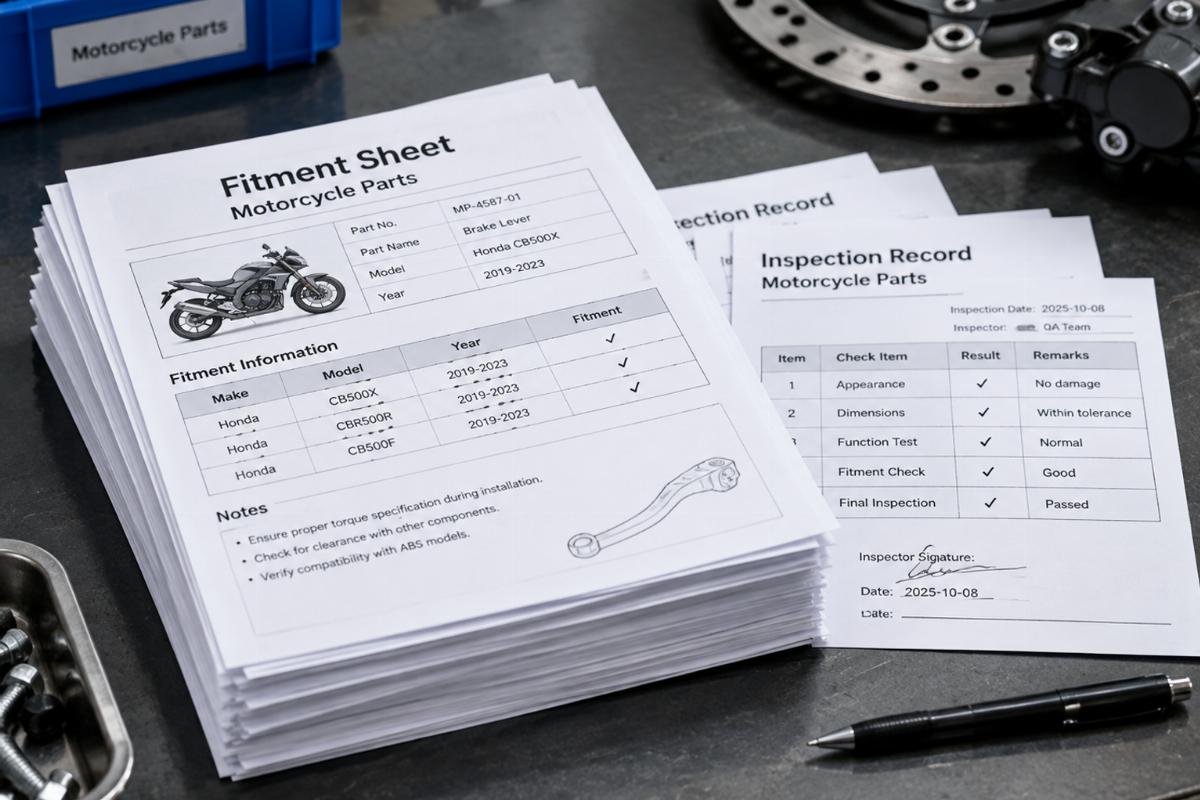
A proper fitment sheet should list the specific model years and variants compatible with the part. It should also include cross-reference numbers to OEM parts, marked clearly as reference only. This helps your sales team answer customer questions accurately. [NEED_CITE: role of documentation in aftermarket parts supply chain]
Inspection records are equally important. These documents show that each batch has been checked for dimensional accuracy and finish quality. For chrome and black finishes, ask for sample confirmation to ensure the color and shine match your expectations. Variations in plating thickness or powder coat texture can occur between batches if not monitored.
I have seen distributors struggle with suppliers who provide no documentation beyond a simple invoice. When a customer asks about compatibility, the distributor has no data to support their answer. By contrast, suppliers who provide detailed fitment sheets and inspection records empower their partners to sell with confidence. This level of transparency builds trust and reduces the likelihood of disputes.
When evaluating a Softail Springer conversion kit fitment provider, ask for their standard documentation package. Review the fitment sheets for clarity and completeness. Check if they provide inspection records for critical dimensions. This due diligence ensures that the parts you receive meet the high standards your customers expect.
Conclusion
Fitment is geometry, not just length.
Avoiding frame damage in Softail Springer conversions requires a rigorous focus on neck angle and triple tree spacing. By verifying these dimensions against your specific model year and demanding comprehensive documentation from your supplier, you ensure structural safety and customer satisfaction. A Softail Springer conversion kit fitment strategy built on technical accuracy protects your business from costly returns and reputational harm.