
Wholesale Dyna Club Style vs Chopper Style Bars and Front End
Longer forks do not automatically create a chopper geometry.
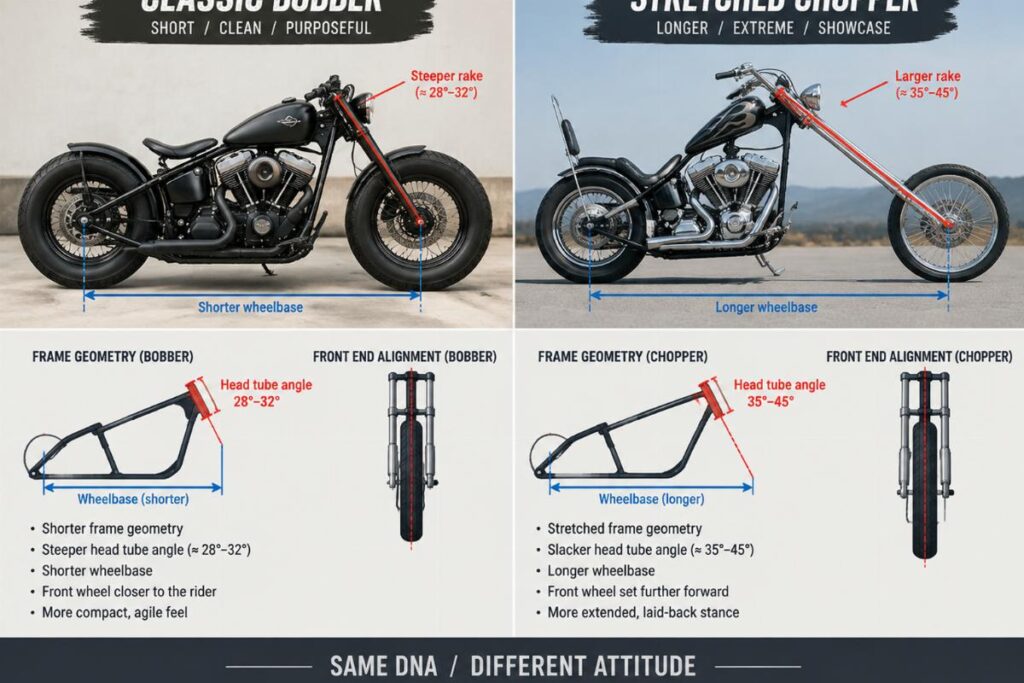
Converting a Harley-Davidson Dyna into a custom build requires distinguishing between two fundamentally different aesthetic and mechanical approaches: Club Style and Chopper. The primary difference lies not just in the visual length of the front end, but in the specific combination of fork extension, triple tree offset, and handlebar pullback. Club Style builds prioritize a compact, aggressive stance with minimal changes to stock rake and trail, while Chopper builds emphasize extended rake, relaxed ergonomics, and significant front-end stretch. Confusing these specifications leads to unstable handling, incorrect rider positioning, and costly fitment errors during assembly. Understanding the dimensional requirements for each style is essential for distributors and builders to ensure correct part selection and avoid returns.
The confusion often stems from a superficial view of custom motorcycle trends. Many buyers assume that any extended front end qualifies as a chopper setup, or that all aftermarket handlebars are interchangeable across custom styles. In reality, the engineering constraints for a Dyna platform differ sharply between these two categories. A Club Style conversion might use slightly longer forks to level the bike or achieve a subtle nose-up attitude, but it retains near-stock steering geometry. A Chopper conversion, however, drastically alters the head angle and trail, requiring specific triple trees and bars designed to accommodate the new rider triangle. This distinction is critical for wholesale buyers sourcing parts for diverse customer bases. [NEED_CITE: fundamental differences in motorcycle steering geometry and rake/trail relationships]
What Defines Club Style vs. Chopper Geometry on a Dyna?
Club Style focuses on performance-oriented aggression, while Chopper style prioritizes visual extension and relaxed cruising.
The term “Club Style” originated in California racing circles, where riders modified street bikes to mimic the look of flat-track racers. On a Dyna, this translates to a low-slung profile, often achieved with shorter rear shocks and slightly extended front forks. The goal is a tight, responsive feel. The front end remains relatively close to stock length, preserving the original steering characteristics. In contrast, the Chopper aesthetic, rooted in post-war American custom culture, seeks to elongate the wheelbase and stretch the front end. This involves significantly longer forks, which push the front wheel forward, increasing the rake angle and trail.
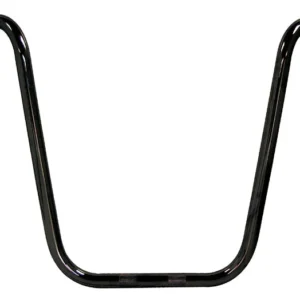
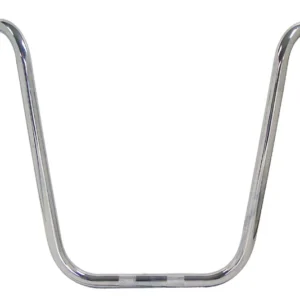
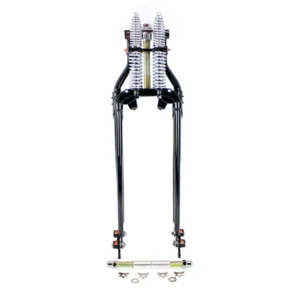
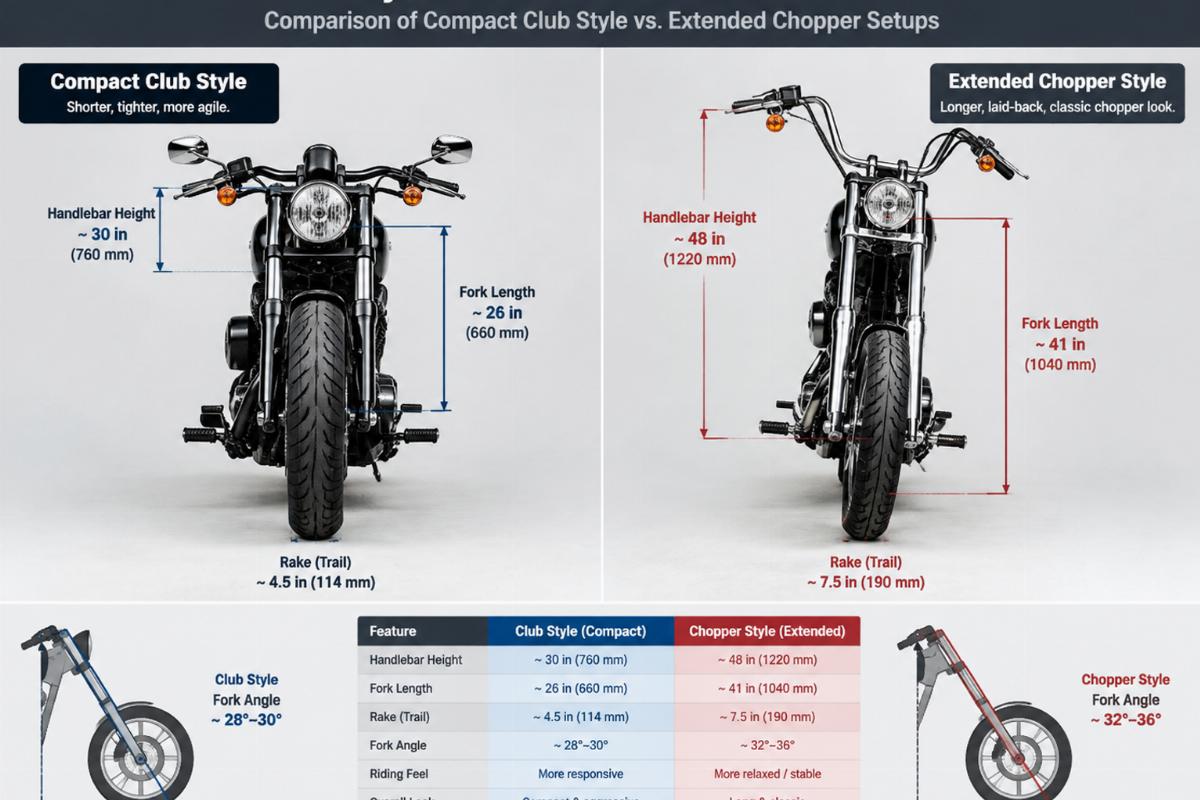
From a sourcing perspective, this means the parts required are not merely “longer versions” of the same component. A Club Style front end might extend only a few inches over stock, maintaining compatibility with standard triple trees and brakes. A Chopper front end may extend much further, necessitating specialized triple trees with different offsets to maintain some semblance of stability. The handlebars follow suit: Club Style bars are typically lower and have less pullback, keeping the rider tucked in. Chopper bars are higher, wider, and feature substantial pullback to compensate for the stretched reach.
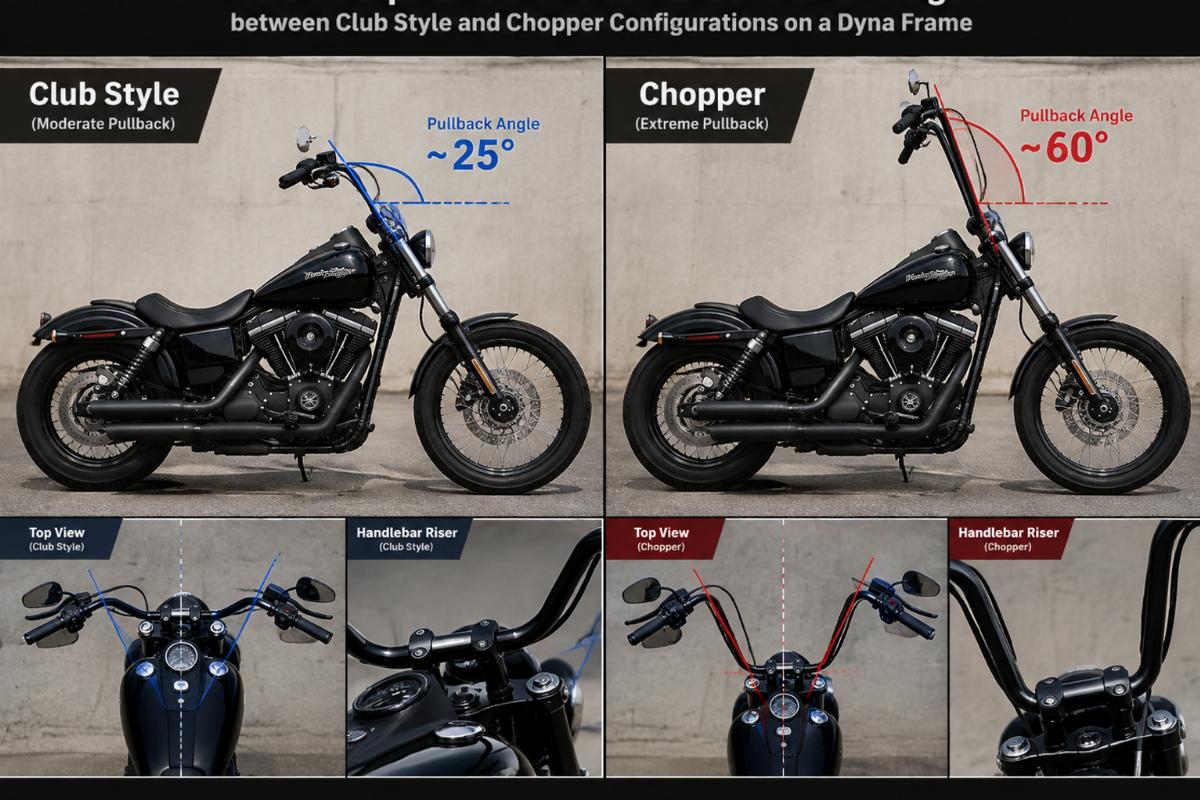
Misidentifying these styles can lead to serious functional issues. A builder attempting a Chopper look with Club Style parts will find the bike looks stubby and handles too quickly for the intended aesthetic. Conversely, using Chopper-spec forks on a Club Style build results in a bike that feels sluggish and difficult to maneuver in tight spaces. For distributors, clarifying the customer’s intent—racing-inspired agility versus cruising relaxation—is the first step in accurate fitment. [NEED_CITE: historical evolution of Club Style and Chopper motorcycle customs]
How Does Fork Length Impact Rake and Trail?
Extended forks increase rake and trail, which stabilizes straight-line riding but reduces cornering agility.
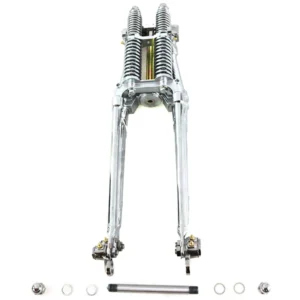
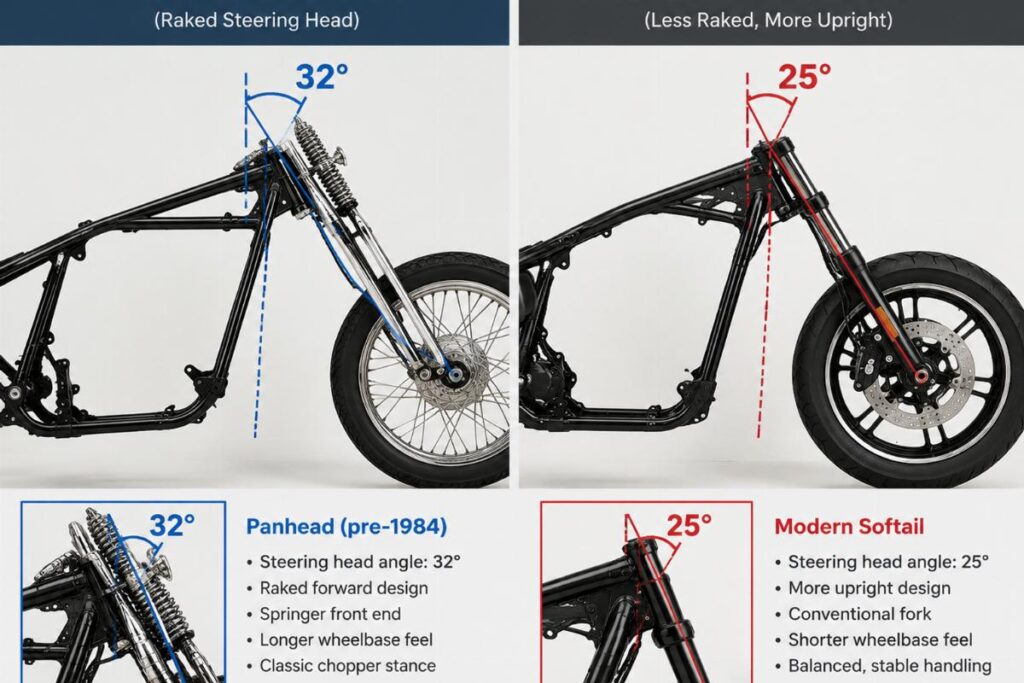
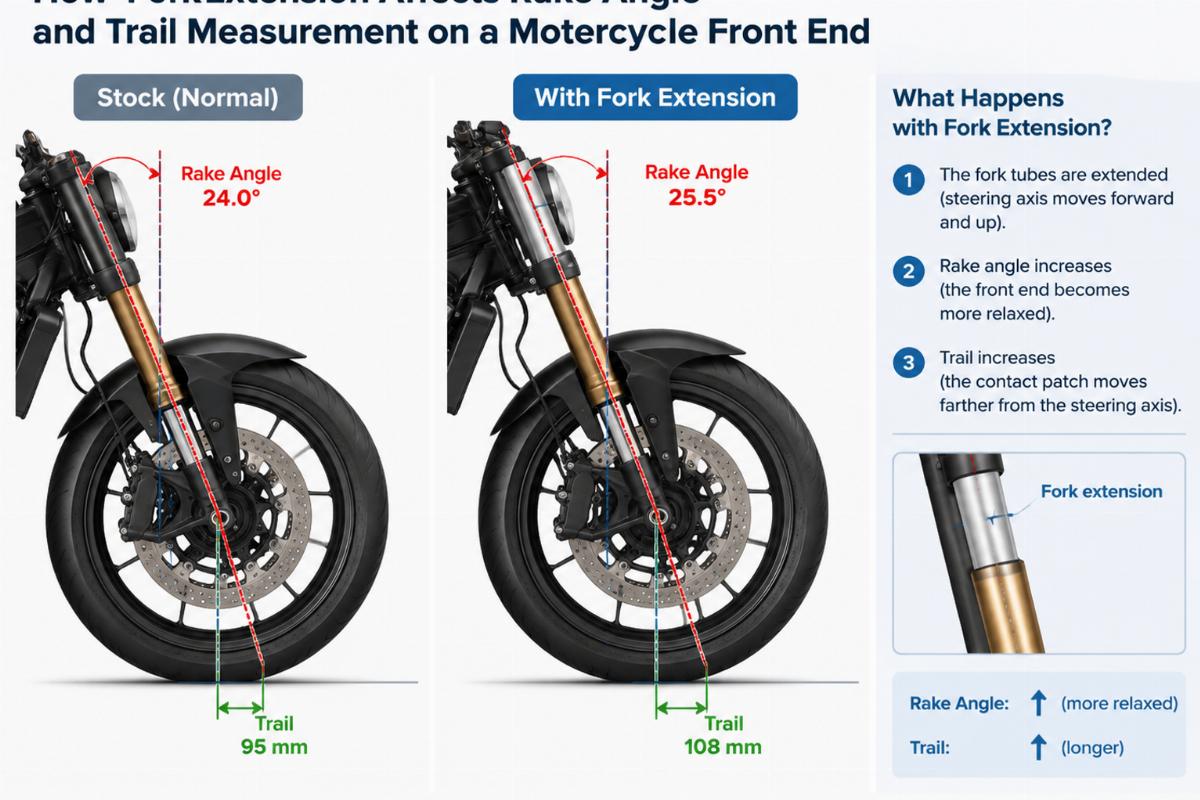
Fork length is the most visible variable in front-end conversions, but its impact on geometry is often misunderstood. When forks are extended, the front axle moves forward and downward relative to the steering head. This change increases the rake angle (the angle of the steering axis) and the trail (the distance between the tire contact patch and the steering axis intersection). Increased trail makes the motorcycle more stable at high speeds and in a straight line, which is desirable for Chopper builds. However, it also makes the bike harder to turn and less responsive to lean inputs.
For Club Style builds, the goal is often to maintain near-stock trail values. This allows the bike to retain its agile handling characteristics despite cosmetic modifications. Therefore, Club Style fork extensions are usually modest. If a builder installs forks that are too long for a Club Style intent, the bike becomes unstable at low speeds and feels vague in corners. This was evident in a case where a customer ordered standard Club Style extensions for a high-rake Chopper build. The result was insufficient trail for the desired aesthetic and compromised handling dynamics because the triple tree offset was not adjusted to compensate.
| Feature | Club Style Front End | Chopper Front End |
|---|---|---|
| Fork Extension | Minimal to moderate over stock | Significant extension over stock |
| Rake Angle | Near stock or slightly increased | Substantially increased |
| Trail | Maintained near stock for agility | Increased for straight-line stability |
| Triple Tree Offset | Standard or minimal change | Often modified to adjust trail |
| Handling Character | Agile, responsive | Stable, relaxed, slower turning |
To avoid these issues, builders must measure the stock fork length and compare it against the desired extended length. The key is not just the absolute length, but how that length interacts with the triple tree offset. [NEED_CITE: motorcycle chassis dynamics regarding rake and trail calculations] Distributors should provide clear data on how much a specific fork kit extends over stock, allowing builders to calculate the resulting geometry changes. Without this information, customers are guessing, leading to mismatched expectations and potential safety concerns.
Why Do Handlebar Specifications Differ Between Styles?
Handlebar pullback and rise determine rider ergonomics, which must align with the front-end geometry.
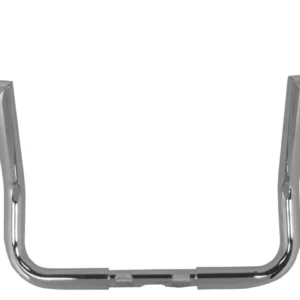
Handlebars are not one-size-fits-all, especially when switching between Club Style and Chopper builds. The primary dimensions that matter are rise, width, and pullback. Pullback refers to how far the grips sweep back toward the rider. In a Club Style build, the rider sits forward, closer to the tank. Therefore, bars with minimal pullback are preferred to keep the arms in a natural, slightly forward position. These bars often have a lower rise to maintain the aggressive, tucked-in posture.
In a Chopper build, the front wheel is pushed far forward, stretching the rider’s reach. To compensate, Chopper bars typically feature significant pullback and higher rise. This brings the controls back to the rider, preventing an overly stretched and uncomfortable riding position. Installing low-pullback Club Style bars on a Chopper frame forces the rider to lean forward excessively, causing fatigue and reducing control precision. Conversely, high-pullback Chopper bars on a Club Style bike can make the controls feel too close and cluttered, interfering with tank clearance and visibility.
A common error observed in the field involves clients installing low-pullback Club bars on a Chopper frame. The rider position becomes overly stretched, leading to discomfort and complaints about handling. This mismatch highlights the importance of verifying handlebar specifications against the specific build style. [NEED_CITE: ergonomic principles in motorcycle handlebar design and rider positioning]
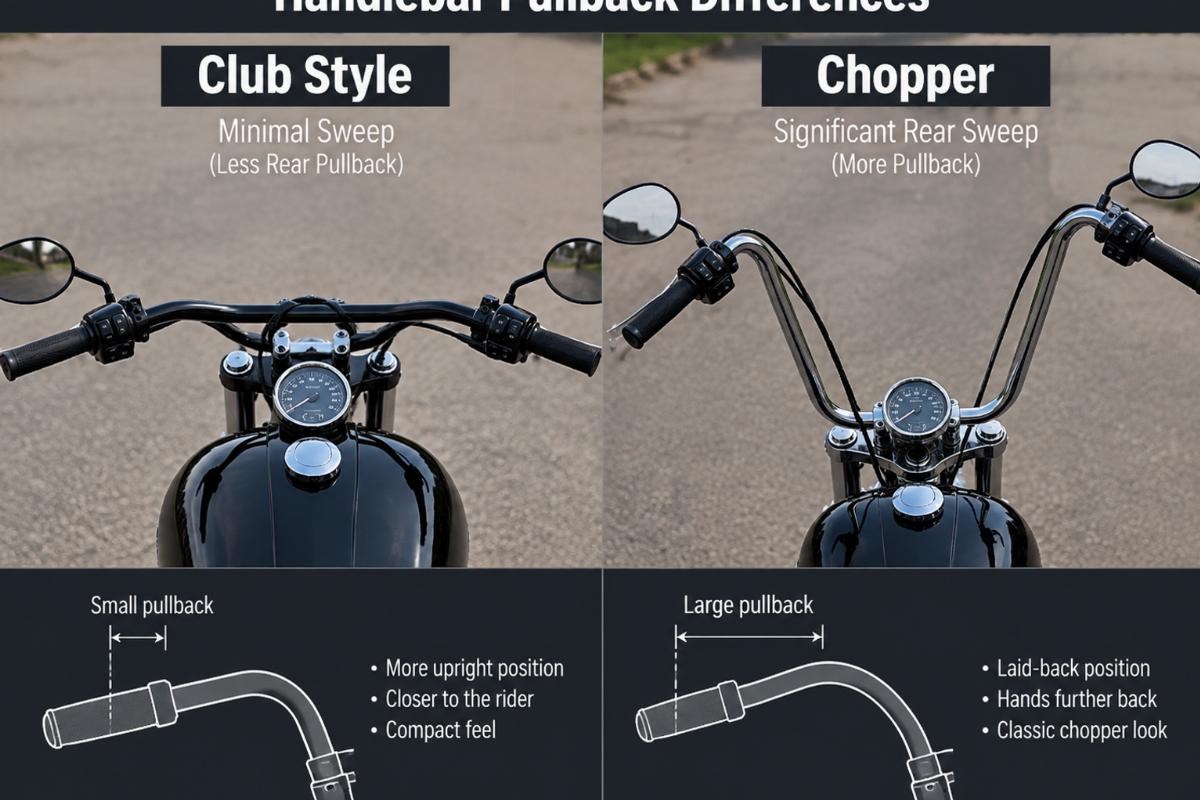
Additionally, control clamp areas and internal wiring paths differ. Club Style bars may have narrower clamp zones to fit tighter triple trees, while Chopper bars need wider spacing to accommodate the broader front end. Ignoring these details can lead to installation failures where controls do not fit or wires are pinched. Distributors must cross-reference bar dimensions with the specific triple tree and fork setup to ensure compatibility.
What Are Common Fitment Pitfalls in Dyna Conversions?
Ignoring triple tree compatibility and control clearance leads to installation failures and unsafe modifications.
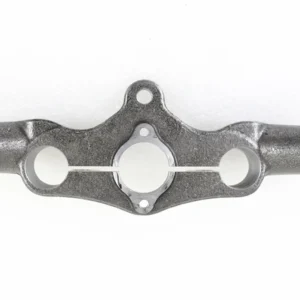
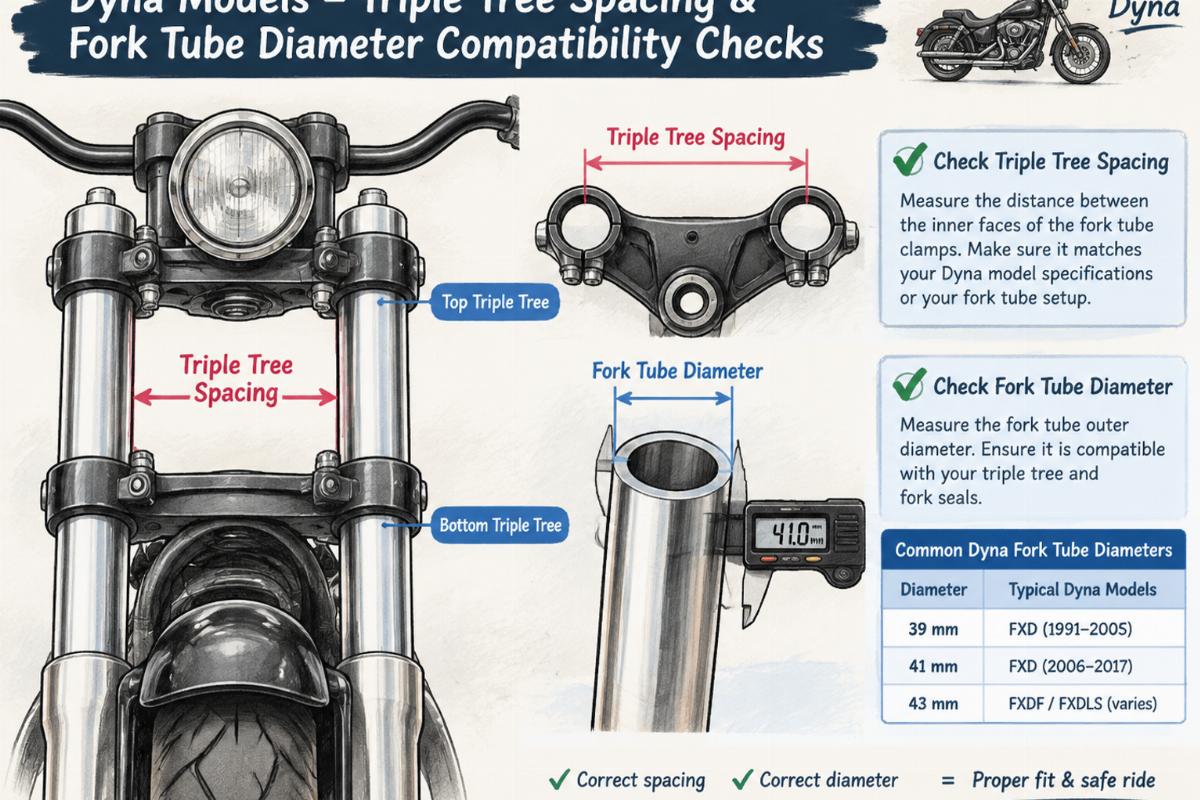
One of the most frequent mistakes in Dyna conversions is assuming that all triple trees are interchangeable. Narrow Glide and Wide Glide forks have different tube diameters and spacing. Attempting to use Wide Glide trees with Narrow Glide sliders without proper adapters results in fitment failure. Even within the same glide type, the offset of the triple tree plays a crucial role in determining final trail. A builder must verify tube diameter and tree spacing before ordering any front-end components.
Another pitfall is overlooking control clearance. Extended forks and altered handlebars can cause cables and brake lines to become too short or too long. In a Chopper build, longer lines are almost always required. In a Club Style build, stock lengths may suffice, but minor adjustments might be needed if the bars are significantly different from original equipment. Failure to account for these ancillary parts leads to incomplete builds and additional shipping costs for replacement lines.
| Pitfall | Cause | Consequence |
|---|---|---|
| Triple Tree Mismatch | Mixing Narrow/Wide Glide components | Installation failure, unsafe steering |
| Incorrect Bar Pullback | Using Club bars on Chopper geometry | Rider fatigue, poor control leverage |
| Cable Length Issues | Not adjusting for fork extension | Broken cables, restricted steering |
| Brake Caliper Interference | Extended forks changing axle position | Rubbing, reduced braking efficiency |
Providing detailed fitment sheets and cross-references prevents these errors. By specifying model year ranges, tube diameters, and required offsets, manufacturers can help distributors guide their customers correctly. This proactive approach reduces return rates and builds trust with builders who rely on accurate technical data. [NEED_CITE: common causes of aftermarket motorcycle part fitment issues]
Conclusion
Accurate fitment depends on understanding the distinct geometric requirements of Club Style and Chopper builds.
Confusing these two styles leads to incorrect rake, trail, and rider ergonomics. Club Style demands minimal changes to preserve agility, while Chopper builds require significant extensions for a relaxed, stretched look. Distributors and builders must verify fork length, triple tree offset, and handlebar pullback to ensure a successful conversion. Attention to these details prevents costly errors and ensures the final build meets both aesthetic and functional expectations.