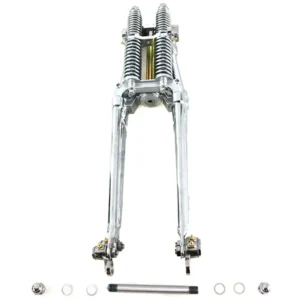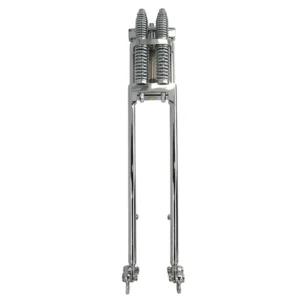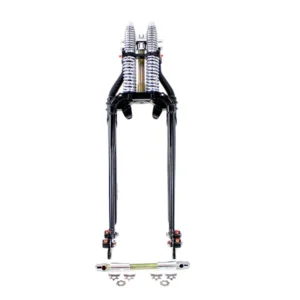

Wholesale Springer Front End Lengths: Stock, +2, +4 and +6
Longer forks do not automatically mean better handling or universal fitment.
Selecting the correct springer front end lengths requires verifying frame neck angles and triple tree clearance against specific model years, rather than relying on aesthetic preference alone. Extended lengths such as +2, +4, and +6 inches alter ride height and steering geometry, which can lead to fender interference or incompatible steering stops if the underlying frame architecture is not accounted for before ordering.
I remember standing in a humid workshop in Lagos, watching a local builder struggle with a batch of extended springers that had just arrived from overseas. The +4 inch extensions looked impressive on the showroom floor, but once mounted on the Softail frames, the front wheel rubbed against the fender during full compression. The builder had assumed that longer travel equated to better rough-road capability, ignoring the fixed geometry of the stock frame neck. We spent days measuring axle-to-fender gaps and adjusting spacers, but the root issue was a mismatch between the extended springer front end lengths and the unmodified chassis. That experience reinforced a simple rule: measure the stock configuration first, calculate the geometric impact of added length, and never ship a part without confirming the frame’s physical limits. [NEED_CITE: effect of fork length on motorcycle steering geometry]
Understanding these dimensions is critical for distributors and builders who aim to minimize returns and ensure customer satisfaction. The following sections break down what these length increments actually mean, how they affect fitment, which models can accommodate them, and how to verify clearance before installation.
What Do +2, +4, and +6 Mean?
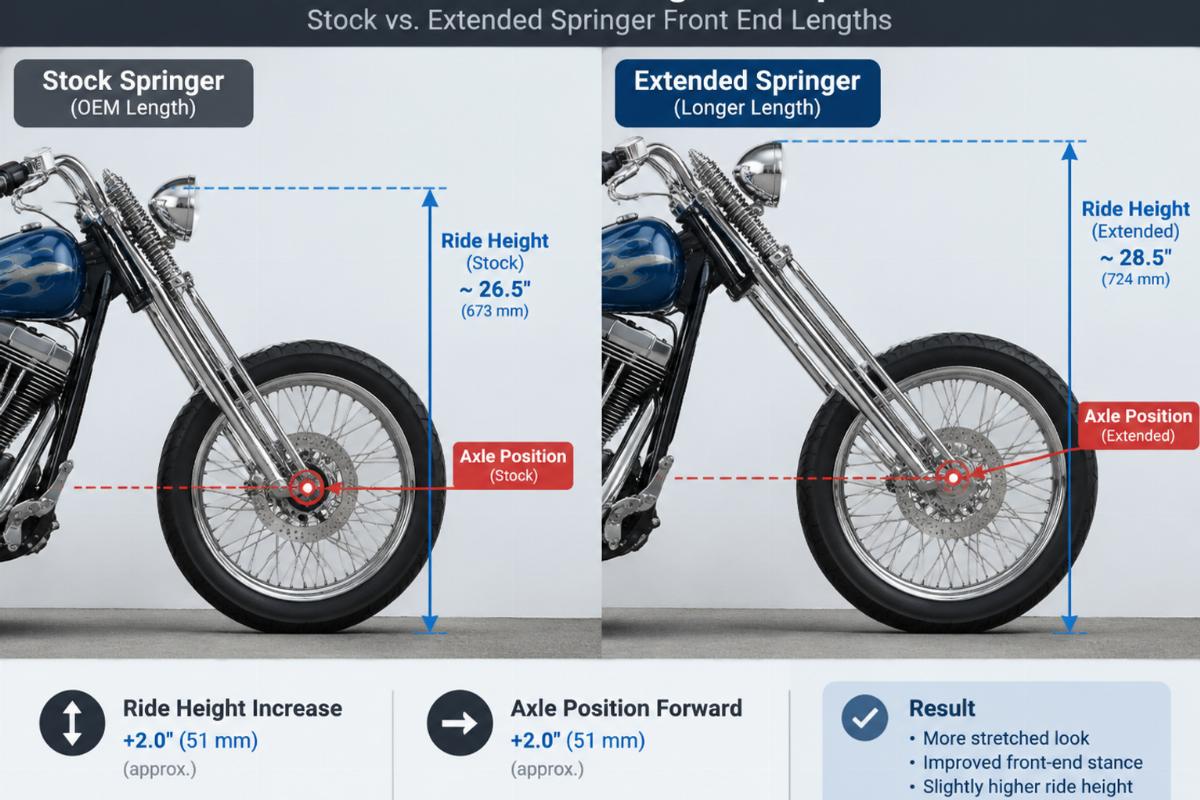
These numbers refer to the additional inches added to the stock axle position, directly influencing ride height and visual stance.
When discussing springer front end lengths, the terms +2, +4, and +6 denote the extension beyond the original equipment manufacturer (OEM) specification. A stock springer maintains the factory-intended rake and trail, preserving the original handling characteristics designed for that specific model year. Adding length moves the front axle forward and downward, which raises the front end of the motorcycle relative to the rear. This change is not merely cosmetic; it shifts the center of gravity and alters the mechanical leverage acting on the steering head.
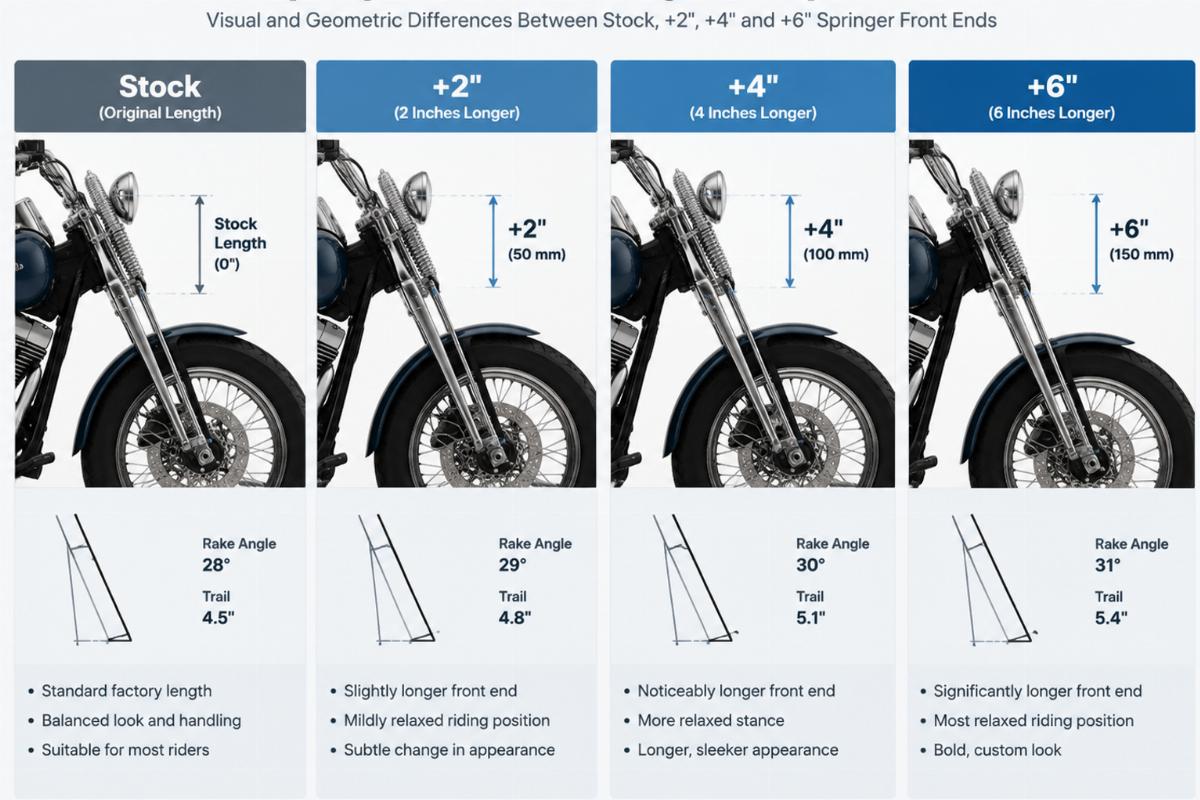
A common misconception is that these extensions are universal upgrades. In reality, each increment serves a different purpose. A +2 extension often provides a subtle lift that clears minor obstacles without drastically changing the bike’s personality. A +4 extension creates a more pronounced chopper aesthetic but begins to stress the limits of stock fender mounts and brake lines. A +6 extension is a significant modification that typically requires custom fabrication for wiring, cables, and braking systems. [NEED_CITE: standard definitions of motorcycle fork extension measurements]
| Length Increment | Visual Impact | Geometric Change | Typical Application |
|---|---|---|---|
| Stock | Original OEM stance | Maintains factory rake and trail | Restoration, daily riding |
| +2 Inches | Slight lift | Minor increase in trail | Mild custom builds, improved ground clearance |
| +4 Inches | Noticeable stretch | Significant change in steering feel | Show bikes, moderate chopper styles |
| +6 Inches | Aggressive extension | Major shift in center of gravity | Heavy custom builds, specialized aesthetics |
Builders must recognize that these lengths are not interchangeable across all platforms. The physical structure of the springer assembly changes with each increment, affecting the spacing of the triple trees and the angle of the spring rods. Ignoring these details leads to parts that simply do not bolt on, regardless of how appealing they look in photographs.
How Does Length Affect Fitment?
Extended lengths change the rake and trail, which can cause frame or fender interference if not properly calculated.
The primary technical challenge with extended springer front end lengths is the alteration of the motorcycle’s steering geometry. Rake refers to the angle of the steering head relative to the vertical axis, while trail is the horizontal distance between the contact patch of the front tire and the point where the steering axis intersects the ground. Increasing the length of the front end generally increases the trail, which can make the steering feel heavier and slower to respond. While this may provide stability at high speeds, it can make low-speed maneuvering difficult and unpredictable.
Furthermore, physical clearance becomes a critical issue. As the front end extends, the wheel travels through a larger arc. On many stock frames, particularly those designed for shorter travel, this expanded arc causes the tire to contact the fender or the frame downtubes during compression. I recall a return case from a US distributor where a customer ordered a +6 kit for a narrow-neck FLSTS frame. The triple tree width of the extended kit was incompatible with the tight spacing of the frame’s downtubes, making installation impossible without modifying the frame itself. This error could have been avoided by checking the triple tree width against the frame specifications before shipment. [NEED_CITE: motorcycle frame clearance requirements for extended forks]
Another frequent issue involves the steering stops. Stock frames have built-in stops that limit how far the handlebars can turn. When using extended springer front end lengths, these stops may engage too early or too late, potentially causing the tires to rub against the frame or the engine cases. Verifying the range of motion before final assembly is essential to prevent damage to paint, chrome, or structural components.
Which Models Suit Extended Springers?
Late-model Softails often accommodate +2 or +4 extensions, while early frames require strict adherence to stock specifications.
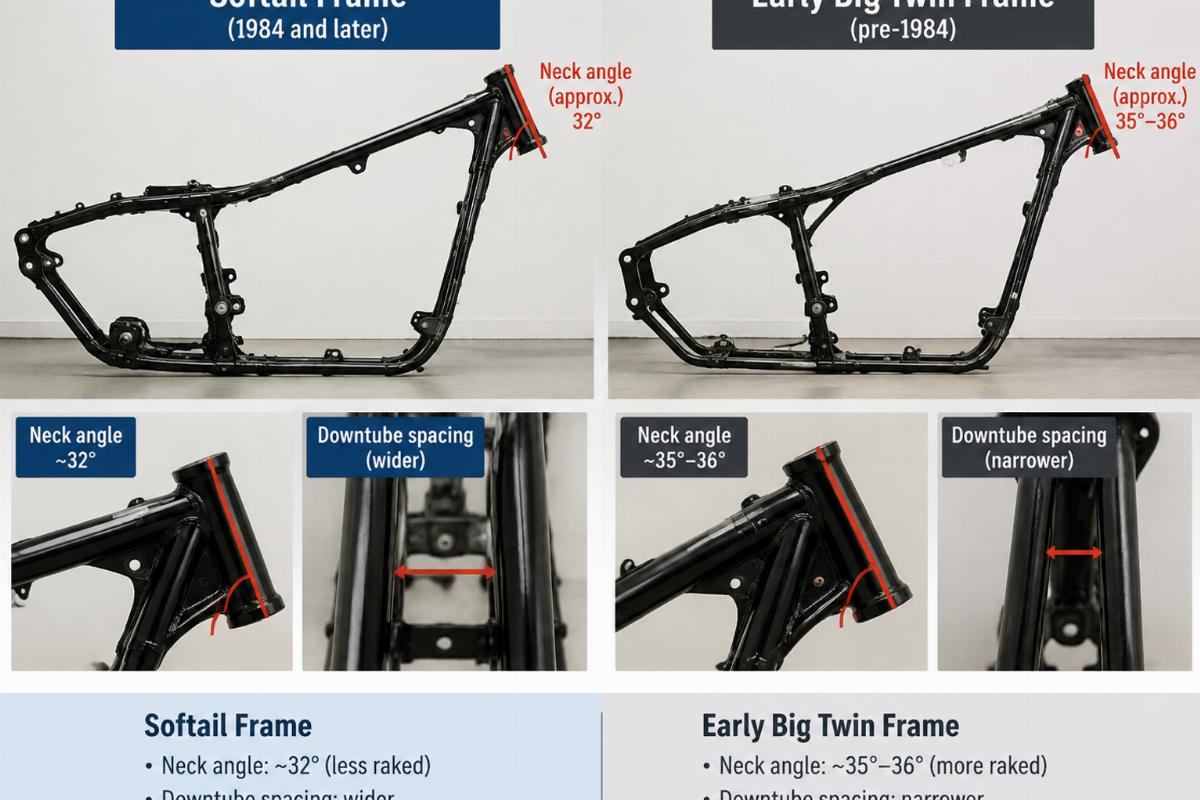
Not all motorcycles are created equal when it comes to accepting extended springer front end lengths. The frame design, specifically the neck angle and the width of the downtubes, dictates how much extension is feasible without major modification. Late-model Softail frames, particularly those from the Evolution and Twin Cam eras, often have more forgiving geometry that can handle mild extensions like +2 or +4 inches. These models were designed with a degree of flexibility that allows for custom builds without compromising structural integrity.
In contrast, early Big Twin frames, such as those found on Knucklehead, Panhead, and Shovelhead models, are much less tolerant of changes. For restoration projects involving pre-1984 machines, maintaining the stock length is crucial to preserve the original rake and historical accuracy. Deviating from stock specifications on these classic bikes can ruin the vintage aesthetic and negatively impact handling in ways that are difficult to correct. [NEED_CITE: historical frame specifications for Harley-Davidson Big Twin models]
The Yamaha XS650 platform also presents unique considerations. While popular for custom builds, its frame geometry differs significantly from American V-twins. Builders working on XS650s must carefully evaluate whether extended springer front end lengths are compatible with the narrower frame profile and different steering head dimensions. Assuming that parts designed for Harley-Davidson models will fit a Yamaha without verification is a common mistake that leads to wasted time and resources.
| Model Family | Era | Compatibility with Extended Lengths | Notes |
|---|---|---|---|
| Softail | 1984 and later | Moderate (+2, +4) | Check triple tree clearance and fender mounts |
| Early Big Twin | Pre-1984 | Low (Stock preferred) | Maintain original rake for restoration accuracy |
| Dyna | Various | Variable | Depends on specific model year and frame type |
| Sportster | Various | Low | Frame geometry often limits extension options |
| Yamaha XS650 | All years | Custom dependent | Requires specific fitment verification for narrow frames |
Understanding these distinctions helps distributors stock the right parts for their target market. Offering extended lengths for models that cannot support them leads to high return rates and dissatisfied customers.
How to Verify Clearance Before Installation?
Mock-up assembly and precise measurement prevent costly modifications and ensure proper fitment.
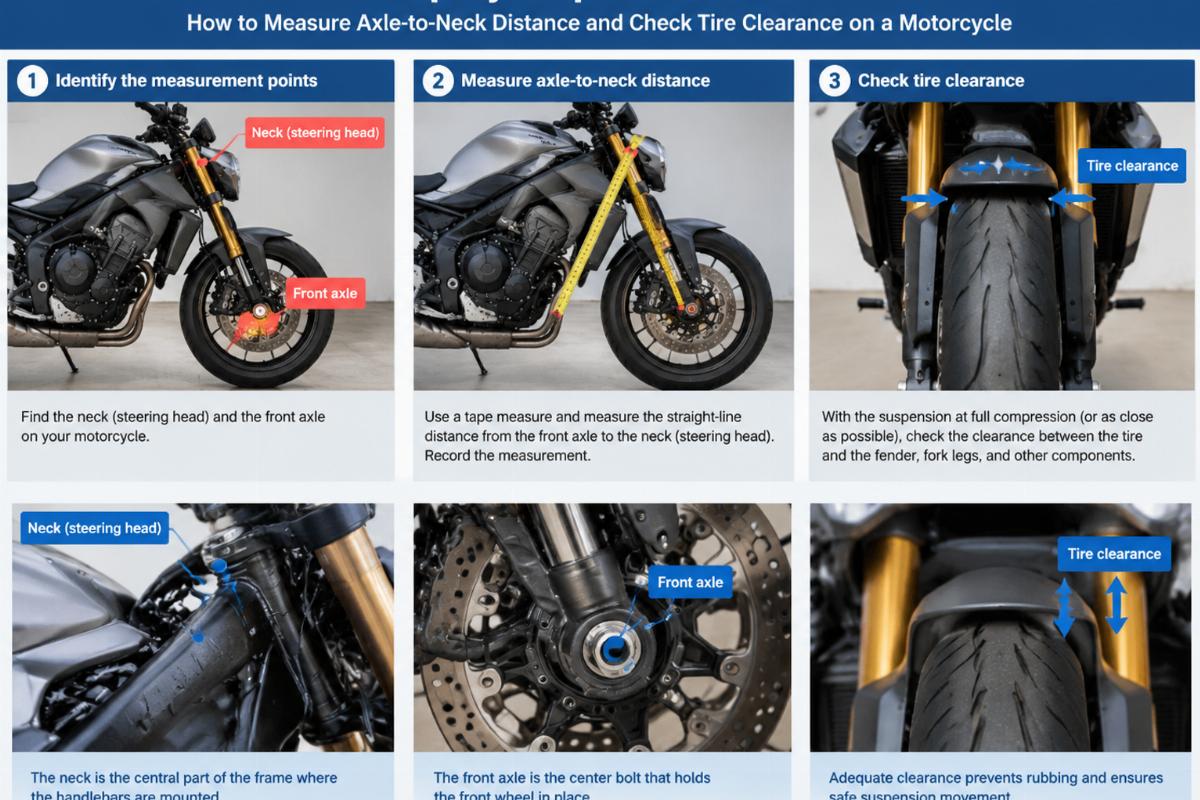
The most effective way to avoid fitment issues with springer front end lengths is to perform a thorough verification process before final installation. This begins with measuring the stock axle-to-neck distance on the motorcycle. This baseline measurement provides a reference point for calculating how much the new front end will extend the geometry. Without this data, selecting the correct length is purely guesswork.
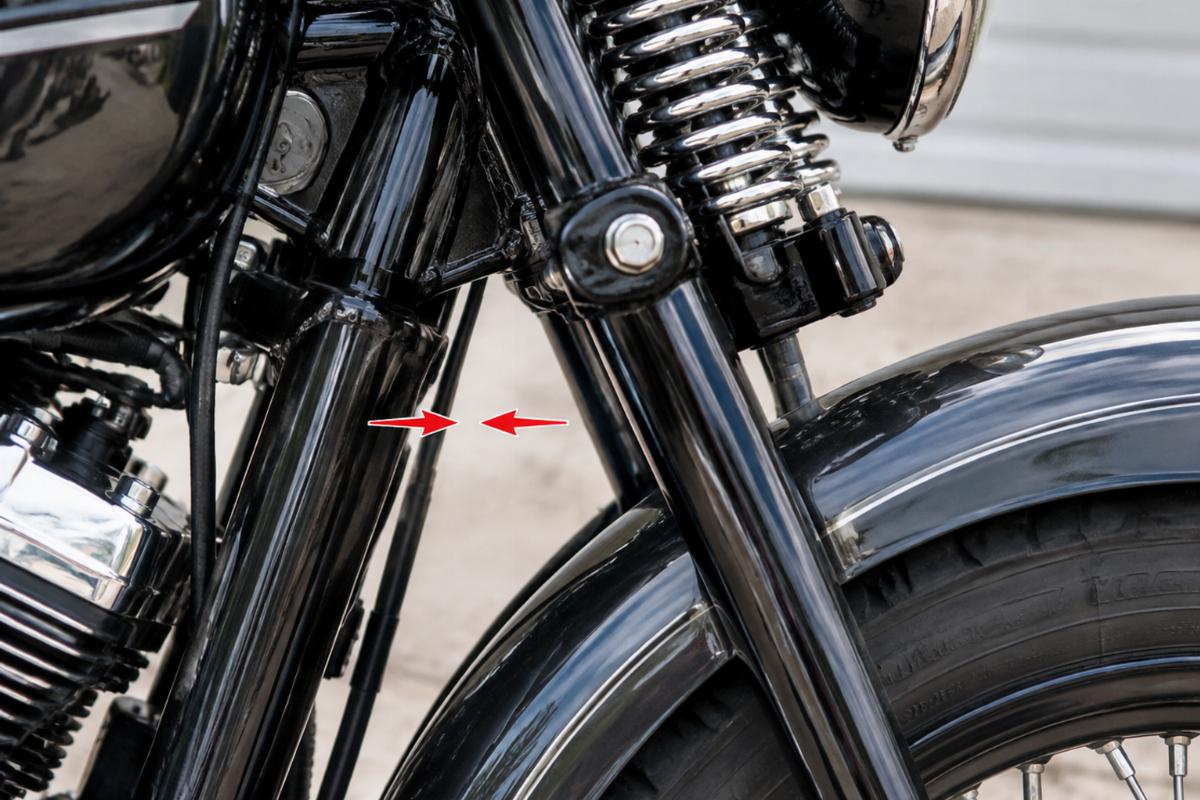
Next, builders should check the triple tree width against the frame downtubes. Measure the inner width of the frame neck and compare it to the outer width of the triple tree on the new springer assembly. If the triple tree is wider than the frame neck, the part will not fit without modifying the frame, which is a complex and risky procedure. [NEED_CITE: methods for measuring motorcycle frame and triple tree dimensions]
Tire clearance at full compression is another critical check. Install the new springer front end loosely and compress the suspension fully. Measure the gap between the top of the tire and the bottom of the fender or frame. There should be sufficient space to account for road irregularities and suspension movement. If the gap is too small, the tire will rub, causing damage and potential safety hazards.
Finally, verify the steering range. Turn the handlebars fully to both sides and check for any contact between the tire, fender, engine cases, or frame. Ensure that the steering stops function correctly and do not allow the wheel to move beyond safe limits. This step is often overlooked but is vital for ensuring the motorcycle remains controllable and safe to ride.
By providing fitment sheets and cross-reference data for specific model years, suppliers can help builders perform these checks accurately. This proactive approach reduces the likelihood of errors and ensures that the selected springer front end lengths are appropriate for the intended application.
Conclusion
Correct selection of springer front end lengths depends on technical verification, not just visual appeal.
Understanding the impact of stock, +2, +4, and +6 extensions on ride height and steering geometry is essential for successful custom builds. Verifying frame clearance, triple tree compatibility, and tire movement prevents costly mistakes and ensures a safe, functional result. Always prioritize precise measurements and model-specific data over aesthetic assumptions when choosing parts.