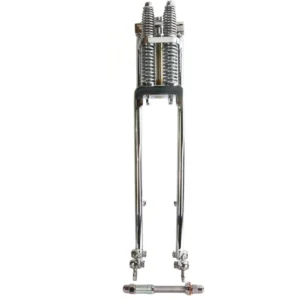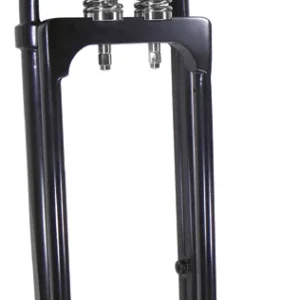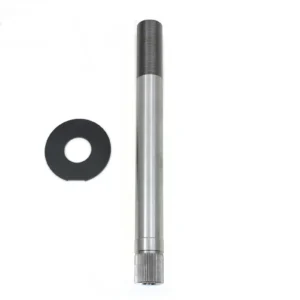

Most think springer is stronger due to visible hardware; true reason is leaf spring distributes load more evenly across the frame neck.
Choice depends on riding terrain and frame geometry, not just aesthetics. Springer offers classic look but requires precise maintenance; leaf spring provides robustness for rough use with simpler installation.
The dust in Lagos does not forgive poor engineering choices. I remember a custom shop near the Apapa port that specialized in turning old Harley-Davidson Big Twins into choppers. The owner loved the look of a traditional springer front end. It screamed heritage. He installed a standard assembly on a customer’s daily rider, assuming the heavy chrome legs meant indestructibility. Within months, the customer returned with a bent rocker arm and worn bushings. The roads were not paved highways but uneven surfaces filled with potholes and loose gravel. The springer design, with its multiple pivot points, amplified every low-impact stress into mechanical wear. We replaced it with a leaf spring front end. The bike spent the next two years hauling goods on unpaved routes without a single alignment issue. This experience shaped how I evaluate front ends today. When distributors ask about a springer front end vs leaf spring, they are not just asking about style. They are asking about failure modes. [NEED_CITE: mechanical stress distribution in pivot-based vs cantilever suspension systems]
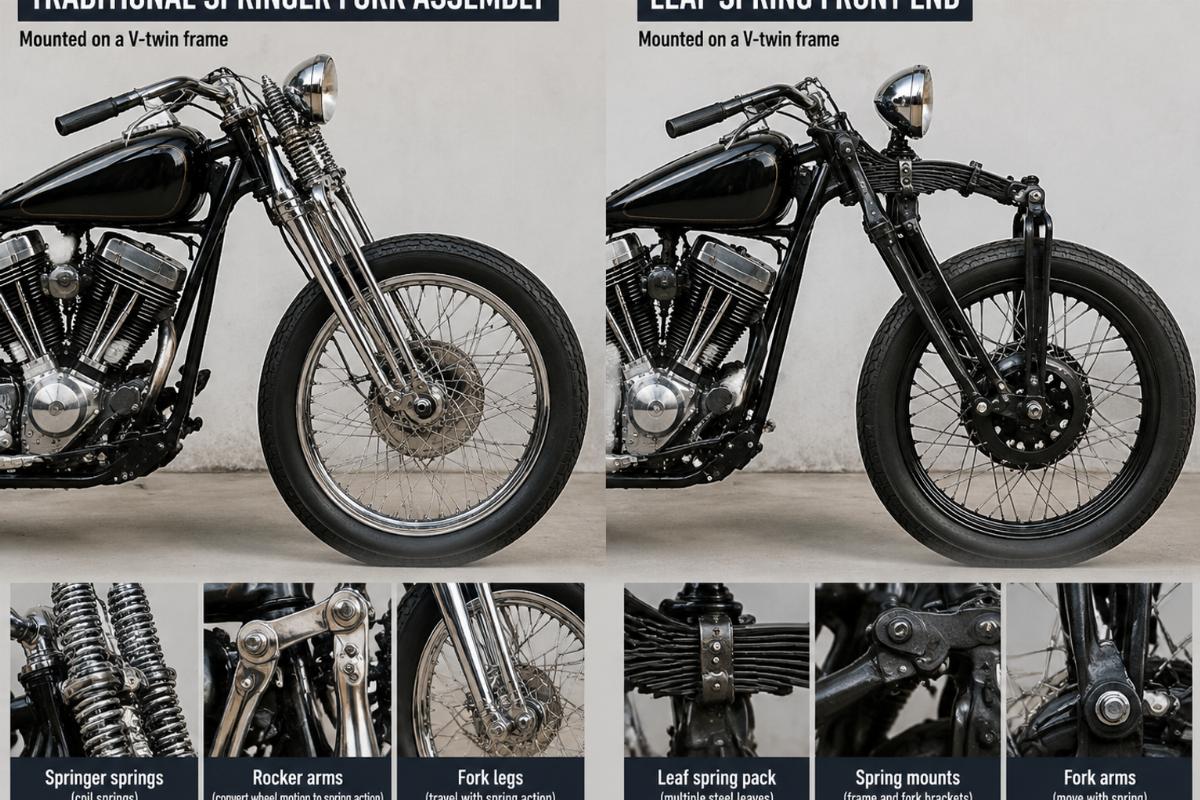
Understanding this distinction helps buyers advise their customers correctly. A distributor in Europe once contacted me after receiving a batch of returns from custom builders. The complaint was consistent: the bikes looked right but felt wrong on city streets. The builders had chosen springers for the aesthetic, ignoring the fact that their customers rode primarily on cracked urban pavement. The frequent, low-amplitude vibrations wore out the rocker bushings faster than anticipated. Switching the recommendation to leaf springs for those specific builds reduced the return rate noticeably. The leaf spring absorbs vertical shock directly through the flex of the steel plate, eliminating the complex linkage that fails in harsh conditions.
How Do Leaf Spring and Springer Front Ends Differ in Structure?
Leaf uses a single curved plate; springer uses dual legs with rockers and springs.
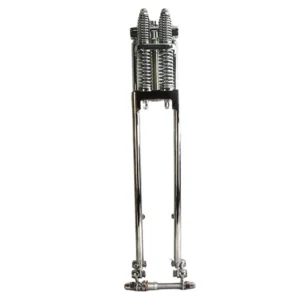
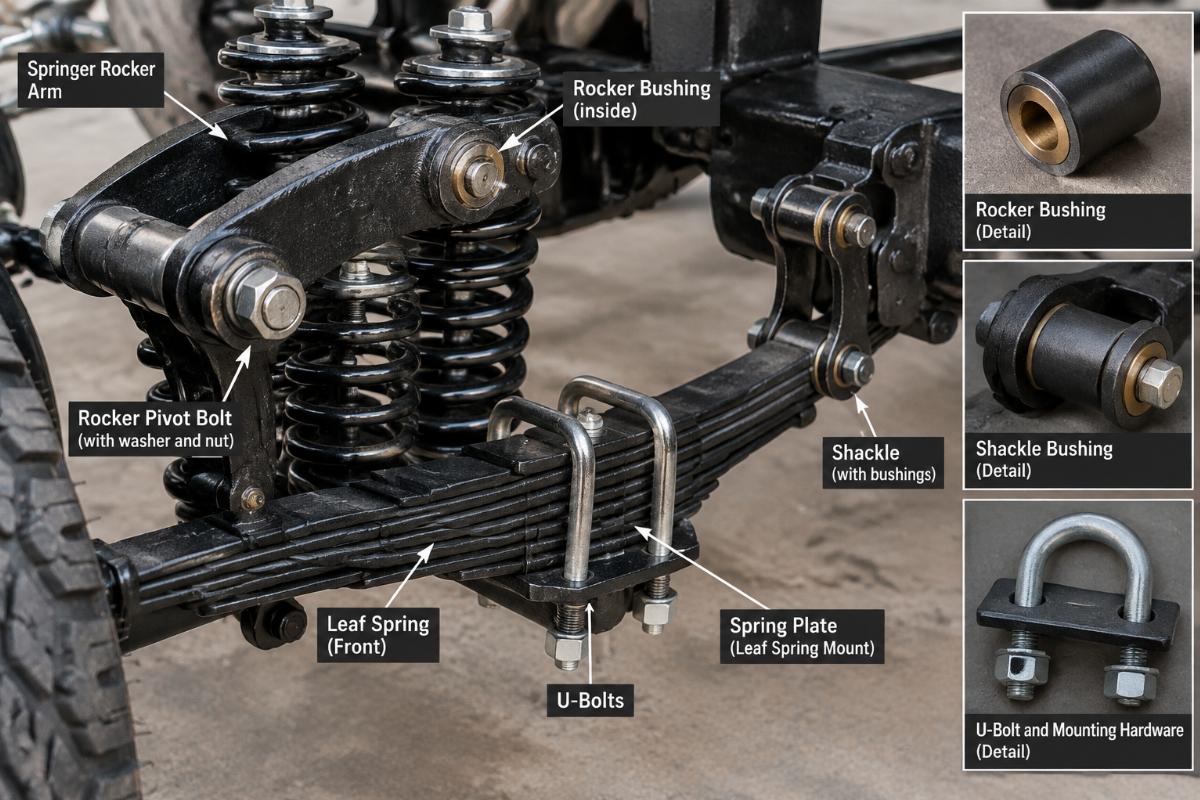
The structural difference defines the maintenance profile. A springer front end mimics the early motorcycle designs where two parallel legs connect to a central spring mechanism via rockers. This setup requires precise alignment of the rocker studs and bushings. If the neck angle of the frame does not match the geometry of the springer kit, the binding occurs immediately. [NEED_CITE: importance of neck angle compatibility in aftermarket springer installations] In contrast, a leaf spring front end relies on a single, thick steel plate anchored at the rear and supporting the axle at the front. There are no pivots to grease, no bushings to press out, and no rocker arms to bend.
| Feature | Springer Front End | Leaf Spring Front End |
|---|---|---|
| Primary Load Path | Pivot points and rockers | Flexure of steel plate |
| Maintenance Focus | Rocker lubrication and bushing inspection | Bolt torque checks and visual crack inspection |
| Complexity | High (multiple moving parts) | Low (single structural element) |
| Visual Profile | Classic, intricate, exposed hardware | Minimalist, rugged, clean lines |
For a restoration project involving a pre-1984 Harley-Davidson Knucklehead or Panhead, the springer is often the only authentic choice. However, fitment is critical. The length of the spring rod and the spacing of the eyelets must match the original specifications exactly. A mismatch here does not just look wrong; it changes the rake and trail, affecting steering stability. [NEED_CITE: effect of spring rod length on motorcycle rake and trail geometry] When sourcing a springer front end vs leaf spring for such projects, verifying these dimensions against the factory service manual is non-negotiable. A builder cannot simply guess the length over stock. Even a small deviation can cause the front wheel to tuck under during braking or wander at highway speeds.
Which Design Handles Rough Terrain Better?
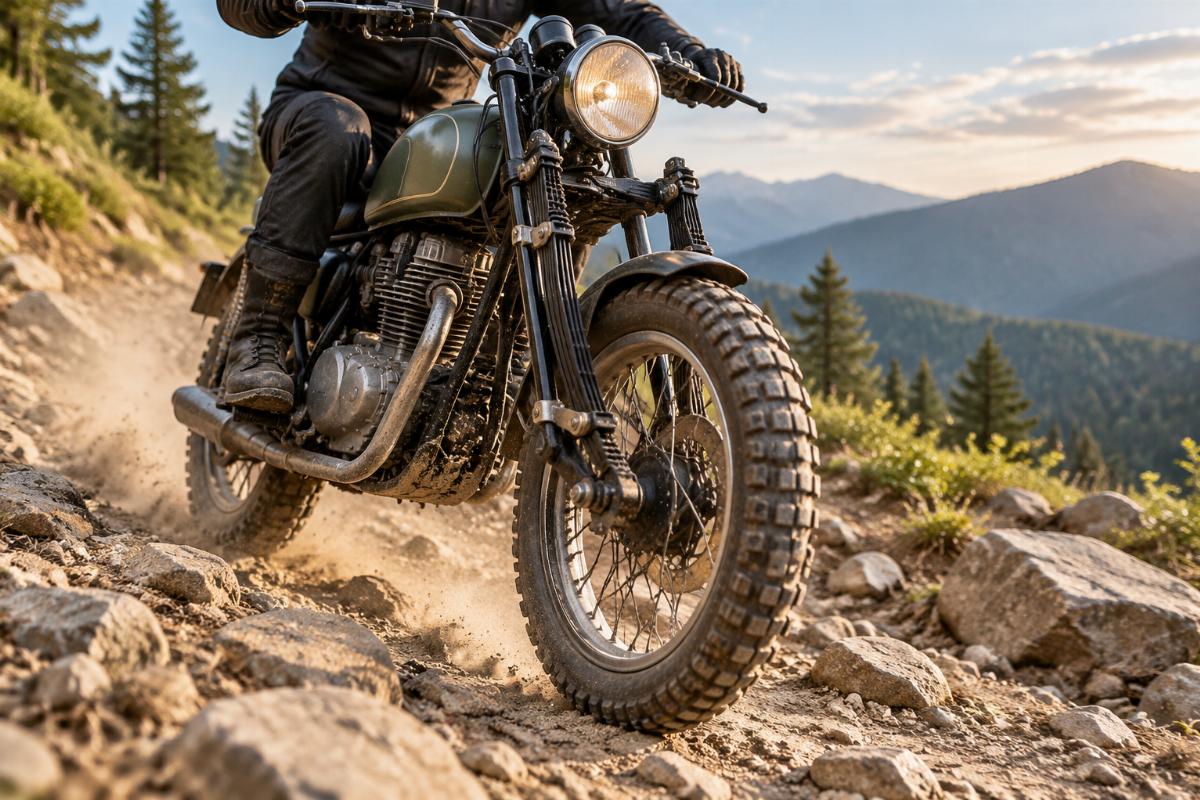
Leaf spring absorbs vertical shock directly; springer relies on pivot points prone to wear.
The Lagos case was not an isolated incident. Rural utility choppers face a different set of demands than show bikes. A customer in South America built a bike for farm use. He started with a springer because he liked the vintage appeal. After repeated alignment issues and broken hardware, he switched to a leaf spring. The difference was immediate. The leaf spring’s simplicity meant there were fewer points of failure. Dirt and grit, which would seize a springer’s rocker pins, had little effect on the solid steel plate of the leaf spring. [NEED_CITE: durability comparison of suspension types in off-road conditions]
This robustness makes the leaf spring ideal for riders who prioritize function over form. It handles the high-frequency vibrations of corrugated dirt roads without transmitting them into the steering head bearings as aggressively as a worn springer might. For distributors selling to customers in regions with poor infrastructure, recommending a leaf spring can prevent warranty claims. The springer, while iconic, is fragile in comparison. Its beauty lies in its complexity, but that complexity is its weakness. Every pivot is a potential failure point. Every bushing is a wear item. In a springer front end vs leaf spring debate focused on durability, the leaf spring wins on pure survivability.
However, this does not mean the springer is useless. On smooth pavement, a well-maintained springer provides a distinct ride quality. The separation of the spring from the damping allows for a softer initial compression. But this benefit vanishes if the maintenance schedule is ignored. Regular greasing of the rocker bushings is mandatory. Without it, metal-on-metal contact destroys the components. The leaf spring requires no such routine. A quick check of the mounting bolts is usually sufficient. This lower maintenance burden is a strong selling point for riders who do not have a workshop full of tools.
What Fitment Details Determine Compatibility?
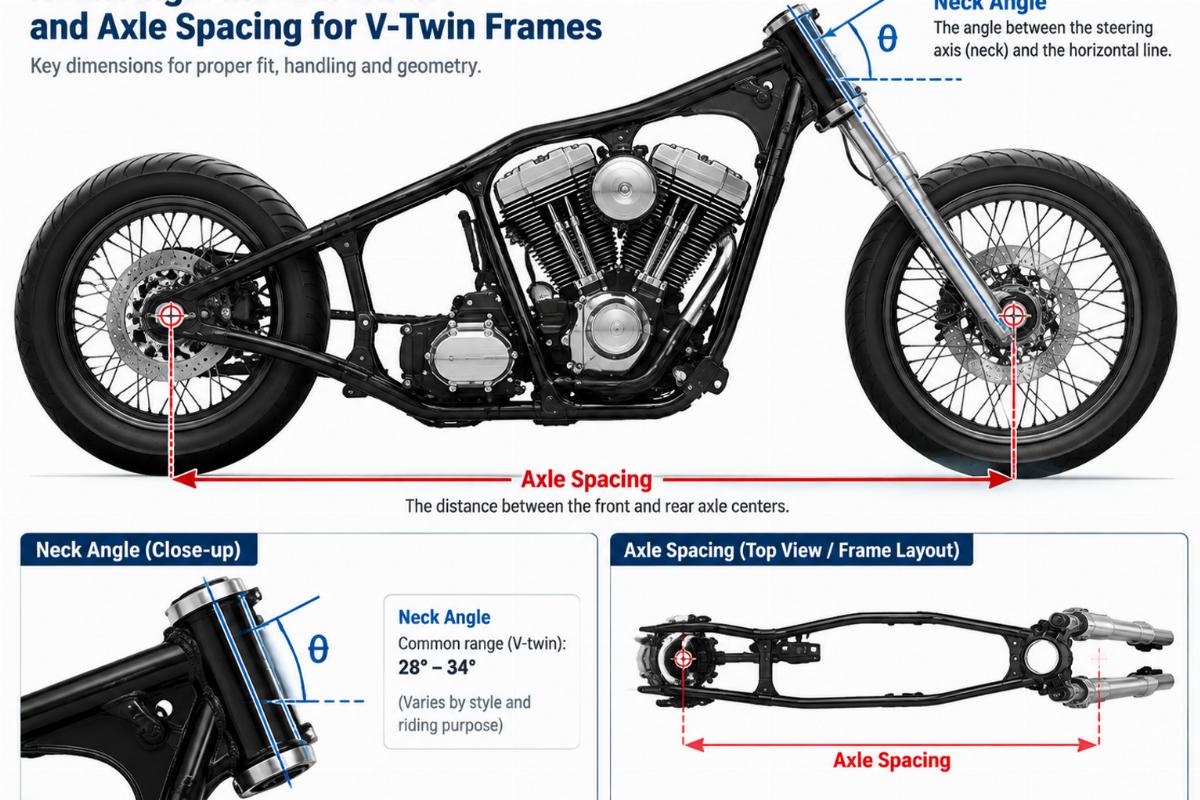
Neck angle, bearing size, and axle spacing must match the specific model year.
Fitment errors are the primary cause of returns in the aftermarket parts industry. Many builders assume all springers fit any Softail. This is false. The neck angle and the length-over-stock dimensions vary significantly by year range. A springer designed for a 1990s Softail will not fit a 2000s model without modification. The head tube diameter and the bearing type may differ. [NEED_CITE: Harley-Davidson frame geometry changes by model year] When evaluating a springer front end vs leaf spring, the first step is to measure the existing frame.
For Harley-Davidson Big Twin models from 1984 and later, the Evolution and Twin Cam eras have specific requirements. The Springer Softail models (FLSTS/FXSTS) came with factory springers, but aftermarket replacements must match the original geometry. For pre-1984 models, the variations are even greater. A Knucklehead frame has different steering head dimensions than a Shovelhead. Using the wrong part can damage the frame neck or cause catastrophic steering failure.
We provide cross-reference sheets and fitment confirmation for specific Harley-Davidson and Yamaha XS650 models. This service helps distributors avoid stocking incompatible inventory. For the Yamaha XS650, a popular platform for custom builds, the fitment is different again. The XS650 has its own steering head geometry. A universal springer kit rarely fits without custom fabrication. A leaf spring designed for an XS650 must account for the specific axle spacing and brake mount locations. [NEED_CITE: Yamaha XS650 aftermarket fitment standards]
| Model Family | Key Fitment Check | Common Pitfall |
|---|---|---|
| Harley Softail (1984+) | Neck angle and length over stock | Assuming universal fit across all years |
| Harley Pre-1984 Big Twin | Spring rod length and eyelet spacing | Mismatched bearing sizes in steering head |
| Yamaha XS650 | Axle spacing and brake mount position | Using Harley-specific kits without adaptation |
A buyer should always send the model and year for a fitment check before placing a bulk order. This simple step prevents the frustration of receiving parts that do not bolt on. It also ensures that the chrome or black finish matches the rest of the build. Consistency in finish is another area where attention to detail matters. A mismatched finish can ruin the aesthetic of a high-end custom build, leading to customer dissatisfaction even if the part fits mechanically.
How to Maintain Each Type for Longevity?
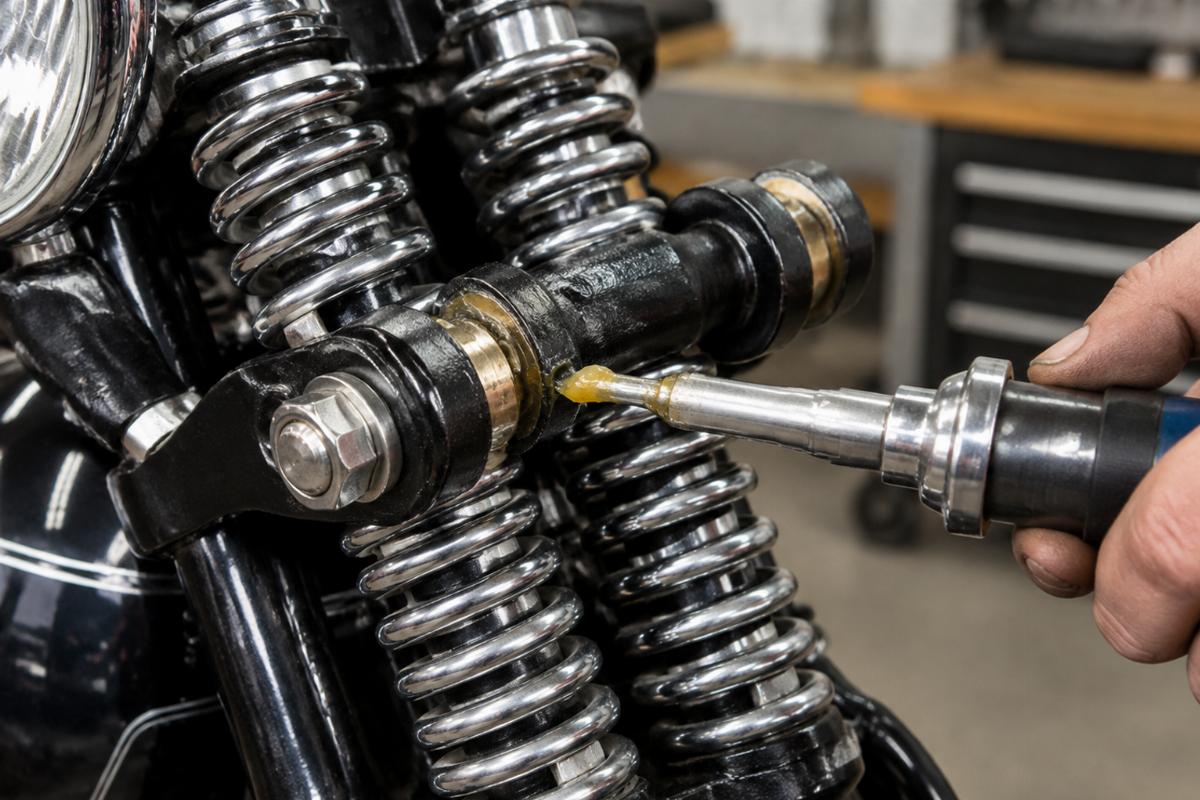
Springer needs regular rocker lubrication; leaf spring requires bolt torque checks.
Maintenance is where the theoretical differences become practical realities. A springer front end is not a install-and-forget component. The rocker bushings are subject to high loads and constant movement. If they run dry, they wear out quickly. This wear introduces play in the front end, causing vague steering and increased stress on other components. Regular lubrication with high-quality grease is essential. Access points for greasing should be checked during every service interval. [NEED_CITE: recommended maintenance intervals for motorcycle suspension pivot points]
In contrast, the leaf spring is nearly maintenance-free. The primary concern is the integrity of the mounting bolts. Vibration can loosen these bolts over time, especially on rough roads. A periodic torque check ensures they remain secure. Visual inspection for cracks in the steel plate is also recommended, though rare in normal use. The simplicity of the leaf spring means there are fewer things to go wrong. This makes it a preferred choice for riders who want reliability without the hassle of regular servicing.
When advising customers, it is important to highlight these differences. A rider who enjoys working on their bike and appreciates the mechanical intricacy of a springer will find satisfaction in its maintenance. A rider who wants to ride and forget will prefer the leaf spring. Understanding the customer’s lifestyle helps in making the right recommendation. In a springer front end vs leaf spring discussion, the maintenance requirement is often the deciding factor for practical users.
Conclusion
Fitment and terrain dictate the choice, not just style.
The decision between a springer and a leaf spring is not merely aesthetic. It is a technical choice based on riding conditions and maintenance willingness. Springer front ends offer a classic look but demand precise fitment and regular care. Leaf springs provide robustness and simplicity, ideal for rough terrain and low-maintenance preferences. Distributors who understand these nuances can better serve their customers and reduce returns. Always verify frame geometry and model year before selection.