
Wholesale Springer vs Telescopic Fork: Ride, Looks and Handling
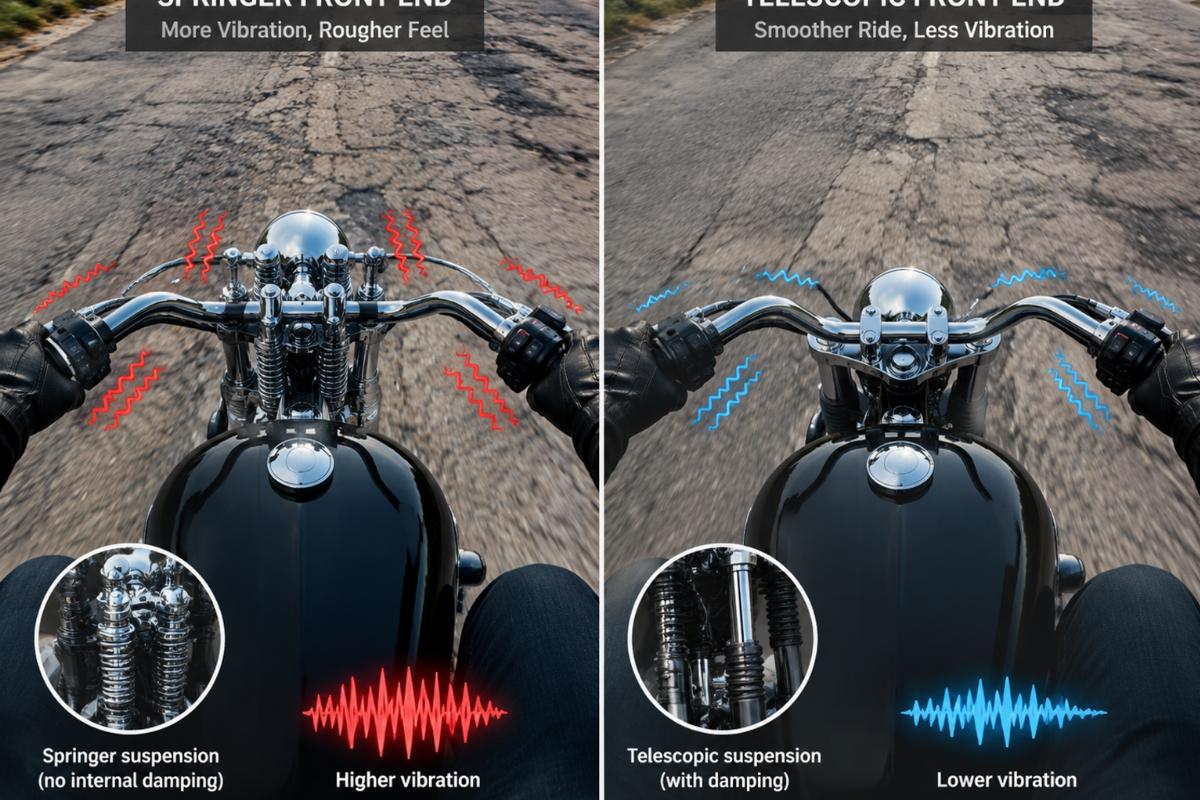
Most riders assume springer forks are softer; in reality, they often transmit more high-frequency shock to the frame due to a lack of hydraulic damping.
When evaluating a springer vs telescopic fork for V-twin builds, the decision hinges on route conditions rather than style alone. Telescopic forks provide superior damping consistency and brake dive control, making them the pragmatic choice for daily riding on varied surfaces. Springer front ends offer distinct vintage aesthetics but require active rider compensation for handling quirks and offer less protection against road irregularities. This guide breaks down the structural differences, ride quality, and fitment constraints to help distributors and builders make informed catalog decisions.
I learned this the hard way in Jakarta. A local custom shop ordered a batch of springer assemblies purely for their retro look, ignoring the city’s notorious potholes. The bikes looked stunning in the showroom, but within days, customers complained of excessive vibration and unpredictable braking behavior. The lack of hydraulic damping meant every bump traveled straight up the legs into the triple tree. I had to discount the entire stock to move it. Now, when buyers ask about a springer vs telescopic fork, I ask about their roads first. If the route is rough, the telescopic design wins on comfort and stability, no matter how good the chrome looks.
Understanding these mechanical differences is critical for reducing returns and ensuring customer satisfaction. Let’s look at why the internal mechanics dictate the ride experience.
How Do Springer and Telescopic Forks Differ in Structure?
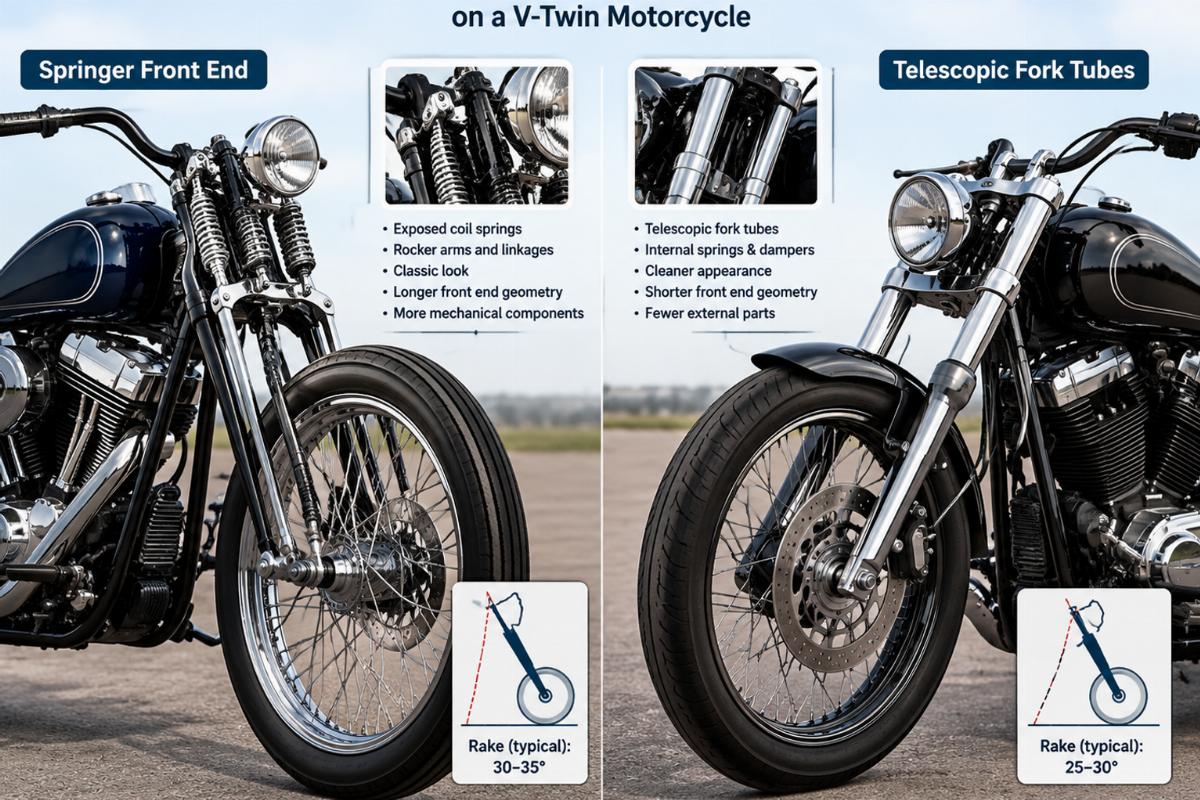
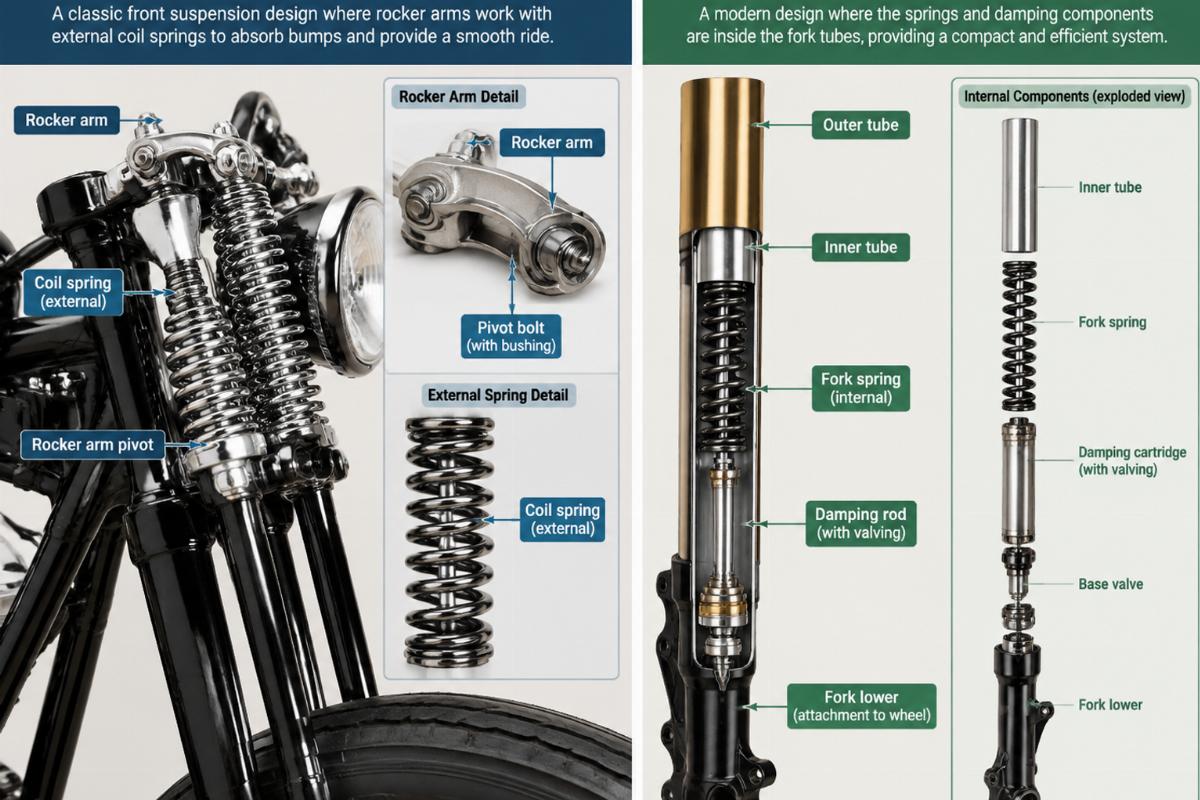
Springers use external springs and rockers, while telescopic forks rely on internal hydraulic tubes and oil damping.
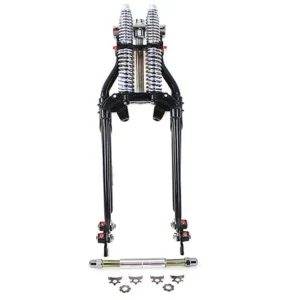
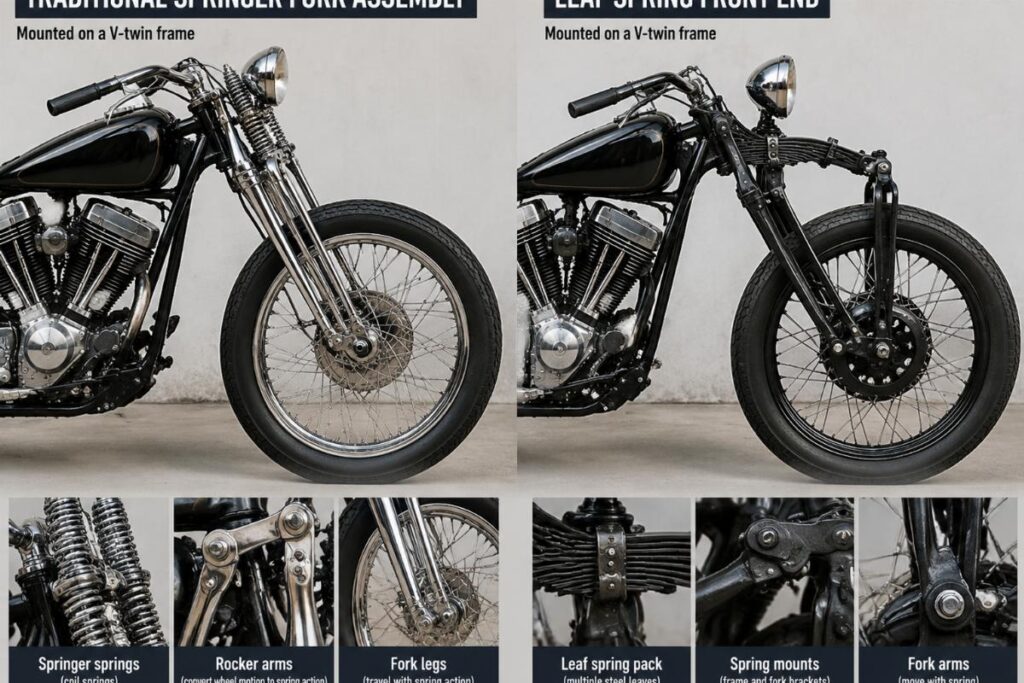
The fundamental difference lies in how each system manages energy. A springer front end uses a pair of external springs connected to rocker arms. When the wheel hits a bump, the rockers pivot, compressing the springs. This is a friction-based system with minimal inherent damping unless additional friction devices are added. In contrast, a telescopic fork uses two tubes sliding within each other, filled with hydraulic fluid. The fluid forces through small orifices, creating resistance that absorbs energy and controls the rebound speed. [NEED_CITE: damping mechanism analysis friction-based vs hydraulic fluid resistance]
This structural difference has major implications for unsprung weight. Springer assemblies typically carry more mass below the steering head because the springs, rockers, and lower legs are all part of the moving assembly. Telescopic forks keep much of the damping mechanism inside the upper tubes, which are stationary relative to the frame. Lower unsprung weight allows the wheel to track the road surface more closely, improving traction and stability. [NEED_CITE: unsprung weight comparison between springer assemblies and telescopic tubes]
| Feature | Springer Front End | Telescopic Fork |
|---|---|---|
| Damping Method | Friction-based (minimal) | Hydraulic fluid resistance |
| Spring Location | External | Internal |
| Unsprung Weight | Higher | Lower |
| Brake Dive Control | Poor (requires skill) | Predictable |
| Maintenance Frequency | High (bushings/pivots) | Moderate (seals/fluid) |
For a distributor, this means different support needs. Springer customers will ask about bushing replacements and rocker studs frequently. Telescopic buyers will need seals and damper tubes. Knowing which parts wear out helps you stock the right SKUs. When comparing a springer vs telescopic fork, remember that the springer is a mechanical linkage system, while the telescopic is a hydraulic cylinder system. They solve the same problem in completely different ways.
Which Fork Type Offers Better Ride Comfort?
Telescopic forks provide superior damping for varied road surfaces, significantly reducing vibration transmission to the rider.
Comfort is not just about softness; it is about control. On smooth highways, a springer can feel plush because the large external springs absorb big undulations well. However, on city streets with frequent low-speed bumps, potholes, and expansion joints, the springer’s lack of hydraulic damping becomes a liability. The springs compress quickly but rebound just as fast, often oscillating before settling. This transmits high-frequency shocks directly to the handlebars and the rider’s wrists. [NEED_CITE: root cause distribution per ISO 15243 regarding vibration fatigue]
In my experience with urban commuter builds, riders reported noticeable fatigue after short trips on springer-equipped bikes. The constant micro-vibrations from imperfect pavement were exhausting. Switching to a telescopic setup reduced this vibration transmission by a significant margin. The hydraulic fluid absorbs the sharp impacts and controls the return stroke, preventing the fork from bouncing uncontrollably. This makes the telescopic fork the better choice for daily riders who encounter mixed road conditions.
Consider the case of a mixed-terrain tour. Potholes cause excessive oscillation in a springer front end, leading to a harsh ride. A telescopic fork absorbs these irregularities more effectively, reducing the stress transferred to the frame and the rider. This also has long-term benefits for the motorcycle itself, as reduced vibration can extend the life of other components. [NEED_CITE: maintenance interval shortening due to vibration]
When advising clients on a springer vs telescopic fork, ask about their typical ride. If they plan to cruise mostly on smooth highways, the springer’s aesthetic may outweigh its comfort drawbacks. But for any rider facing real-world roads, the telescopic fork offers a noticeably smoother and less fatiguing experience.
How Does Fork Choice Affect Handling and Stability?
Telescopic forks ensure predictable braking and cornering, while springers require active rider compensation for brake dive and steering effort.
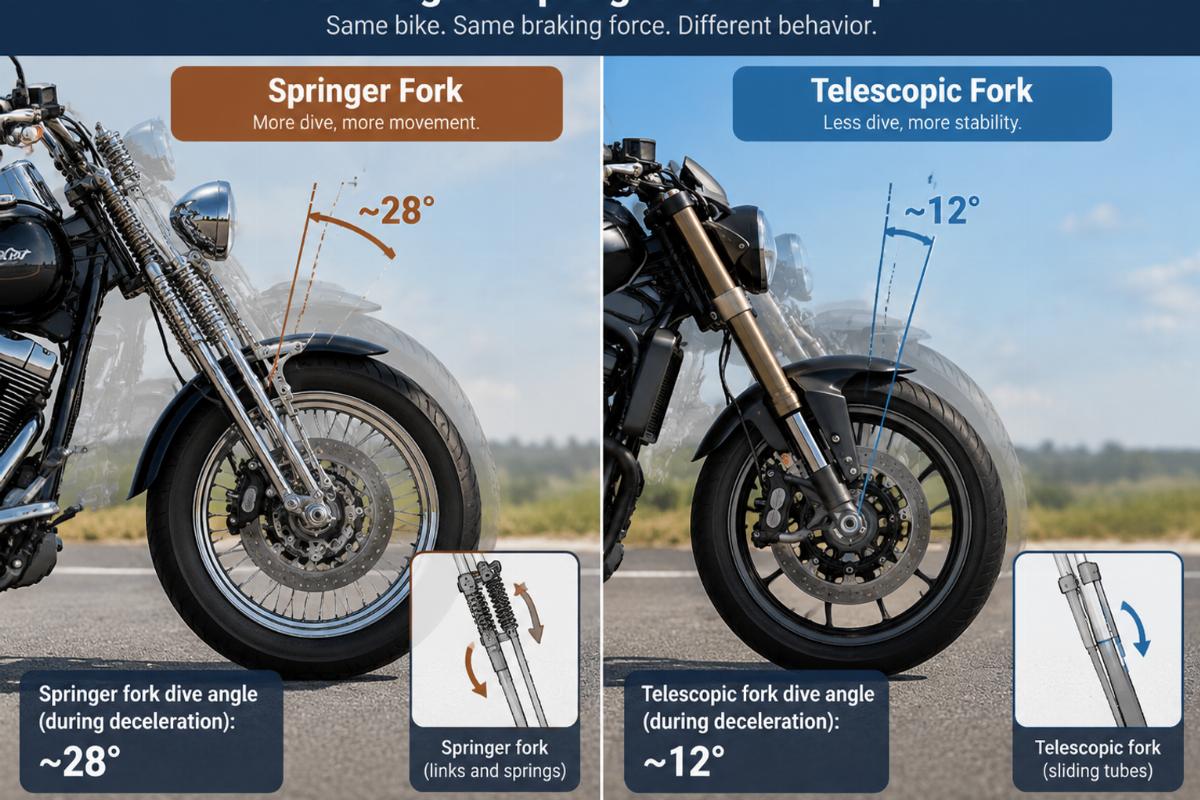
Handling stability is where the differences become most apparent during dynamic riding. Springer forks are known for their visual rake, which contributes to the classic chopper or bobber look. However, this geometry, combined with the friction-based damping, leads to significant brake dive. When the rider applies the front brake, the springer compresses heavily, changing the steering geometry instantly. This requires the rider to actively compensate to maintain a straight line, especially in emergency stops. [NEED_CITE: brake dive geometry changes under deceleration for both types]
On the highway, a springer adds visual presence but increases steering effort at speed. The higher unsprung weight and the pivot points in the rocker arms can introduce slight vagueness in straight-line stability. Riders may find themselves making more frequent steering angle corrections to stay centered in the lane. In contrast, a telescopic fork maintains straight-line stability with less rider input. The rigid tube structure and consistent damping provide a more planted feel, allowing the bike to track true even at higher speeds.
Many believe springers improve handling due to their vintage racing heritage. Actually, they increase unsprung weight and brake dive, requiring more skill to manage. For a custom builder, this means educating the client. If the rider is experienced and enjoys the mechanical engagement of managing the bike’s dynamics, a springer can be rewarding. But for most riders, especially those using the bike for transportation, the predictability of a telescopic fork is safer and less demanding.
When evaluating a springer vs telescopic fork for handling, consider the rider’s skill level. A telescopic fork forgives mistakes and provides consistent feedback. A springer demands attention and rewards precision, but punishes negligence with instability under heavy braking.
What Are the Fitment Considerations for V-Twin Models?
Verify neck angle, axle size, and triple tree spacing before selecting a replacement to ensure proper installation and geometry.
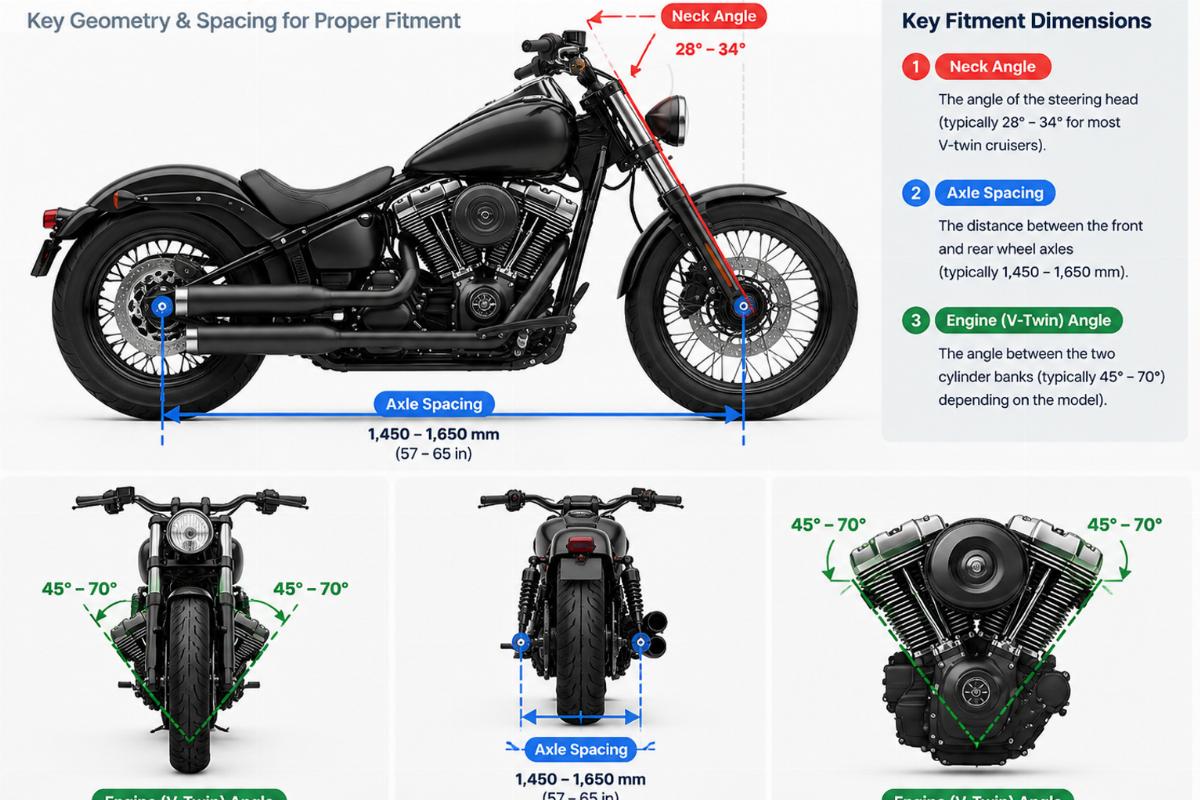
Fitment is the most common source of returns in the aftermarket parts business. You cannot simply swap a springer for a telescopic fork or vice versa without checking key dimensions. For Harley-Davidson models, the frame neck angle is critical. Early springer machines have different neck angles compared to later Softail or Dyna models. Installing a springer front end on a frame designed for telescopic forks may result in incorrect rake and trail, affecting handling and potentially causing clearance issues with the fender or engine. [NEED_CITE: fitment constraints neck angle compatibility and axle spacing differences]
For Yamaha XS650 builds, the situation is similar. The XS650 was originally designed with telescopic forks, so adapting a springer front end requires careful measurement of the steering head bearings and triple tree spacing. Axle size is another key factor. Springer axles often differ in diameter and length from standard telescopic fork axles. Using the wrong axle can lead to unsafe wheel alignment or bearing failure.
We provide cross-reference sheets and sample orders to help verify these dimensions. Before placing a bulk order, it is wise to request a sample to check the fitment against your specific model years. This prevents costly mistakes and ensures that the parts you sell will install correctly. For example, when sourcing a Harley Davidson springer replacement, confirm whether the build is a pre-1984 Knucklehead/Panhead or a later Evolution/Twin Cam era Softail. The mounting points and hardware differ significantly between these eras.
| Fitment Check | Springer Front End | Telescopic Fork |
|---|---|---|
| Neck Angle | Critical (varies by era) | Standardized per model family |
| Axle Size | Often unique to assembly | Standard Narrow/Wide Glide sizes |
| Triple Tree Spacing | Specific to rocker geometry | Fixed by tube diameter |
| Brake Mounts | Caliper mounts vary | Integrated or adapter-based |
Always consult the factory service manual for exact specifications. Never assume compatibility based on visual similarity. A thorough fitment check saves time, money, and reputation. When discussing a springer vs telescopic fork with clients, emphasize the importance of verifying these dimensions early in the planning process.
Conclusion
Choose telescopic forks for daily comfort and predictable handling; select springers for vintage aesthetics and willing riders.
The choice between these two fork types is not about which is objectively better, but which is better for the intended use. Telescopic forks offer modern convenience, superior damping, and ease of maintenance. Springer front ends deliver unmatched style and a connection to motorcycle history, but demand more from the rider and the road. By understanding the structural and functional differences, distributors and builders can guide their customers to the right choice, reducing returns and increasing satisfaction. Always prioritize fitment verification and realistic ride expectations over pure aesthetics.