
Raw Offset Triple Tree Forging 1 in – Fitment Checked
In-house front end production — Every spring fork offset triple tree forging is physically measured for center-to-center distance and bar bore before dispatch to ensure exact fitment for your custom build.
Product Specification
| Parameter | Value |
|---|---|
| Part Type | Offset Triple Tree Forging |
| Finish | Raw |
| Material | Forging |
| Bar Diameter | 1 in |
| Offset | Offset |
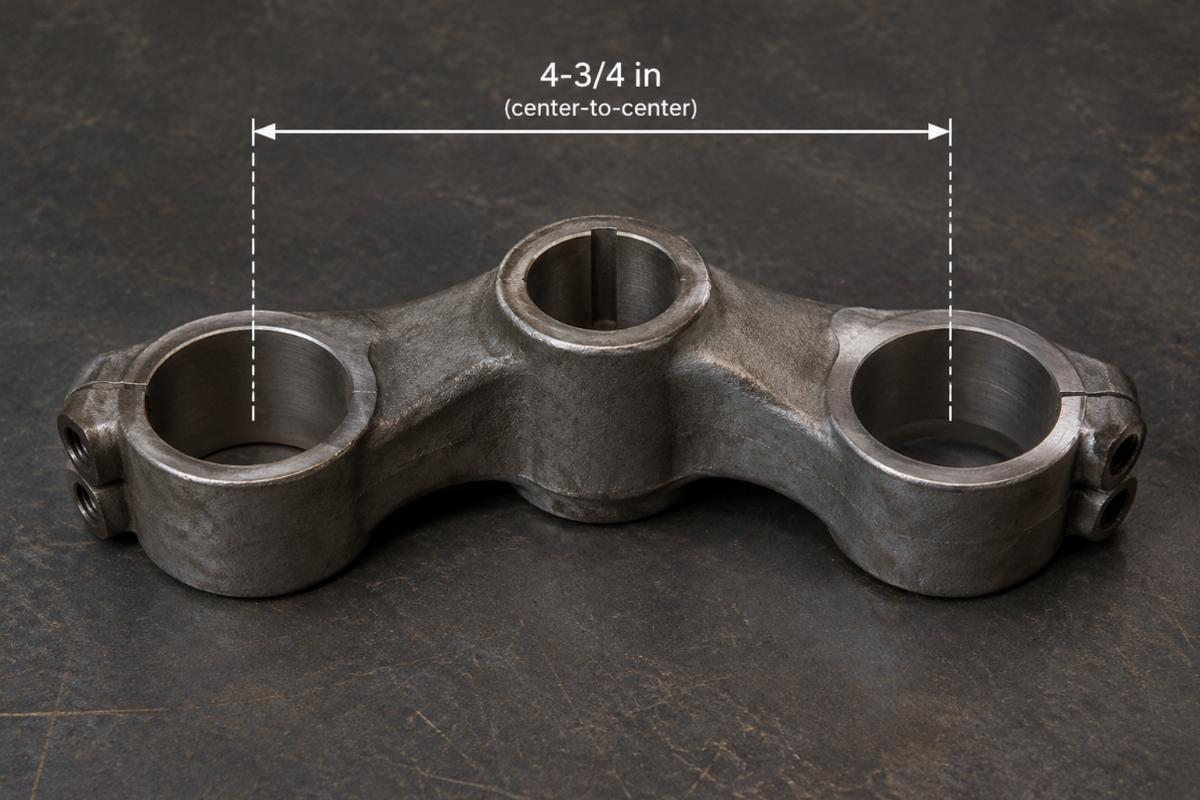
| Center to Center Distance | 4-3/4 in |
| Cable Routing | Holes for cables and wires to exit |
| Kit Contents | Bar ends not included |
Fitment Verification
| Platform | Year Range | Notes |
|---|---|---|
| Not stated in source | Confirm with model | For handlebar fabrication or repair; for riser installation. |
Independent aftermarket part. Not manufactured, sold or endorsed by any motorcycle manufacturer. Model names and OEM numbers are used for fitment reference only.
Resolving Springer Handlebar Fabrication Guesswork
Exact 4-3/4 in center-to-center spacing eliminates riser alignment failures.
Custom springer builds frequently stall on the workbench when triple tree spacing or bar clamping dimensions are estimated rather than measured. A raw offset triple tree forging provides the precise 4-3/4 in center-to-center distance and 1 in bore required for accurate handlebar fabrication. Guessing these dimensions often leads to misaligned risers and compromised steering geometry [NEED_CITE: frame geometry and triple tree offset specifications for custom springer builds].
Verifying Offset Dimensions for Riser Installation
When fabricating handlebars for a custom springer front end, the offset dimension dictates how the bars sit relative to the steering stem. This spring fork offset triple tree forging features a fixed 4-3/4 in center-to-center distance. Verifying this measurement against your specific riser layout prevents structural interference and ensures the handlebars clear the fuel tank during full steering lock.
Confirming Stem Compatibility Before Welding
The internal machining of the steering stem must match the raw forging’s specifications before any welding occurs. Since the 1 in bars must be welded directly into the triple tree, confirming the stem diameter and depth prevents material waste. Builders should cross-reference their existing stem measurements with the forging’s internal bore to guarantee a secure, concentric weld joint [NEED_CITE: steering stem diameter variations across custom springer front end generations].
Interpreting Raw Forging Dimensions for Custom Builds
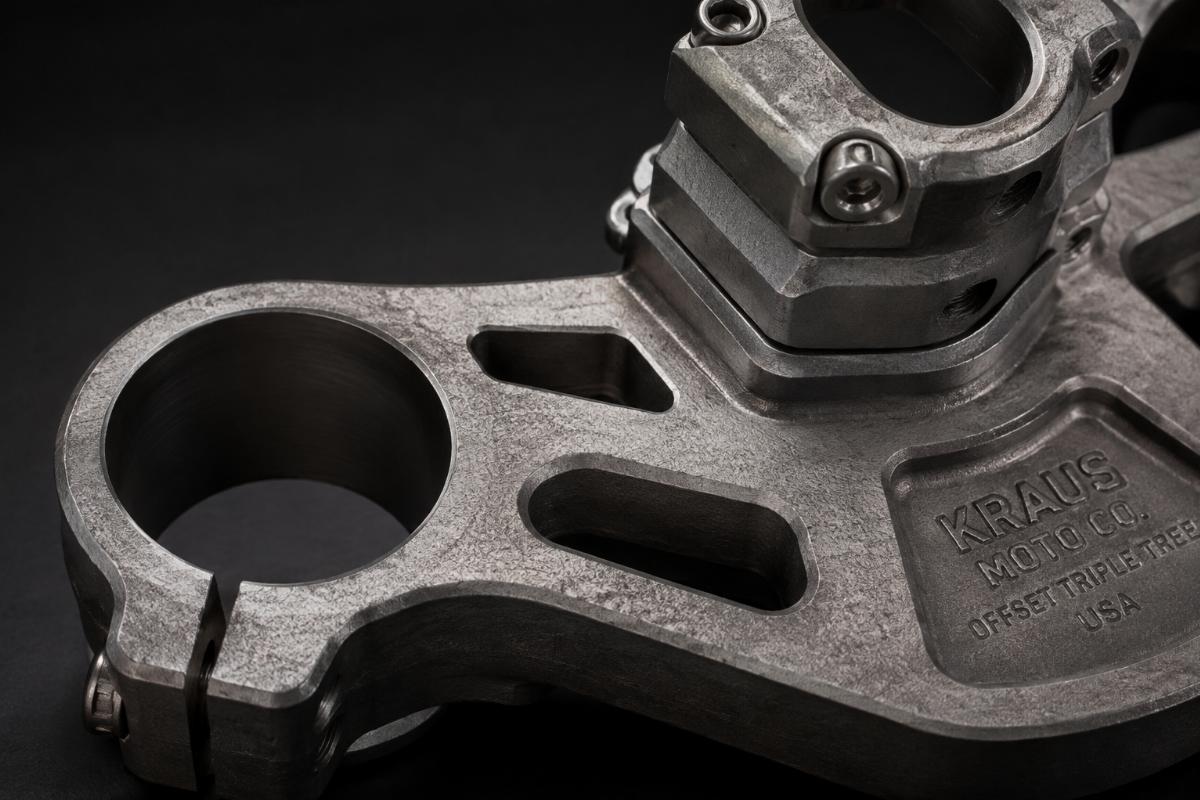
The raw finish indicates this component is intended for custom machining, welding, or final finishing by the builder. The 1 in bar diameter acceptance requires the handlebars to be welded in place, meaning no traditional clamping hardware is used. Pre-drilled holes for cables and wires to exit are integrated into the forging, allowing for clean routing without the need for secondary drilling that could weaken the structural integrity of the triple tree.
The Hidden Cost of Unverified Triple Tree Spacing
Ordering a triple tree without confirming the center-to-center distance often results in the bike sitting idle on the lift. If the offset is incorrect, the handlebars will not align with the risers, or the cables will stretch beyond their operational limits. This forces the builder to either machine a new component from scratch or abandon the current fabrication plan, delaying the project and increasing material costs [NEED_CITE: fabrication delays caused by incorrect triple tree offset measurements].
Sourcing Fitment-Checked Front End Components
Every spring fork offset triple tree forging is checked against its physical dimensions before leaving the facility. We verify the 4-3/4 in center-to-center distance and 1 in bore to ensure the part matches the quotation. This process supports custom builders who need a single component for a one-off project, as we accept minimum orders from one piece without requiring bulk purchases.
Included Documentation for Fabrication Reference
- Fitment sheet stating applicable platforms and year ranges when identified from photos or measurements
- Key dimensions sheet detailing the 4-3/4 in center-to-center distance and 1 in bar diameter
- Finish specification confirming the raw forging condition
- Quality inspection record verifying physical measurements before dispatch
- Packing photographs showing the raw forging and pre-drilled cable routing holes
Pre-Installation Checks for Raw Forgings
- Verify the 4-3/4 in center-to-center distance matches your riser fabrication layout before welding
- Confirm the internal bore matches your springer fork steering stem diameter for a proper weld joint
- Check that the pre-drilled holes align with your planned cable and wire routing path
- Inspect the raw forging surface for any shipping damage or machining defects prior to final finishing
- Ensure 1 in handlebars are prepared for welding, as bar ends are not included in the kit
Requesting a Fitment Check for Your Build
Send your model and year, along with photographs or measurements of your existing steering stem, to verify compatibility. Provide the required center-to-center distance and bar diameter for your specific handlebar fabrication. We can supply a sample for fitment confirmation before you commit to bulk orders for your shop.
Frequently Asked Questions
Q: How do I confirm if this raw forging fits my custom springer front end stem?
A: You must measure the internal diameter and depth of your existing steering stem. Compare these physical dimensions against the raw forging’s internal bore. If you provide photographs or measurements of your stem, we can verify compatibility and confirm if this spring fork offset triple tree forging matches your specific build requirements before dispatch.
Q: What are the critical dimensions to measure before welding 1 in bars into the triple tree?
A: The most critical dimension is the 4-3/4 in center-to-center distance, which dictates riser alignment. You must also verify the internal bore diameter to ensure it matches your steering stem for a concentric weld. Measuring the depth of the bore ensures the bars seat fully before welding, preventing structural weakness in the final assembly.
Q: Can I order a single triple tree forging for a one-off custom build?
A: Yes, we accept minimum orders from one piece. This supports custom builders and fabrication shops working on individual projects without requiring bulk purchases. We verify the physical dimensions of the spring fork offset triple tree forging against your quotation to ensure the single unit meets your specific center-to-center distance and bar diameter requirements.
Q: Does the raw forging include bar ends or risers?
A: No, the kit contents explicitly state that bar ends are not included. This spring fork offset triple tree forging is supplied as a raw component intended for custom handlebar fabrication. The 1 in bars must be welded directly into the triple tree, and any risers, clamps, or bar ends must be sourced separately to complete your front end assembly.