
Wholesale Chrome Harley Parts: Rust-Free Cleaning & Care
Chrome peels because of chemistry, not just plating thickness.
The primary cause of premature chrome failure on motorcycle parts is not inadequate manufacturing, but the use of alkaline or acidic cleaning agents that strip protective wax layers, combined with a lack of post-installation sealing in humid or saline environments. To maintain chrome motorcycle parts maintenance standards, distributors and shops must enforce pH-neutral cleaning protocols and immediate application of breathable sealants after assembly.
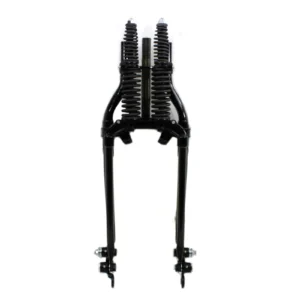
I remember standing in a workshop near Guadalajara, watching a team assemble a batch of springer front ends destined for a coastal distributor. The chrome looked flawless under the shop lights—mirror-bright and heavy. Yet, within months, the same units returned with white spotting and early-stage peeling around the lower legs. The local mechanic insisted the plating was thin. I checked the records. The plating thickness met standard specifications. The issue was not in the tank, but in the bucket. The assembly crew had used a strong industrial degreaser to wipe down the fork tubes before installation, assuming “cleaner is better.” They removed every trace of oil, but also the microscopic protective barrier left by the polishing process. In a salt-air environment, bare chrome oxidizes rapidly. This pattern repeated across multiple regions until we changed how we documented care instructions. [NEED_CITE: chemical interaction between alkaline cleaners and chrome passivation layers]
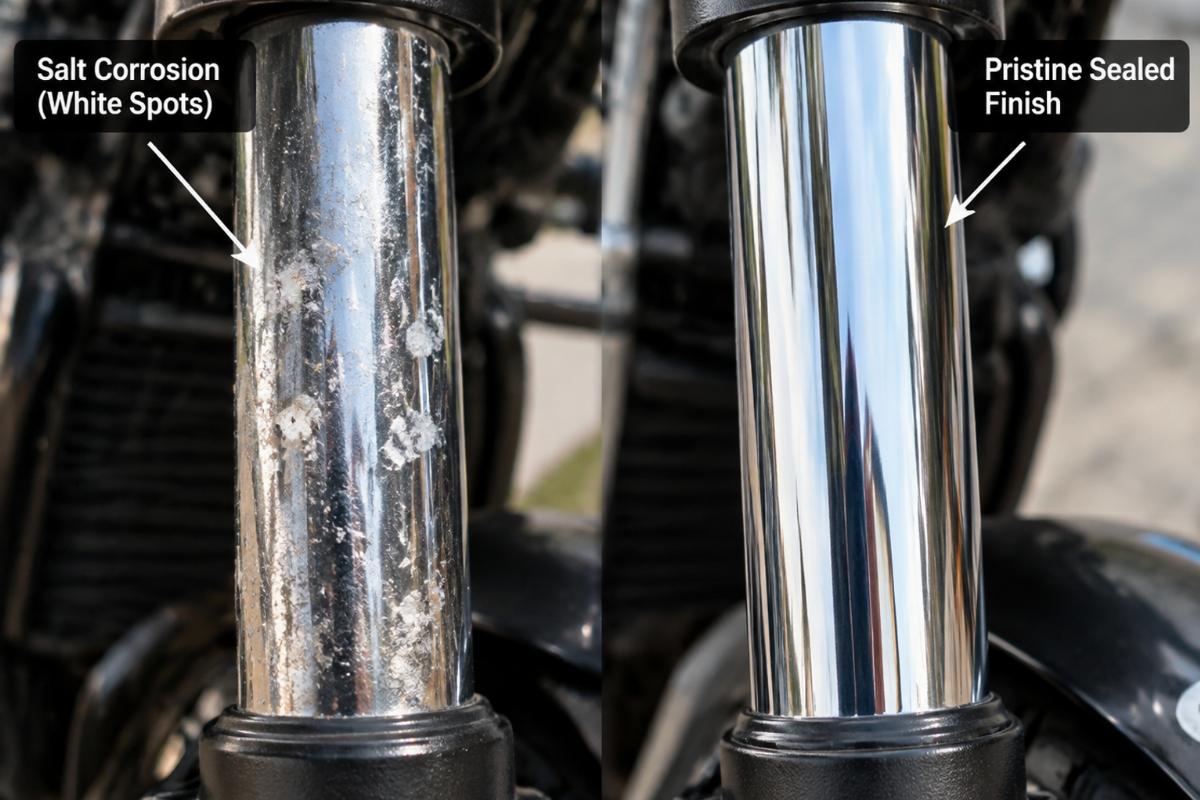
Understanding this distinction is critical for anyone managing inventory of chrome motorcycle parts maintenance solutions. It shifts the focus from blaming the supplier to educating the end-user.
Why Does Chrome Peel or Spot So Quickly?
Environmental exposure and chemical stripping are the dominant factors in chrome degradation, often outweighing initial plating quality.
Many buyers assume that if chrome fails, the manufacturer cut corners on nickel or chromium layers. While poor adhesion due to contaminated base metal is a valid defect, it is statistically less common than environmental damage in the aftermarket sector. The reality is that chrome is porous at a microscopic level. Without a sealed surface, moisture and salts penetrate these pores, reaching the underlying steel or copper layers. Once oxidation begins underneath, the chrome lifts and flakes.
In coastal areas, salt spray accelerates this process dramatically. A distributor in a humid port city reported that unsealed chrome hardware developed visible pitting in under half a year. This was not a batch error; it was an environmental inevitability. [NEED_CITE: corrosion rates of unprotected chrome in marine atmospheres]
The second culprit is improper cleaning. Alkaline cleaners, often found in general-purpose degreasers, react with the chrome surface. They do not just remove dirt; they strip away any residual wax or oil that acts as a temporary shield. Acidic cleaners, sometimes used to remove brake dust or road grime, can etch the surface directly. Both practices leave the metal vulnerable.
For shops handling chrome motorcycle parts maintenance, recognizing this helps in diagnosing returns. If the peeling is uniform and accompanied by white residue, it is likely environmental or chemical. If it is blistering in specific spots without surrounding corrosion, it may be a plating adhesion issue. Proper fitment and pre-shipped inspection records help identify if issues are material-based or care-based, reinforcing the value of detailed documentation. When we supply parts, we include notes on these distinctions so dealers can explain them to their customers.
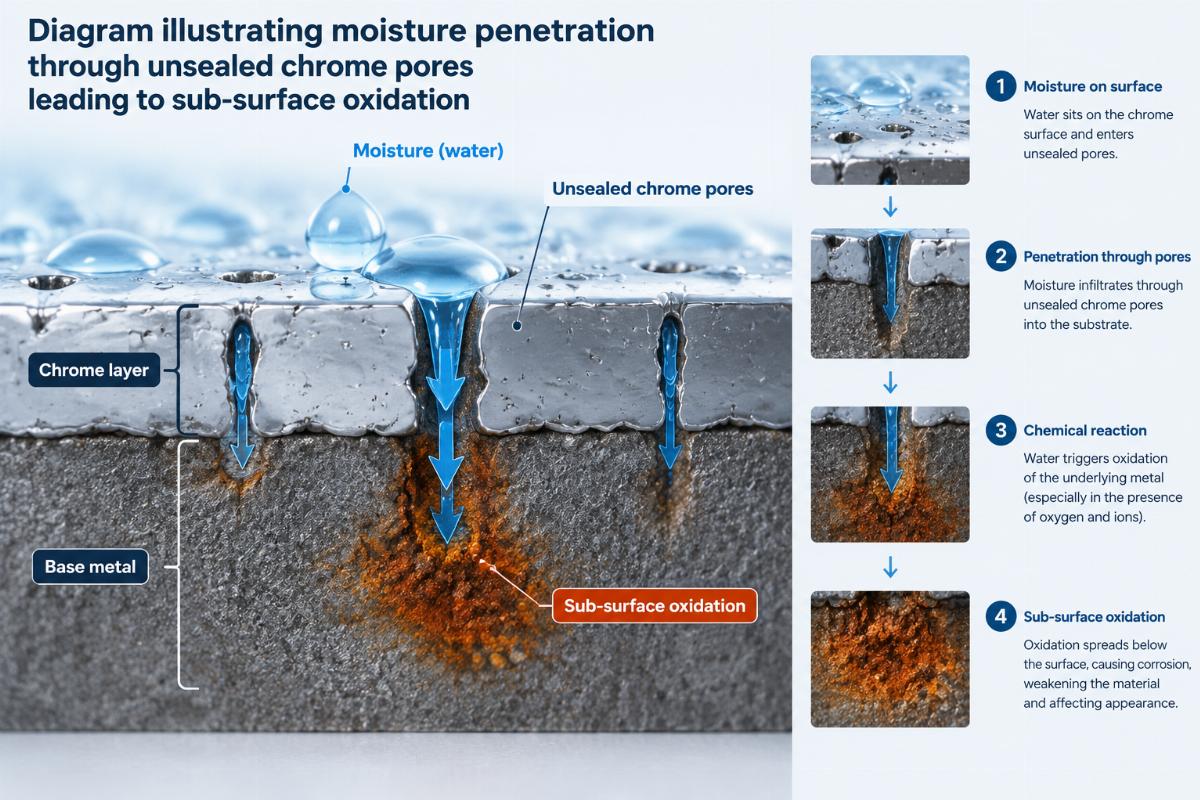
This understanding prevents unnecessary disputes and helps shops provide better after-sales support.
Which Cleaners Are Safe for Motorcycle Chrome?
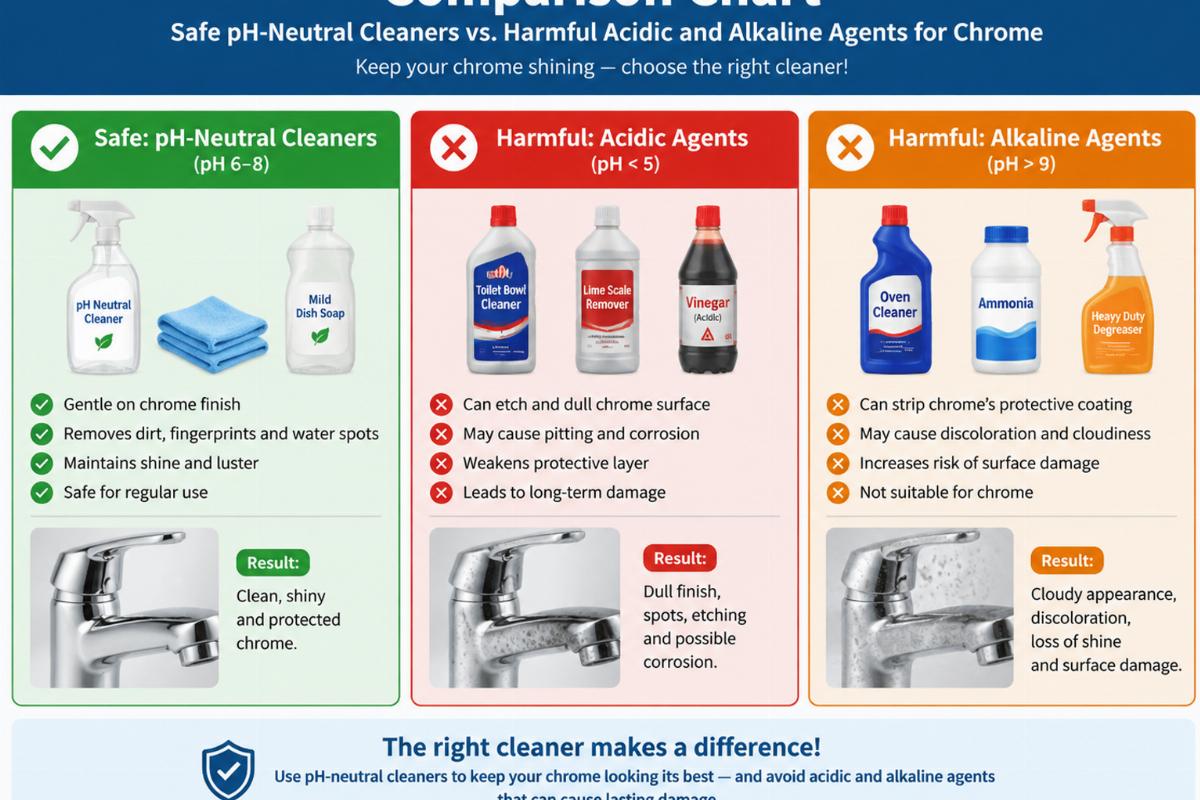
Avoid all alkaline and acidic solutions; restrict cleaning to pH-neutral soaps and dedicated chrome polishes designed for automotive finishes.
Selecting the right cleaner is the most impactful step in chrome motorcycle parts maintenance. The market is flooded with products labeled “heavy-duty” or “industrial strength,” which are often euphemisms for high-pH formulas that damage delicate finishes.
Safe cleaners share specific characteristics:
- pH Neutral: They do not alter the chemical balance of the metal surface.
- Non-Abrasive: They rely on chemical emulsification rather than physical scrubbing to lift dirt.
- Wax-Compatible: They do not dissolve existing protective coatings.
Unsafe cleaners include:
- Household Glass Cleaners: Often contain ammonia, which can dull chrome over time.
- Wheel Cleaners: Many are acidic to break down brake dust, which eats into chrome.
- All-Purpose Degreasers: Typically alkaline, designed for engine blocks, not polished surfaces.
A restoration project involving pre-1984 Springer parts highlighted this issue. The components had been stored in a garage without protection. Micro-pitting had already started. The restorer initially used a wheel cleaner to remove the rust spots, which only widened the pits. Switching to a pH-neutral soap and a fine-grade chrome polish stopped the progression. [NEED_CITE: effects of acidic cleaners on chrome micro-structure]
When advising customers, emphasize that “clean” does not mean “sterile.” A slight film of wax is preferable to bare, squeaky-clean metal exposed to air. For chrome motorcycle parts maintenance, the goal is preservation, not sterilization.
This simple switch in product selection can extend the life of the finish significantly.
Step-by-Step Cleaning and Sealing Routine
Thorough drying and immediate application of a breathable sealant are non-negotiable steps after washing.
Cleaning is only half the battle. The routine used during assembly or regular service determines long-term durability. Here is a method that minimizes risk:
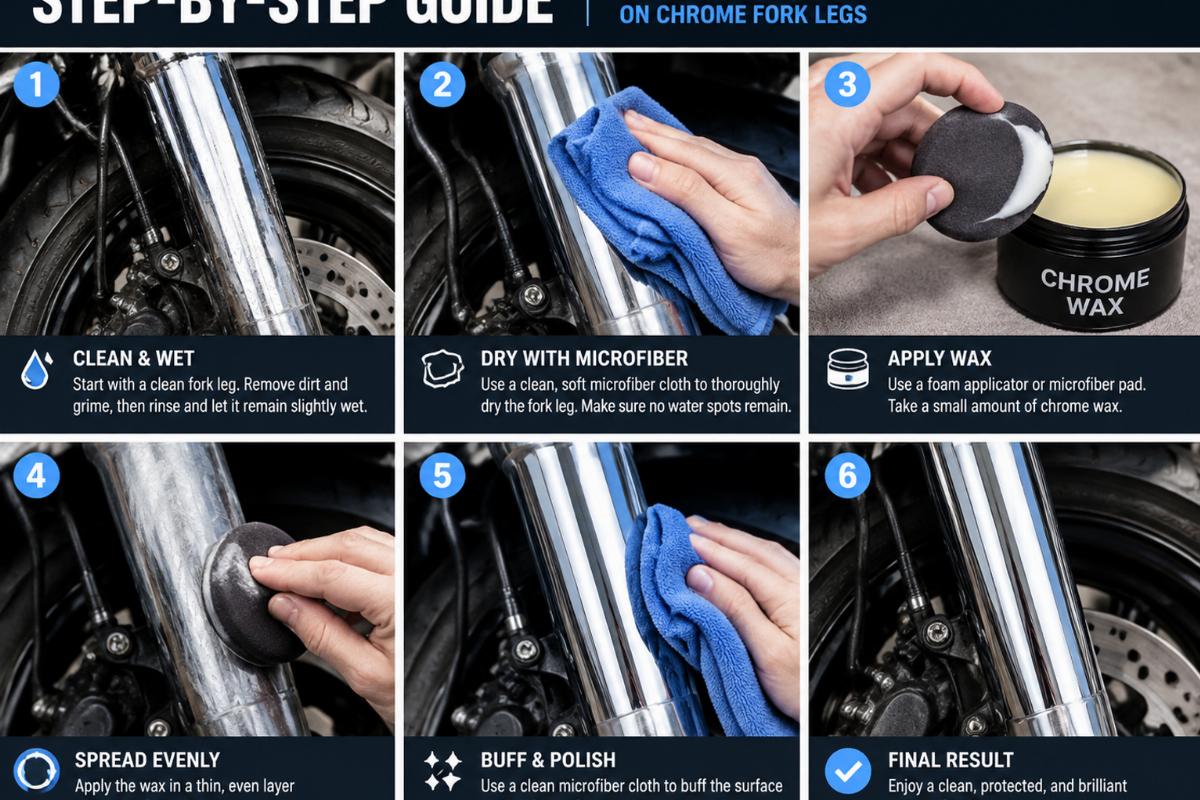
- Wash with pH-Neutral Soap: Use a dedicated motorcycle wash or mild car shampoo. Apply with a soft microfiber mitt. Do not use sponges that may trap grit.
- Rinse Thoroughly: Ensure no soap residue remains, as dried soap can leave spots that attract moisture.
- Dry Immediately: Use a clean, dry microfiber towel. Air-drying allows water spots to form, which contain minerals that can etch chrome. Pay special attention to crevices around triple trees and axle mounts.
- Apply Sealant: While the surface is still warm from drying, apply a high-quality automotive wax or synthetic sealant. Avoid products containing harsh solvents. Use a separate applicator pad to ensure even coverage.
- Buff Gently: After the sealant hazes, buff with a fresh microfiber cloth. Do not press hard; let the product do the work.
A common error observed in assembly lines involves workers using strong degreasers on fork tubes before sealing. This removes the factory-applied protective oil but leaves the metal bare until the bike is ridden. If the bike sits in storage, corrosion begins immediately. Implementing a final wax step before crating reduces returns linked to cleaning damage. [NEED_CITE: best practices for metal preservation during storage]
For those learning how to clean chrome fork tubes, the key is gentleness. Aggressive scrubbing creates micro-scratches that trap dirt and moisture, accelerating future corrosion.
This routine, when followed consistently, creates a robust barrier against the elements.
Storage Tips for Long-Term Shine
Control humidity and use breathable covers to prevent condensation-induced corrosion during off-seasons.
Even the best cleaning routine fails if storage conditions are poor. Chrome does not rust, but the steel beneath it does. In humid climates, condensation forms on cold metal surfaces. If trapped under a plastic cover, this moisture has nowhere to go, creating a perfect environment for corrosion.
For shops storing chrome motorcycle parts maintenance inventory or finished builds:
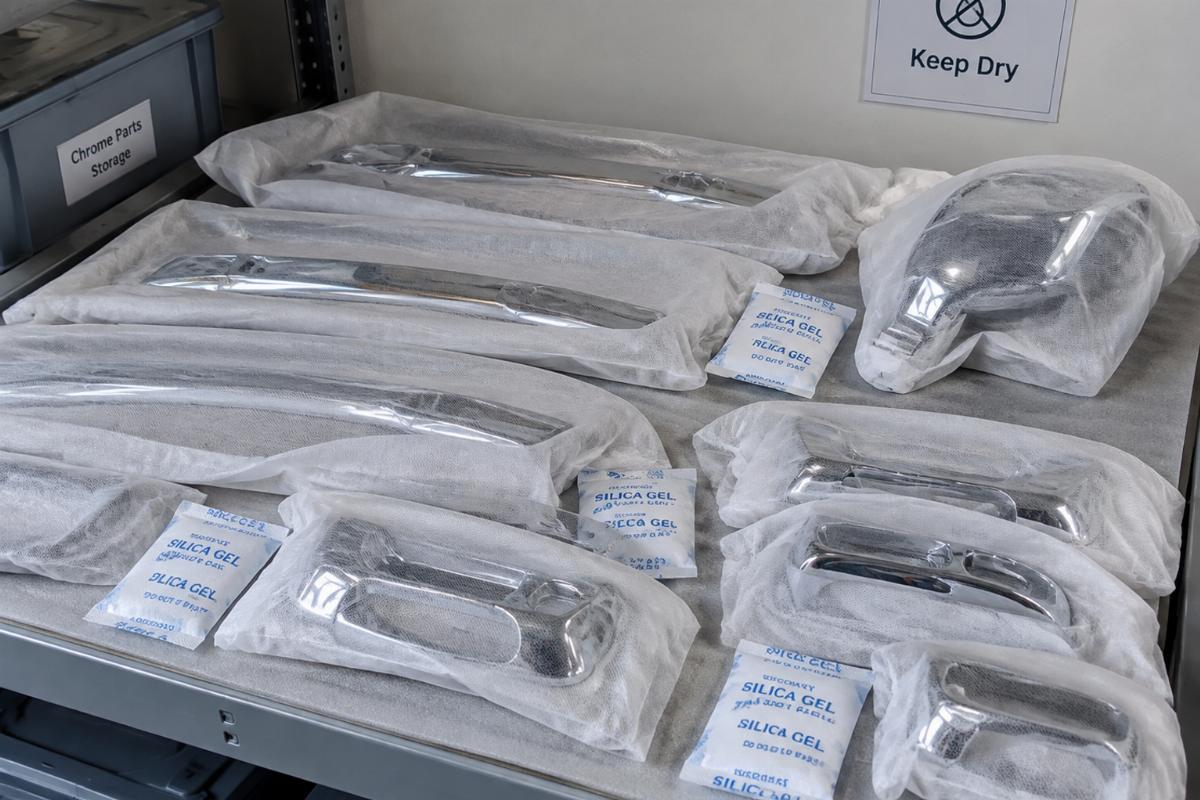
- Avoid Plastic Wraps: Plastic traps moisture. Use breathable cotton or flannel covers instead.
- Control Humidity: Keep storage areas below 60% relative humidity if possible. Dehumidifiers are effective in enclosed spaces.
- Regular Inspection: Check stored parts seasonally. If white spots appear, re-clean and re-seal immediately. Do not wait for the riding season.
A case involving a batch of springer front ends stored in a non-climate-controlled warehouse showed significant surface oxidation after one winter. The parts were wrapped in plastic sheeting to keep dust off. The trapped humidity caused uniform fogging across the chrome. Switching to breathable fabric covers and adding desiccant packs to the crates eliminated the issue in subsequent shipments. [NEED_CITE: impact of relative humidity on metal corrosion rates]
For customers asking how to prevent chrome corrosion on motorcycles during winter layup, advise them to park in a dry place and cover the bike with a breathable material. Regularly wiping down the chrome with a wax-infused detailer can also replenish the protective layer.
Proper storage is the final line of defense in chrome motorcycle parts maintenance.
Conclusion
Chrome durability is defined by care, not just construction.
Protecting chrome requires a shift from aggressive cleaning to gentle preservation. By using pH-neutral products, sealing surfaces immediately, and controlling storage humidity, shops and riders can prevent the majority of cosmetic failures. This approach protects the investment in quality parts and ensures they remain show-ready for years. For those responsible for chrome motorcycle parts maintenance, education is as important as the parts themselves.