
Front End Rake and Trail Calculator for Custom Build Suppliers
Longer forks do not automatically mean better handling; they often destroy stability.
Accurate geometry calculation is the only way to ensure a custom front end is safe and rideable. A front end rake and trail calculator converts raw measurements of frame angle, fork length, and offset into precise handling metrics. Without this data, extending a springer or hydraulic fork is a guess that frequently results in high-speed wobble, heavy steering, or catastrophic failure. Builders must measure the existing frame neck angle and calculate the resulting trail before fabricating or ordering any components.
The difference between a stable cruiser and an unstable chopper is often measured in millimeters of trail. When I first started supplying extended springer assemblies, I focused on the aesthetic stretch. I sent a batch of three-inch extensions to a North American shop without verifying the trail impact on their specific frame geometry. The result was not just unhappy customers but a full container return because the bikes became dangerously unstable at highway speeds. That loss taught me that visual proportion means nothing if the physics are wrong. Now, every quote begins with a request for model year and frame drawings to run through a front end rake and trail calculator. This process prevents costly errors and ensures the parts we manufacture actually fit the intended build.
Why Do Rake and Trail Matter in Custom Builds?
Geometry dictates handling stability, not just aesthetics.
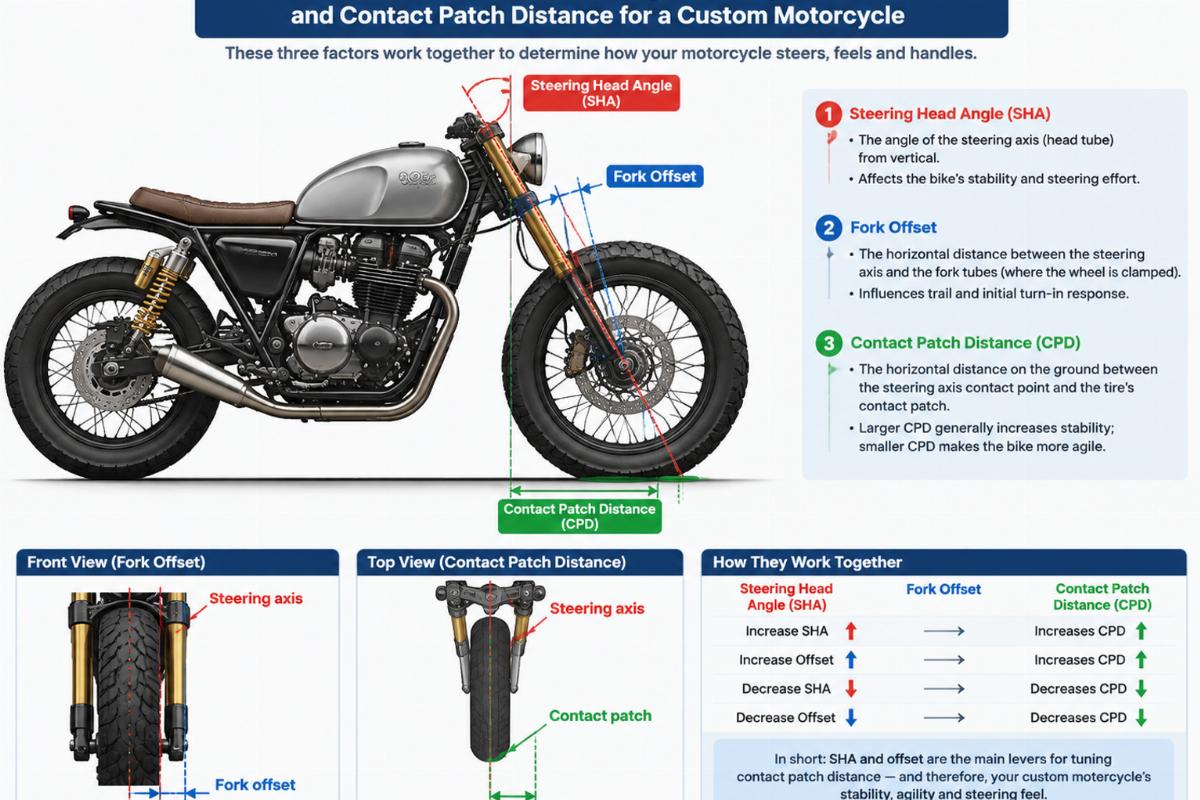
Rake and trail are the two fundamental parameters that determine how a motorcycle steers and stabilizes itself. Rake is the angle of the steering head relative to vertical. Trail is the horizontal distance between where the steering axis intersects the ground and where the tire contacts the ground. [NEED_CITE: definition of motorcycle steering geometry parameters] While rake affects the visual stance and low-speed steering effort, trail is the primary factor in high-speed stability.
Many builders assume that increasing rake by stretching the forks will naturally improve the look without compromising safety. This is a dangerous misconception. Extending the front end increases rake, which typically reduces trail. If trail drops below a critical threshold, the bike loses its self-centering tendency. The front wheel may wander, shimmy, or tuck under during braking. Conversely, too much trail makes the steering feel heavy and sluggish, requiring significant effort to initiate turns.
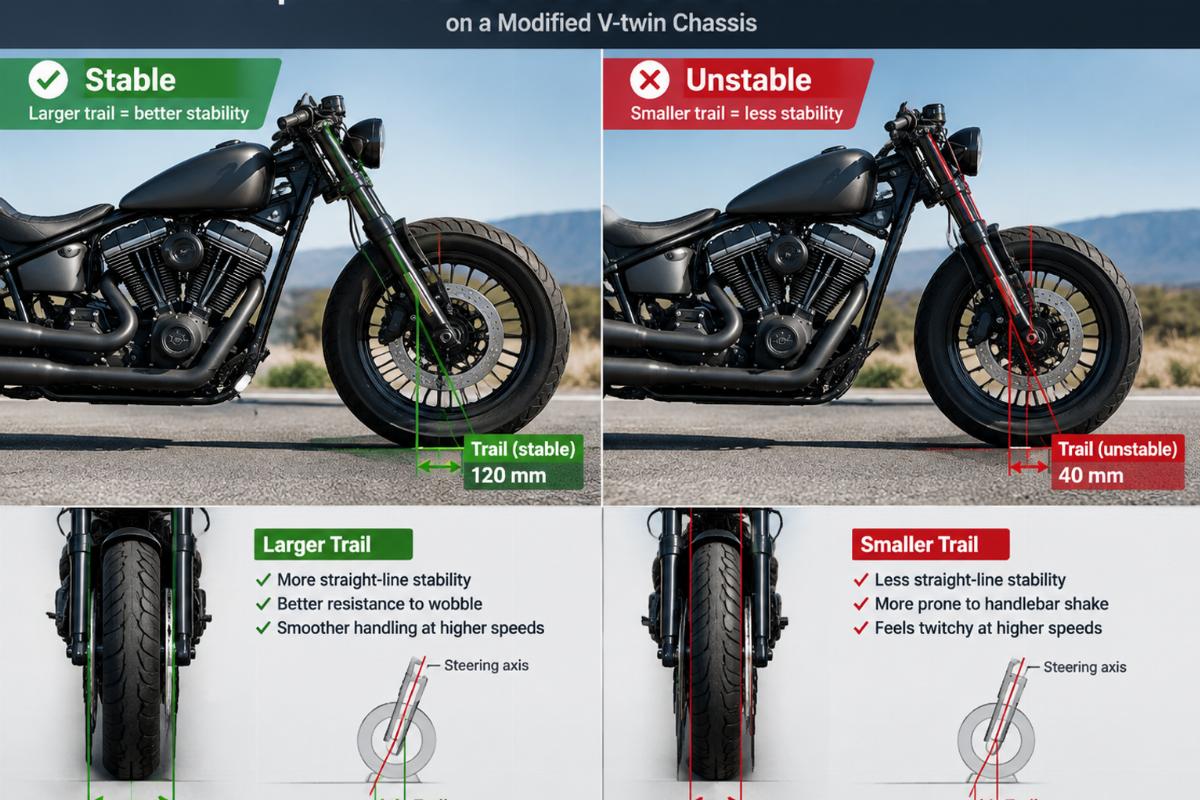
Using a front end rake and trail calculator allows builders to visualize these trade-offs before cutting metal. It reveals whether a proposed fork length will keep the trail within a safe operating range for the specific frame. For example, a Softail frame has different stock geometry than an XS650. Applying the same extension to both will yield different trail values. Ignoring these differences leads to builds that look correct but ride poorly. The calculator provides the objective data needed to balance style with function, ensuring the final machine is not just a show piece but a viable rider.
How to Calculate Rake and Trail for Springer Forks?
Measure frame angle and fork offset precisely using standard formulas.
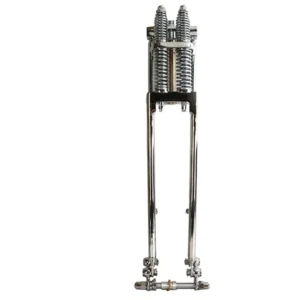
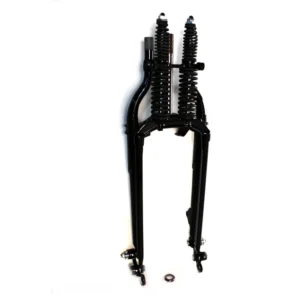
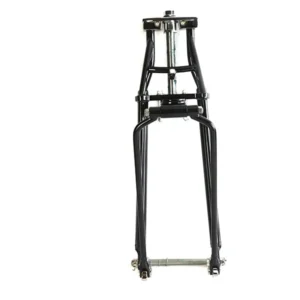
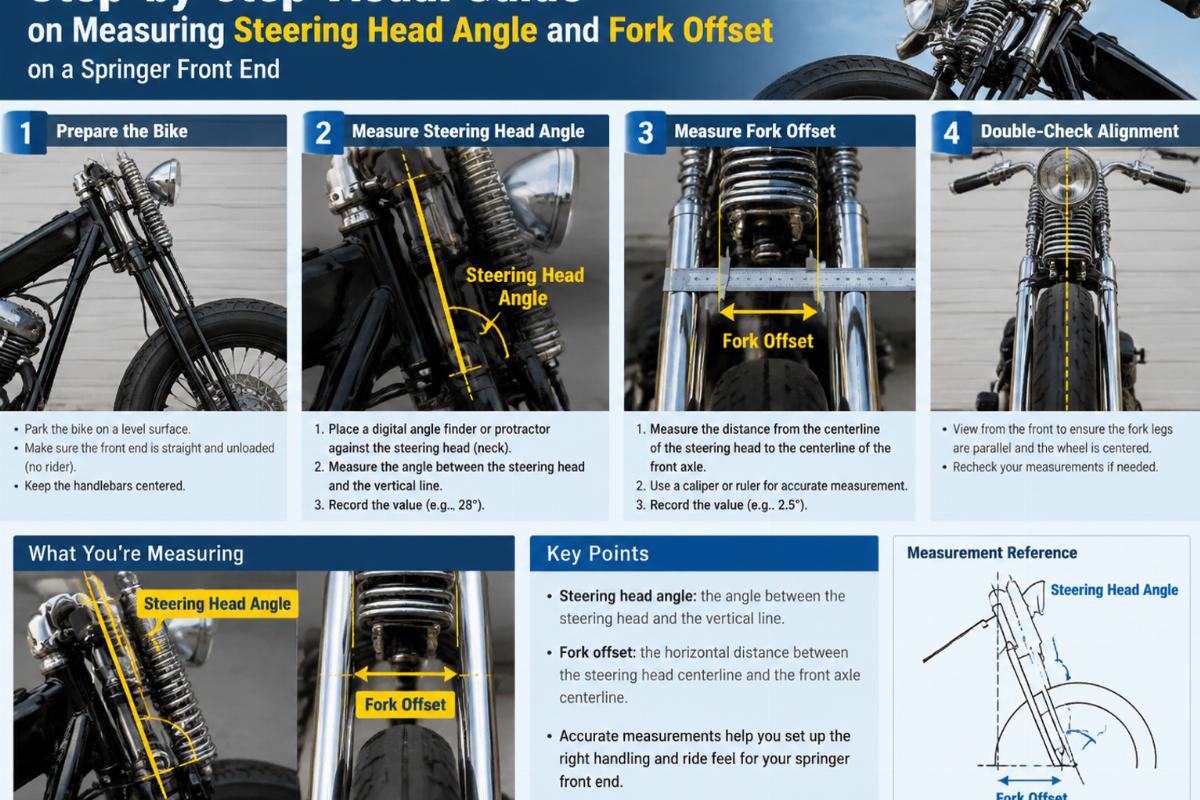
Calculating geometry for springer forks is more complex than for hydraulic forks due to the multiple pivot points and the offset nature of the spring assembly. The process requires three key inputs: the frame neck angle, the effective fork length, and the fork offset. [NEED_CITE: methodology for measuring motorcycle fork offset and rake] The frame neck angle is fixed by the manufacturer and can be found in service manuals or measured directly with a digital protractor. The effective fork length is the distance from the steering stem center to the axle center. Fork offset is the perpendicular distance from the steering axis to the axle centerline.
To perform the calculation, input these values into a front end rake and trail calculator. The tool applies trigonometric functions to determine the new rake angle and the resulting trail. For springer setups, it is crucial to account for the rocker arm geometry, as this influences the effective offset. A common error is measuring the outer tube length instead of the functional steering axis length. This mistake skews the calculation and leads to incorrect predictions of handling behavior.
Consider a case where a builder wanted to install a wide-glide style springer on a narrow-glide frame. The physical mounting points were different, requiring an adapter plate. Without adjusting for the change in triple tree spacing and axle alignment, the calculated trail was significantly off. The front end rake and trail calculator highlighted this discrepancy before any parts were ordered. By adjusting the offset in the design phase, the builder was able to maintain proper trail despite the frame mismatch. This level of precision is only possible when relying on calculated data rather than visual estimation.
What Happens When Geometry Is Ignored?
Incorrect trail leads to dangerous high-speed instability and returns.
Ignoring geometric verification is the most common cause of failed custom builds. When trail is miscalculated, the consequences are immediate and often severe. A bike with insufficient trail will exhibit a phenomenon known as “head shake” or “tank slapper,” where the front wheel oscillates violently at speed. This is not just uncomfortable; it is a critical safety hazard. [NEED_CITE: effects of negative or low trail on motorcycle stability]
I recall a specific incident involving a batch of extended springer kits. The customer had stretched the front end by several inches to achieve a dramatic chopper look. They did not use a front end rake and trail calculator to check the impact on trail. The resulting geometry reduced the trail to near zero. During testing, the bike became uncontrollable above forty miles per hour. The customer returned the entire order, citing safety concerns. The cost of shipping, restocking, and lost reputation far exceeded the profit from the sale.
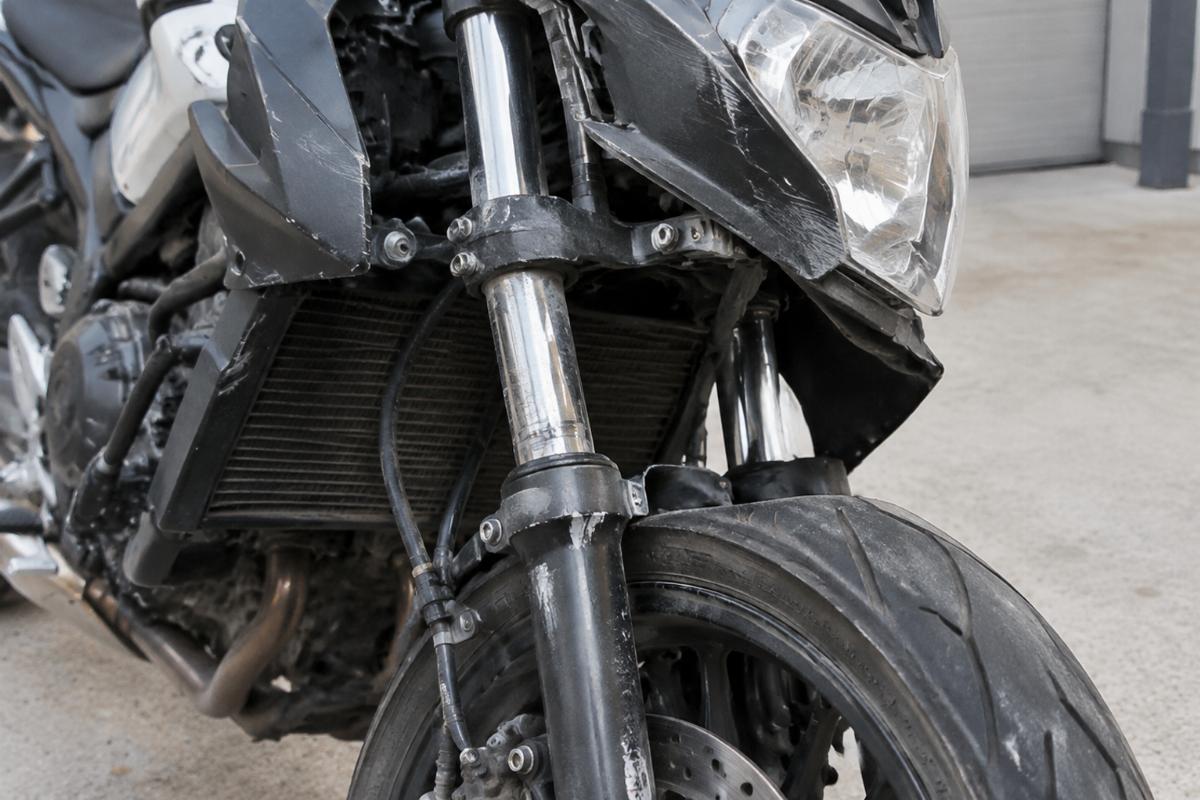
Another frequent issue arises from assuming OEM numbers guarantee fitment. Frame geometries change even within the same model family across different years. A fork designed for a 1990 model may not provide the correct trail on a 2005 model due to subtle changes in the steering head angle or triple tree design. Skipping the verification step means relying on luck. Professional builders avoid this risk by running every modification through a front end rake and trail calculator. This simple step identifies potential instability issues before fabrication begins, saving time, money, and liability.
How to Verify Fitment Before Ordering?
Share model year and frame drawings for professional geometric checks.
The most effective way to prevent geometry errors is to verify fitment before placing an order. This involves providing detailed information about the base motorcycle, including the model, year, and any existing modifications. Suppliers who specialize in custom parts should offer a fitment check service based on this data. [NEED_CITE: importance of cross-referencing OEM part numbers and frame specifications]
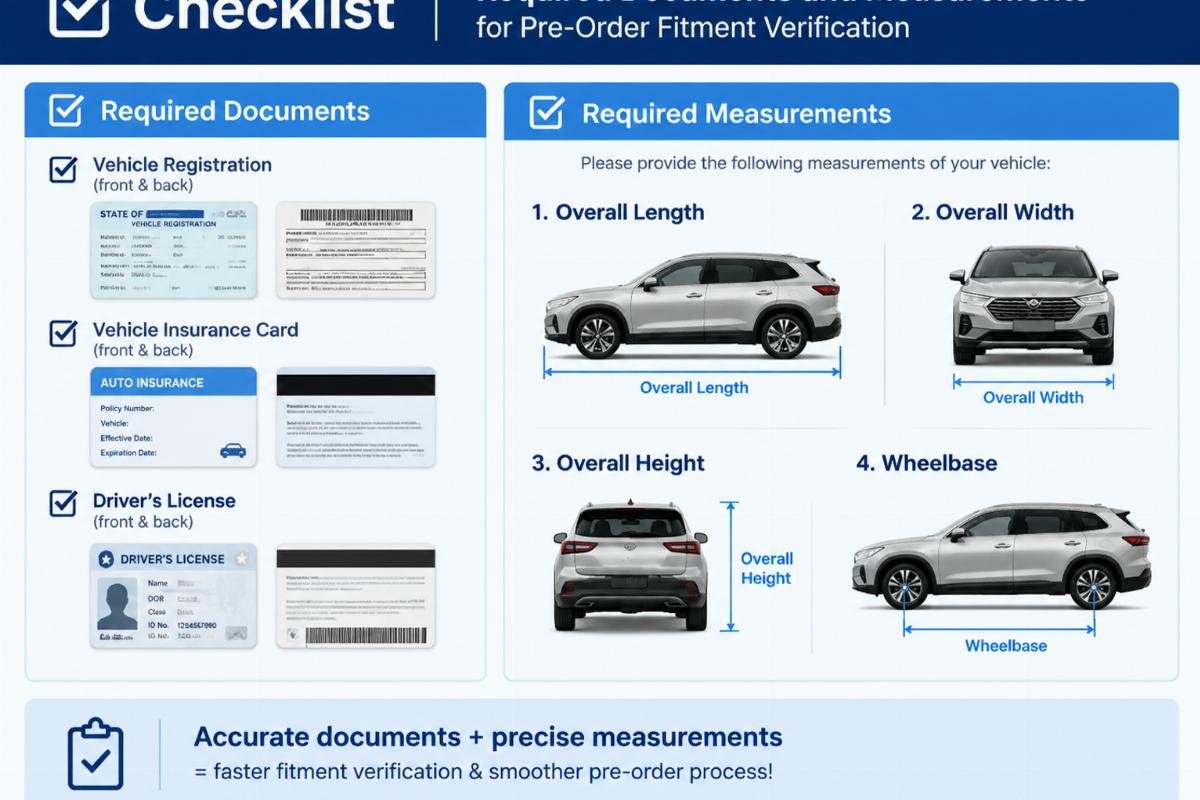
When requesting a quote for a springer front end or extended forks, include the frame neck angle if known. If not, provide high-resolution photos of the steering head area and the current fork setup. A knowledgeable supplier will use this information to run a preliminary check using a front end rake and trail calculator. They can then advise on the appropriate fork length and offset to maintain safe trail values. This collaborative approach ensures that the parts manufactured will align with the specific requirements of the build.
For example, when building a custom XS650, the stock geometry is quite different from a Harley-Davidson Softail. A generic extension kit may work for one but fail for the other. By sharing the specific model details, the supplier can tailor the recommendation. They might suggest a specific offset triple tree or a modified rocker arm to compensate for the frame characteristics. This level of technical support distinguishes professional suppliers from generic parts sellers. It transforms the transaction from a simple purchase into a technical partnership, reducing the risk of returns and ensuring customer satisfaction.
Using a front end rake and trail calculator is not just a technical formality; it is a essential step in responsible custom building. It bridges the gap between artistic vision and mechanical reality. By prioritizing accurate geometry, builders can create machines that are not only visually striking but also safe and enjoyable to ride. The next time you plan a front end modification, start with the numbers. Let the data guide your design, and let the front end rake and trail calculator be your first tool in the workshop.
Conclusion
Precision in geometry prevents instability and costly returns.
Custom motorcycle builds require more than just aesthetic judgment; they demand rigorous technical validation. Understanding and calculating rake and trail ensures that extended front ends remain stable and safe. By using a front end rake and trail calculator, builders and suppliers can avoid the pitfalls of guesswork and deliver high-quality, reliable machines. Always verify fitment with detailed model information before fabrication to guarantee success.