
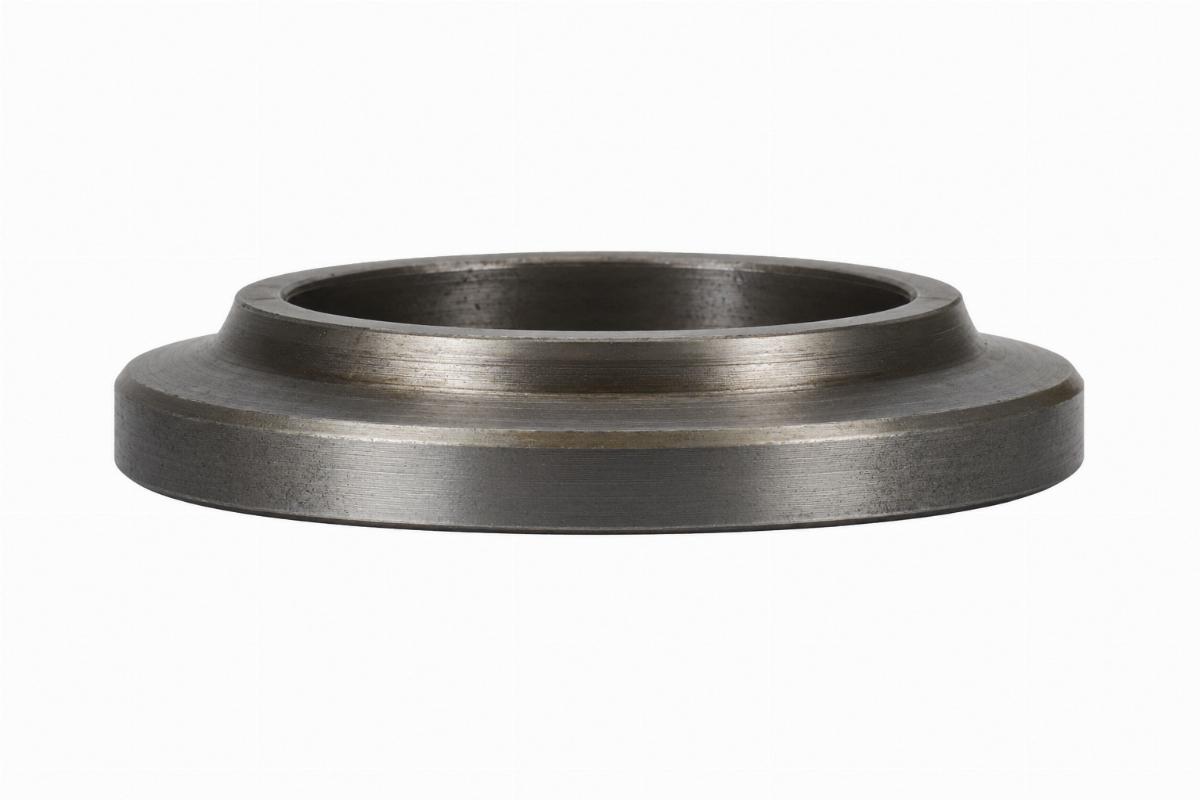
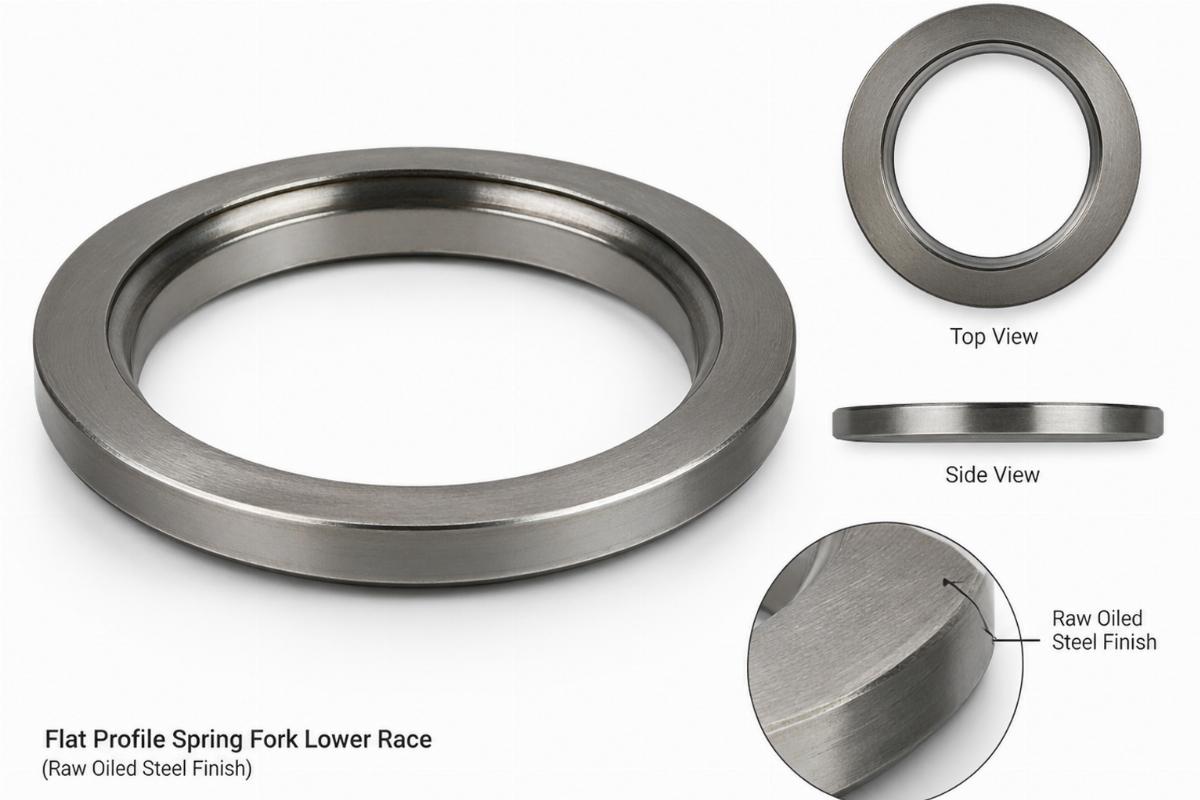
Raw Spring Fork Lower Race Flat Profile – Fits Early Springer
Fitment Verified Before Dispatch — Every steering head component is checked against platform family and year range to prevent profile mismatches.
Product Specification
| Parameter | Value |
|---|---|
| Part Type | Spring Fork Lower Race |
| Finish | Raw oiled steel |
| Profile | Flat profile |
| Tapered Recess | None |
| Application | Early Springer Front End |
Fitment
| Platform | Year Range | Notes |
|---|---|---|
| Classic Big Twin pre-1984 | Confirm with model and year | Does not fit with #49-2000 Bearing Guard |
Independent aftermarket part. Not manufactured, sold or endorsed by any motorcycle manufacturer. Model names and OEM numbers are used for fitment reference only.
Why Flat Profile Depth Matters for a Spring Fork Lower Race for Harley-Davidson Frames
The profile depth dictates whether the bearing guard seats correctly or drops through the neck.
When rebuilding a classic front end, assuming all lower races share the same internal geometry is a frequent sourcing error. A flat profile race lacks the tapered recess required to support specific bearing guards, meaning the guard will simply fall into the steering stem if mismatched. This structural mismatch forces a complete teardown of the front end just to swap a single steering head component. Builders must verify the exact frame year range and the original cup geometry before clearing any steering head component to avoid this exact scenario [NEED_CITE: factory service manual specifications by model year for early springer steering heads].
Verifying Frame Year Range for Early Springer Setups
Determining the correct spring fork lower race for harley-davidson applications requires checking the specific year range of the Classic Big Twin pre-1984 platform. Steering head cup dimensions and bearing seat profiles changed across different production eras, meaning a race designed for one decade will not mate correctly with another. Confirming the exact model year ensures the flat profile aligns perfectly with the original steering head cup geometry, preventing unwanted movement or improper bearing seating.
Exclusion Checks for Bearing Guard Compatibility
Beyond the year range, verifying the exclusion for the #49-2000 Bearing Guard is critical when sourcing this component. This specific flat profile design features no tapered recess, which directly impacts how the bearing guard interacts with the race. If the build requires a guard that relies on a tapered recess for retention, this particular race will not function as intended. Cross-referencing the intended guard part number against the race profile prevents assembly failures on modified early front ends [NEED_CITE: bearing guard retention methods across early springer variations].
Interpreting Raw Oiled Steel and Flat Profile Specs
The raw oiled steel finish provides a basic protective layer for storage and initial handling, requiring proper preparation if a different final finish is planned for the build. The flat profile design ensures a solid, even mating surface for bearings that do not require a tapered recess for alignment. Because the tapered recess is absent, the internal diameter and depth must precisely match the bearing outer dimensions to maintain correct steering geometry. These dimensional factors directly influence how the front end tracks and responds to rider input.
The Hidden Cost of Steering Head Profile Mismatches
Ordering a lower race based solely on the model name without confirming the year range often leads to receiving the wrong profile depth. A flat profile race sent for a frame requiring a tapered recess will cause the bearing guard to drop through, halting the assembly process entirely. Tearing down a fully assembled springer front end to replace a single steering head component wastes significant shop time and delays the build schedule. This type of sourcing error highlights why verifying the exact year range and profile depth is mandatory before clearing any component [NEED_CITE: steering head teardown labor impacts from fitment errors].
Sourcing Front End Components from a Single Account
This spring fork lower race for harley-davidson builds is backed by own production on springer front ends and chassis hardware, ensuring direct control over the manufacturing process. Fitment is confirmed against the platform family and model year range before any quotation is issued to the buyer. Cross-reference checks against Harley-Davidson OEM numbers are provided, with all reference numbers clearly marked for identification only. A minimum order of one piece is supported, allowing custom builders and restoration shops to procure exact replacements without bulk commitments.
Documentation and Traceability
- Fitment sheet stating applicable platforms and confirmed year ranges
- Cross-reference sheet with OEM numbers marked reference only
- Finish specification detailing the raw oiled steel treatment
- Quality inspection record verifying profile depth and dimensions
- Packing photographs showing the exact part shipped
Receiving and Pre-Installation Checks
- Verify the raw oiled steel finish for any transit damage or surface rust
- Confirm the flat profile matches the original steering head cup geometry
- Check the exclusion notes to ensure compatibility with your bearing guard
- Measure the internal diameter to verify it matches your bearing specifications
- Store the component in a dry environment to prevent the raw steel from corroding
Requesting a Fitment Check
Send your specific model code and year range to verify if this flat profile race matches your steering head cup geometry. Provide the old part number or a clear photograph of the existing race to confirm the absence of a tapered recess. Let us know if you need a sample for fitment confirmation before committing to a larger order for your restoration shop.
Frequently Asked Questions
Q: How can I confirm if this flat profile lower race fits my specific early springer frame year?
A: You must verify the exact model year range for your Classic Big Twin pre-1984 platform. The flat profile is designed for specific neck bearing setups that do not require a tapered recess. Providing your frame year and a photo of the original cup allows us to cross-reference the geometry and confirm compatibility before dispatch.
Q: What is the main difference between flat profile and tapered recess lower races?
A: The flat profile provides an even mating surface without a recessed step, while a tapered recess includes a stepped internal diameter to retain specific bearing guards. Using a flat profile race when a tapered recess is required will cause the bearing guard to drop through the neck, preventing proper assembly and requiring a complete front end teardown.
Q: Can I order a single lower race for a one-off custom build or restoration?
A: Yes, a minimum order of one piece is fully supported for custom builders and independent repair shops. You do not need to meet bulk purchasing thresholds to procure this steering head component. We process single-piece inquiries with the same fitment verification and documentation as larger wholesale orders.
Q: Does this raw oiled steel race come with the bearing guard included?
A: No, this listing is strictly for the spring fork lower race itself. The bearing guard is sold separately. Furthermore, this specific flat profile race explicitly does not fit with the #49-2000 Bearing Guard due to the lack of a tapered recess. You must source the correct guard separately based on your steering head requirements.