
Chrome Narrow Springer Fork Assembly 31″ – Fitment Checked
Front-end depth in one catalogue — complete springer assemblies and multiple over-stock lengths verified against platform and year range before dispatch.
Product Specification
| Parameter | Value |
|---|---|
| Part Type | Narrow Springer Fork Assembly |
| Finish | Chrome |
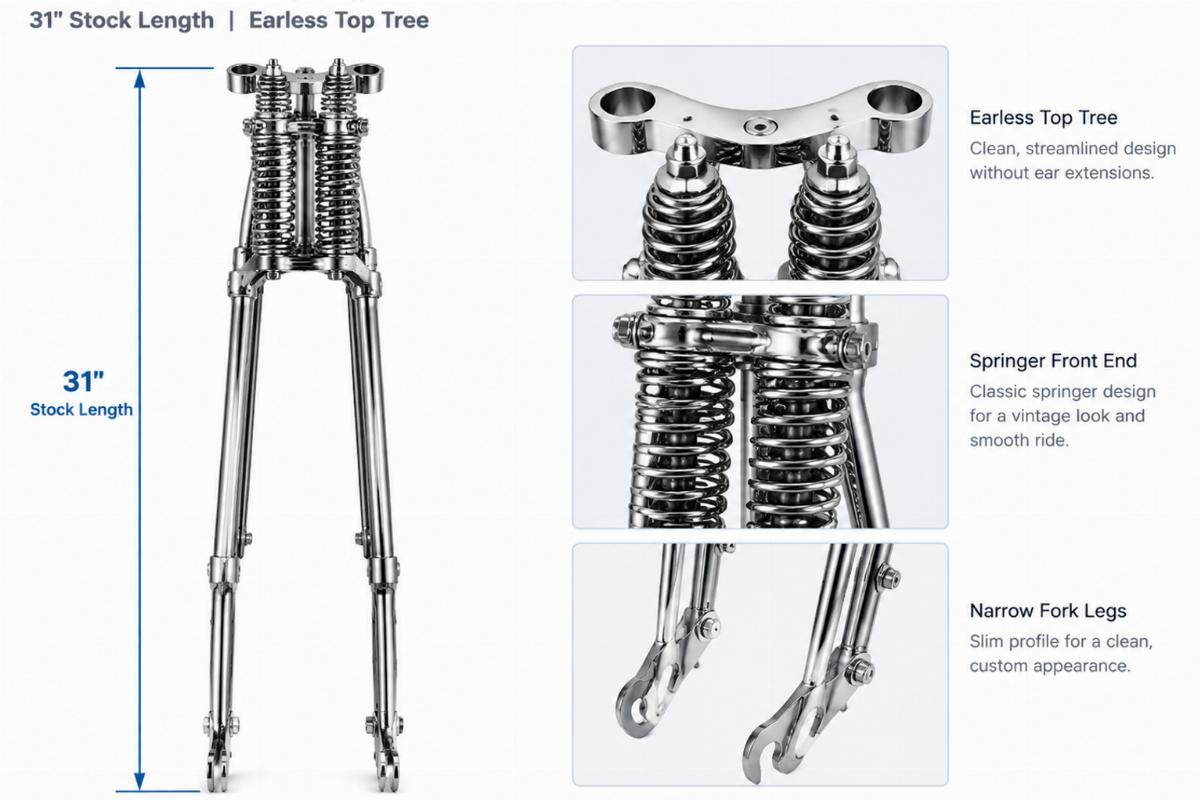
| Overall Length | 31″ stock length |
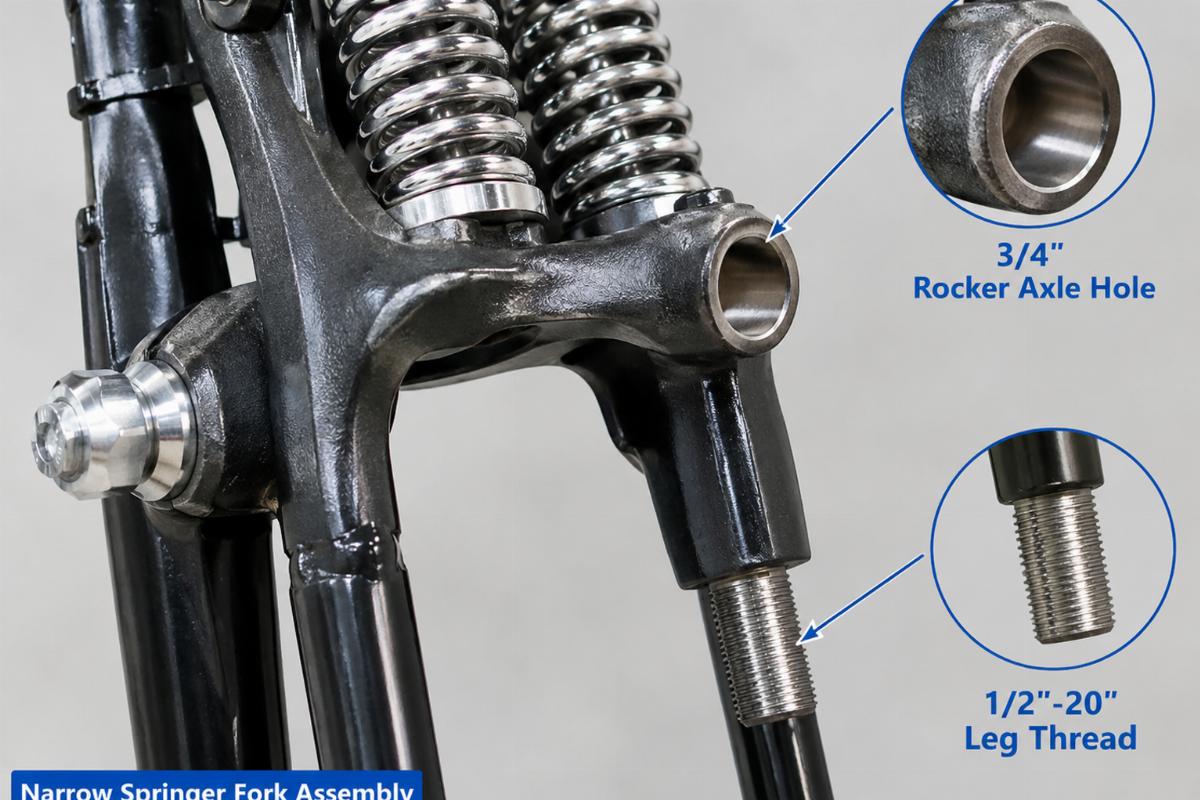
| Rocker Axle Hole | 3/4″ |
| Top Tree | Without ears |
| Leg Thread | 1/2″-20″ |
Fitment
| Platform | Year Range | Notes |
|---|---|---|
| Not stated | Not stated | Confirm frame neck spacing and stem dimensions for the earless top tree. |
Independent aftermarket part. Not manufactured, sold or endorsed by any motorcycle manufacturer. Model names and OEM numbers are used for fitment reference only.
Why Geometry Fails When Hardware Details Are Missing
A 31″ narrow springer fork assembly requires exact axle and thread matching to maintain stock ride height.
Builders often order front ends without verifying the rocker axle hole or leg thread, assuming a standard length will simply bolt onto any frame. When the 3/4″ axle hole meets a 1-inch hub, or the 1/2″-20″ leg thread fails to accept the chosen risers, the entire steering geometry is compromised. This leaves the motorcycle unrideable and forces a complete teardown to source the correct hardware [NEED_CITE: frame neck spacing and stem dimension variations across custom chassis].
Verifying Frame Neck Spacing for Earless Top Trees
An earless top tree changes how the steering stem interfaces with the frame neck. You must measure the exact inner diameter of your frame neck and the stem length to ensure the narrow springer fork assembly sits flush without binding. Overlooking this dimension often results in the tree bottoming out or rattling against the frame cups during steering input.
Checking Axle and Hub Compatibility
The 3/4″ rocker axle hole on this unit dictates the front wheel hub requirement. If your custom build utilizes a 1-inch axle, the wheel will not mount without modifying the hub or swapping the rockers. Always confirm the axle diameter against your wheel assembly before finalizing the front end order [NEED_CITE: axle diameter standards for custom front wheel hubs].
Interpreting the 31″ Stock Length and Leg Threads
The 31″ overall length is designed to replicate the stock ride height geometry of the donor platform, preserving the original rake and trail characteristics. The legs are drilled and tapped with a 1/2″-20″ thread, which is the standard pitch for most aftermarket handlebar risers. This threading depth ensures the riser bolts engage sufficiently to hold the bars securely under load.
The Hidden Cost of Unverified Front-End Dimensions
Ordering a front end without confirming the earless top tree fitment means the steering head may not align, forcing you to machine the frame or return the part. A mismatched 3/4″ axle hole halts the build entirely, leaving the bike stranded on the lift while you wait for a replacement wheel or modified rockers. Furthermore, if the 1/2″-20″ leg threads are cross-threaded or stripped during riser installation, the entire assembly becomes unsafe to ride [NEED_CITE: consequences of mismatched steering stem and frame neck dimensions].
Sourcing from a Fitment-Focused Specialist
We verify the 31″ stock length and earless top tree specs against your specific frame before shipping to prevent geometry issues. Our own production facility ensures the chrome finish remains consistent across batches, avoiding mismatched shading when paired with other front-end components. We offer a one-piece minimum order, allowing custom builders to purchase a single narrow springer fork assembly for a specific project without meeting bulk quotas. Every unit is cross-referenced against OEM numbers to confirm dimensional accuracy, and we provide a fitment sheet detailing the exact platform and year range compatibility.
Documentation Provided with Your Shipment
- Fitment sheet stating applicable platforms and year ranges for this 31″ assembly
- Cross-reference sheet with OEM numbers marked reference only for dimensional checks
- Key dimensions including fork length over stock, 3/4″ axle hole, and 1/2″-20″ thread
- Finish specification detailing the chrome plating process and quality inspection record
- Packing photographs showing the earless top tree and rocker hardware prior to dispatch
Pre-Installation Checks for the Builder
- Measure the frame neck inner diameter to confirm clearance for the earless top tree
- Verify the front wheel hub accepts a 3/4″ axle before mounting the rockers
- Check the handlebar riser base to ensure it matches the 1/2″-20″ leg thread pitch
- Inspect the chrome finish on the legs and rockers for any shipping damage or plating flaws
- Store the assembly in a dry environment to prevent surface oxidation before installation
Requesting a Fitment Check Before Ordering
Send your model and year along with a photograph of your frame neck to confirm the earless top tree compatibility. Provide the exact axle diameter of your front wheel hub to verify the 3/4″ rocker hole match. If you are unsure about the 1/2″-20″ leg thread for your risers, share the riser model number so we can confirm the fitment before dispatch.
Frequently Asked Questions
Q: How do I confirm if this 31″ springer fork fits my specific custom frame?
A: You must measure the inner diameter of your frame neck and the length of your steering stem to ensure the earless top tree interfaces correctly. Additionally, verify that your front wheel hub is designed for a 3/4″ axle to match the rocker hole. We provide a fitment sheet with every order to help you cross-reference these dimensions against your build.
Q: What is the difference between narrow and wide springer assemblies?
A: The primary difference lies in the overall width of the fork legs and the spacing of the triple tree, which dictates the front tire clearance. A narrow springer fork assembly is designed for tighter tire clearances and specific frame neck widths, whereas wide versions accommodate larger tires and wider frame setups. Always check your frame neck spacing and tire size before selecting the width.
Q: How do I measure frame neck spacing for an earless top tree?
A: Remove the existing steering stem and measure the inner diameter of the frame neck cups where the tree will sit. You also need to measure the stem length to ensure the earless top tree will seat fully without bottoming out against the lower cup. These measurements determine if the steering will turn smoothly without binding.
Q: Can I order a single springer fork assembly for a custom build?
A: Yes, we support a one-piece minimum order, allowing custom builders and repair shops to purchase a single unit for a specific project. There are no bulk quantity requirements, making it easy to source a complete front end for a one-off chopper or bobber build while still receiving full fitment verification and documentation.
Q: How do I verify the 1/2″-20″ leg thread for my risers?
A: Check the specifications of your chosen handlebar risers to confirm they require a 1/2″-20″ mounting bolt. You can also measure the diameter and thread pitch of the existing bolts if you are replacing an old setup. Matching this thread pitch is critical, as forcing an incorrect bolt will strip the leg threads and ruin the assembly.