
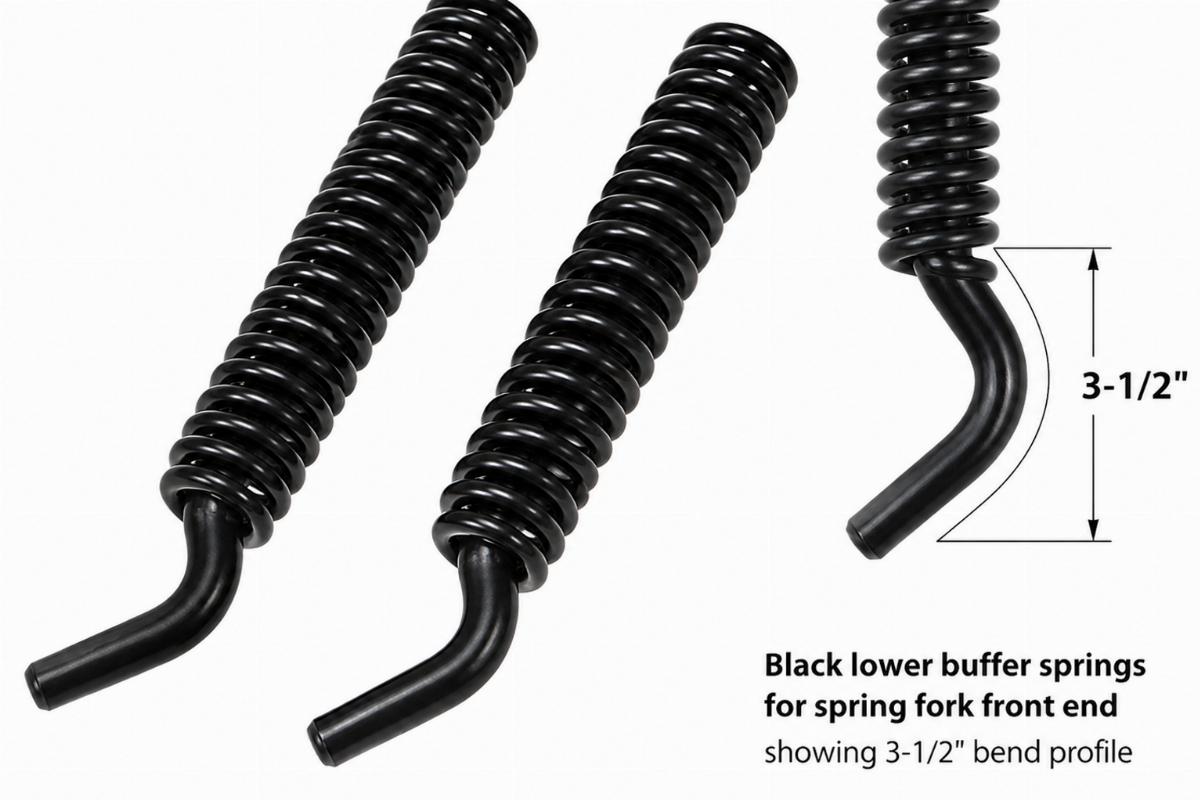
Black Lower Buffer Springs 3-1/2″ – Fits Spring Fork Front End
Verified Front-End Fitment — We manufacture and source springer components under a single account, ensuring every lower buffer spring matches the exact platform and year range before dispatch.
Product Specification
| Parameter | Value |
|---|---|
| Part Type | Lower Buffer Springs |
| Finish | Black |
| Length | 3-1/2″ |
| Feature | With bend |
| Quantity | Sold as a pair |
Fitment
| Platform | Year Range | Notes |
|---|---|---|
| Spring Fork front end | Confirm with model and year | Verify the 3-1/2″ length and bend angle against the specific front end assembly. |
Independent aftermarket part. Not manufactured, sold or endorsed by any motorcycle manufacturer. Model names and OEM numbers are used for fitment reference only.
Sourcing Exact lower buffer springs for spring fork Builds
Exact length and bend angle prevent fork travel issues.
In the repair shop, I have seen builders order replacement springs without checking the specific 3-1/2″ bend required for their early springer setup. One builder sent a photo of an old black spring, assuming it was a universal fit. When I measured it, the lack of the correct bend profile would have completely thrown off the fork travel. Verifying these dimensions against the specific front end is critical before sending anything out. [NEED_CITE: factory service manual specifications by model year]
Checking Platform and Year Range Compatibility
Fitment certainty starts with confirming the exact spring fork front end type and overall assembly length. These lower buffer springs for spring fork setups feature a 3-1/2″ overall length with a specific bend profile that must align with the existing rocker and leg geometry. If the platform family or year range is mismatched, the bend orientation will not seat correctly against the internal stops. We verify the applicable platform and year range against your build details before quotation to ensure the 3-1/2″ dimension matches the required travel and spacing.
Understanding the 3-1/2″ Bend Profile
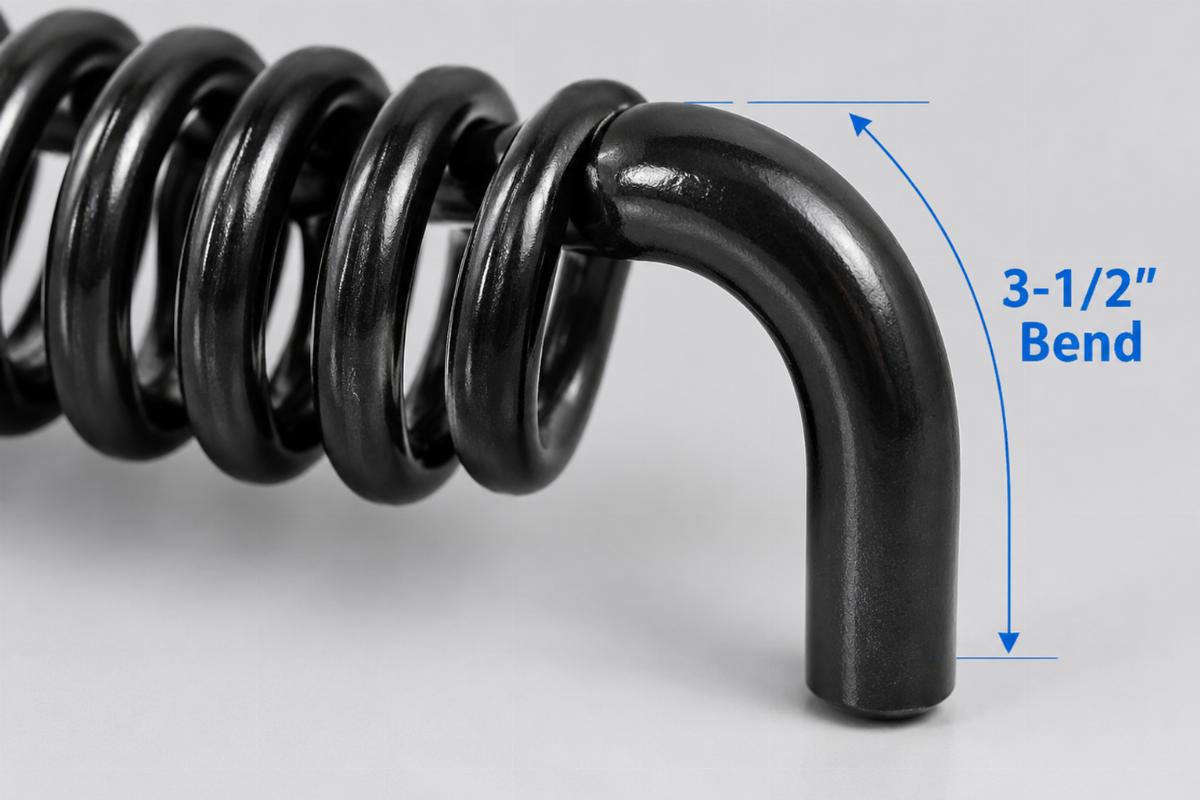
The 3-1/2″ length and integrated bend on these lower buffer springs are not arbitrary; they dictate how the spring compresses within the leg housing. When the bend profile is incorrect, the spring binds against the slider wall instead of compressing linearly. This binding restricts travel and places uneven stress on the rocker studs. By supplying these springs as a pair with a consistent black finish, we ensure both sides of the front end react identically to road inputs, maintaining the intended geometry of the springer assembly. [NEED_CITE: spring compression dynamics in early springer designs]
Hidden Costs of Incorrect Spring Dimensions
Ordering generic springs without confirming the 3-1/2″ bend often leads to bikes sitting on the shop floor while waiting for the correct hardware. When a spring lacks the specific bend, builders attempt to force the assembly, which can damage the fork bumpers and rocker hardware. Furthermore, mixing finishes from different batches results in visible color mismatches once the front end is fully assembled. A single incorrect dimension forces a complete teardown and delays the entire build timeline. [NEED_CITE: teardown delays caused by mismatched springer hardware]
Procuring from a Front-End Specialist
We produce front-end components in our own facility, allowing us to control the 3-1/2″ bend profile and black finish consistency directly. Every pair of lower buffer springs is checked against the specific spring fork front end requirements before leaving the shop. We support single-piece orders, meaning custom builders can source exactly what they need for one bike without meeting high minimums. Fitment is confirmed against the platform family and year range, and we cross-reference against OEM numbers marked reference only to ensure absolute compatibility.
Documentation Provided
- Fitment sheet stating the applicable spring fork platforms and year ranges.
- Key dimensions sheet documenting the 3-1/2″ length and bend specifications.
- Finish specification record ensuring black batch consistency.
- Quality inspection record verifying the bend angle and pair matching.
- Cross-reference sheet with OEM numbers marked reference only.
Receiving and Pre-Installation Checks
- Verify the pair of black lower buffer springs matches the 3-1/2″ length specification.
- Confirm the bend orientation aligns with your specific spring fork leg geometry.
- Inspect the black finish on both springs for batch consistency before assembly.
- Check the included hardware and pair quantity against the packing list immediately.
- Store the springs in a dry environment to protect the black finish prior to installation.
Requesting a Fitment Check
Send your specific spring fork front end model and year range to verify if these 3-1/2″ lower buffer springs match your build requirements. Provide photographs or measurements of your existing springs if the part number is unknown. Let us know if you require a sample pair for fitment confirmation before placing a bulk order for your shop.
Frequently Asked Questions
Q: How do I confirm if these 3-1/2″ lower buffer springs fit my specific spring fork front end build?
A: You must verify the overall fork assembly length and the specific rocker and leg geometry of your spring fork front end. The 3-1/2″ length and bend profile must match the required travel and spacing. We provide a fitment sheet stating the applicable platforms and year ranges before dispatch to ensure exact compatibility with your build.
Q: What key dimensions should I measure when replacing early springer buffer springs?
A: Measure the overall length of the existing spring, which must be exactly 3-1/2″ for this replacement pair. Additionally, check the specific bend angle and orientation, as an incorrect bend will cause the spring to bind inside the leg housing. Confirming these dimensions against your front end assembly prevents fork travel issues during installation.
Q: Can I order just one pair of lower buffer springs for a single custom bike project?
A: Yes, we support single-piece orders for custom builders and repair shops working on individual projects. You can order exactly one pair of these black lower buffer springs without meeting high minimum order quantities. This allows you to source the correct 3-1/2″ hardware for a single spring fork front end build efficiently.
Q: How do you ensure finish consistency if I am mixing black and chrome parts?
A: We maintain strict finish specifications and provide a quality inspection record with every order. This documentation ensures the black finish on these lower buffer springs matches the batch consistency required when mixing them with chrome components in the same front end assembly, preventing visible color mismatches once the bike is fully fitted.